A comprehensive guide detailing storm preparation for homes in Charleston and the surrounding Lowcountry region, initially published in October 2025 and updated on May 27, 2026, provides a structured approach for residents to mitigate potential damage from severe weather.
The recommendations emphasize a phased strategy, beginning with basic preventative maintenance 2 to 3 months before the typical storm season. As a specific storm threat emerges, a more focused protection plan is advised 3 to 5 days prior to its forecasted arrival. Final, immediate actions are to be completed within the 24 hours leading up to the storm.
Exterior home preparation is a critical component of the guide. It advises homeowners to thoroughly inspect their roofs for any existing damage or vulnerabilities. Cleaning gutters and downspouts is also highlighted, ensuring they are free of debris to allow for efficient water runoff. Furthermore, the guide recommends directing downspout water at least 5 to 10 feet away from the home’s foundation to prevent water accumulation and potential structural issues. Trimming tree branches that are within 10 feet of the house or power lines is another key step to reduce the risk of impact damage. All loose outdoor items, such as patio furniture, garbage cans, and decorative elements, should be secured or brought indoors. Windows and doors, including their seals and latches, should be checked for integrity.
Beyond the visible exterior, the guide addresses foundational and drainage concerns. It suggests grading the soil around the home to ensure it slopes away from the foundation at a minimum rate of 6 inches over a 10-foot distance, a measure designed to direct rainwater away. Testing sump pumps to confirm they are in working order is crucial, especially for homes with basements or crawl spaces. Identifying vulnerable entry points for water, such as cracks in the foundation or gaps around utility lines, is also recommended. Homeowners should additionally check basement and garage floor drains to ensure they are clear and functional.
Assembling an emergency supply kit is a non-negotiable step, with the guide recommending provisions for at least 72 hours. This kit should include one gallon of water per person per day for drinking and sanitation, along with a supply of non-perishable food items. Essential tools like flashlights and an ample stock of batteries are necessary. A well-stocked first-aid kit, any required prescription medications, and a battery-powered or hand-crank radio for emergency broadcasts are also vital. Phone chargers, power banks, and a supply of cash are important considerations, as power outages can render electronic payment systems inoperable and ATMs inaccessible. For households with pets, appropriate pet supplies, including food, water, and any necessary medications, should be included.
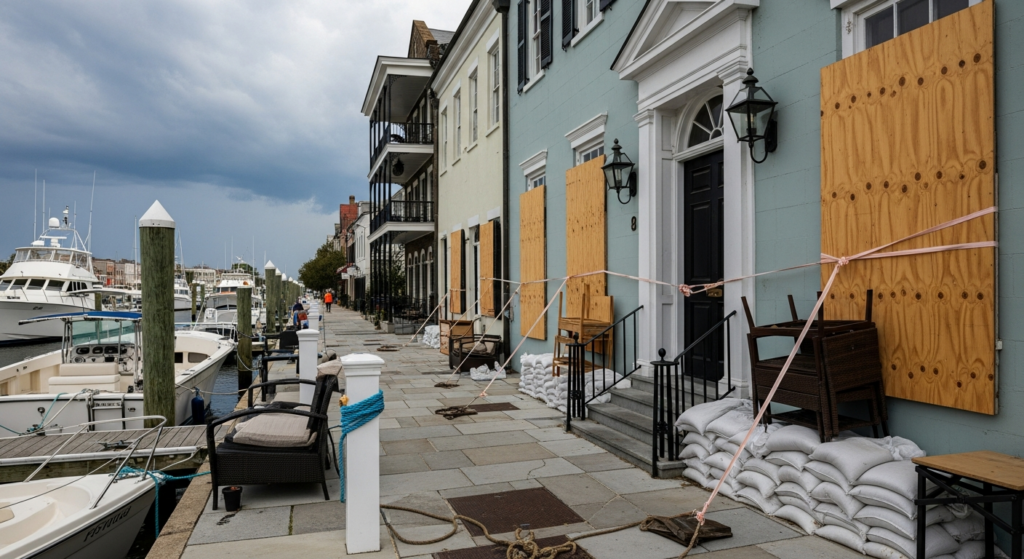
When a storm is specifically forecast for the Charleston area, the guide outlines a series of immediate actions. These include bringing all remaining outdoor items inside to prevent them from becoming projectiles in high winds. Installing storm shutters or securely boarding windows with plywood is a critical step to protect against flying debris. Placing sandbags around vulnerable entry points can help prevent water intrusion. Filling bathtubs and other containers with water ensures a reserve supply for sanitation purposes if municipal water services are disrupted. Charging all electronic devices, including phones and laptops, is advised. Vehicle fuel tanks should be filled to capacity, providing both transportation readiness and a potential power source if needed. Valuables and important documents should be moved to higher floors to protect them from potential flooding. Finally, documenting the home’s condition with photographs or videos before the storm can be invaluable for insurance claims after the event.
The guide also specifies situations where professional assistance is warranted, either before or after a storm. These include significant roof damage that goes beyond minor repairs, the presence of dangerous or diseased trees that pose a fall risk, pre-existing foundation or water-seepage problems, and the installation or replacement of sump pumps. Post-storm, professional help is recommended for electrical hazards, visible mold growth, any signs of structural damage, suspected gas leaks, downed power lines, active water intrusion that cannot be contained, and sewage backups, all of which present immediate health and safety risks.
Why it matters in Charleston
Charleston’s coastal location, nestled between the Ashley River and Cooper River and directly exposed to Charleston Harbor, makes it particularly susceptible to the impacts of tropical storms and hurricanes. The detailed preparation guide is a crucial resource for residents and institutions alike. For major employers such as the Medical University of South Carolina (MUSC) and Roper St. Francis Healthcare, ensuring their staff and facilities are prepared is paramount for maintaining essential services. Similarly, the Charleston County School District must consider the safety of its infrastructure and the families it serves. Proactive measures outlined in the guide, from securing properties to assembling emergency supplies, directly contribute to the resilience of the community, minimizing disruption and accelerating recovery efforts across Charleston County.