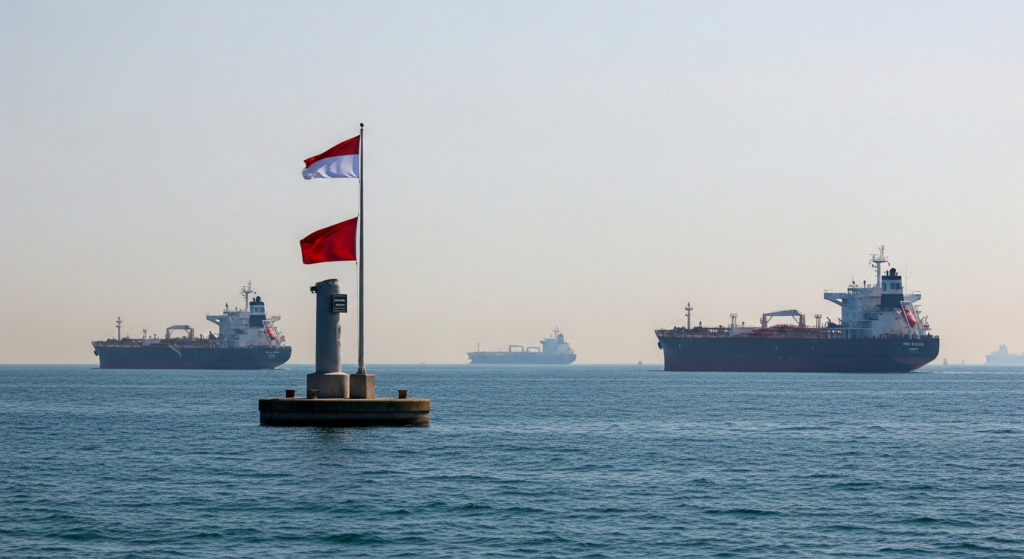
Renewed hostilities between the United States and Iran around Iranian ports and the strategically vital Strait of Hormuz have escalated, leading to a reimposition of a U.S. blockade in the region. The development, which unfolded during the July 15 cycle, has immediately reverberated through international energy markets, pushing global oil prices to their highest point in a month and prompting renewed anxiety about the security of maritime trade.
The Strait of Hormuz, a narrow waterway connecting the Persian Gulf to the open ocean, is one of the world’s most critical chokepoints for crude oil shipments. An estimated one-fifth of the world’s total oil consumption, and a significant portion of its liquefied natural gas, passes through this strait daily. Any disruption to this flow carries substantial implications for global energy supply and pricing.
The U.S. administration confirmed the resumption of a blockade on Iranian ports, a move that signals a significant hardening of its stance and directly impacts shipping routes through the Strait. This action follows a period of heightened tensions and reported attacks, though specific details on casualties or targeting remain unverified in official reports. The focus of international and business coverage has centered on the confirmed conflict, the blockade, and the resulting risks to shipping and energy markets.
Energy market analysts have directly linked the escalation to the recent surge in oil prices. The uncertainty surrounding the Strait’s stability and the potential for prolonged disruptions has added a substantial risk premium to crude futures. Traders and refiners are factoring in increased costs for securing supply, navigating potential delays, and covering higher insurance rates for vessels operating in the region. This upward pressure on oil prices is a direct consequence of the perceived threat to a waterway central to global crude flows.
Beyond crude oil, the broader implications for global shipping are considerable. The Strait of Hormuz is not only crucial for energy transport but also serves as a key artery for general cargo and container traffic moving to and from the Middle East. Increased security measures, potential rerouting of vessels, and higher operational costs for shipping companies could lead to delays and increased freight charges across various supply chains. These costs are ultimately passed on to consumers and businesses worldwide, affecting everything from manufacturing inputs to finished goods.
The national security context of the U.S. reimposing a blockade on Iran underscores the gravity of the situation. Such actions are typically undertaken to exert economic pressure and restrict maritime access, reflecting deep-seated geopolitical tensions. The immediate effect is a disruption of normal commercial shipping patterns and a heightened state of alert for naval forces in the region, further contributing to the atmosphere of risk for commercial vessels.
For the global economy, the confluence of rising energy costs and potential shipping disruptions presents a dual challenge. Higher oil prices can dampen economic growth by increasing the cost of transportation, manufacturing, and consumer goods, effectively acting as a tax on economic activity. Simultaneously, delays and increased costs in global supply chains can hinder production, reduce trade volumes, and contribute to inflationary pressures. Businesses that rely on timely and cost-effective movement of goods are particularly vulnerable to these developments.
Why it matters in Charleston
The renewed U.S.-Iran hostilities and the resulting surge in global oil prices and shipping concerns have tangible implications for Charleston. As a major port city on the East Coast, the Port of Charleston is deeply integrated into international trade networks. Increased insurance premiums for vessels, potential rerouting of global shipping lanes, or even minor delays in transit through critical chokepoints like the Strait of Hormuz can translate into higher operational costs for the port and the businesses that rely on its services. Major employers in the Charleston area, such as The Boeing Company (Boeing South Carolina) and Volvo Cars USA (Ridgeville plant), depend on stable global supply chains for parts and components, as well as predictable energy costs for manufacturing and transporting finished products. Any sustained increase in oil prices will inevitably affect fuel costs for transportation, impacting everything from local logistics to the price of goods on store shelves, ultimately affecting the daily lives and purchasing power of residents across Charleston County.