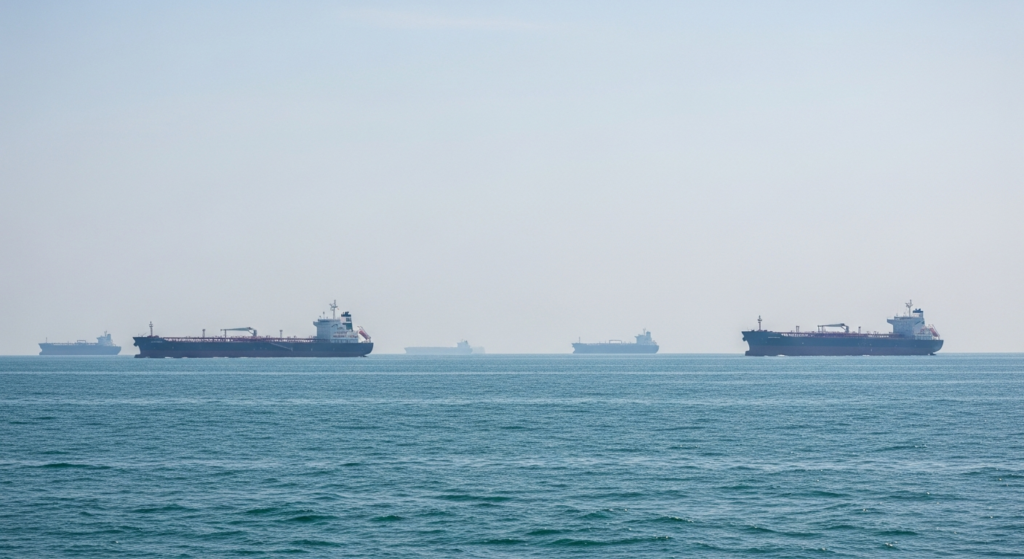
Renewed hostilities between the United States and Iran around Iranian ports and the Strait of Hormuz have intensified global concerns over shipping security and energy markets, driving crude oil prices to a one-month high. The escalation, confirmed during the July 15 cycle, marks a significant development in U.S.-Iran relations, prompting a re-evaluation of risks for international trade routes.
The U.S. has reimposed a blockade on Iranian ports, a measure linked to earlier attacks in the Strait of Hormuz. This action follows a period of heightened tensions and represents a resumption of more assertive U.S. national security postures in the region. The focus of these renewed hostilities remains the critical waterway that connects the Persian Gulf to the open ocean.
The Strait of Hormuz is one of the world’s most vital maritime chokepoints, through which a substantial portion of the world’s seaborne crude oil passes daily. Disruptions or perceived threats to shipping in this narrow passage can have immediate and far-reaching consequences for global energy supplies and prices. The current escalation has underscored the fragility of these supply lines and the potential for geopolitical events to impact economies worldwide.
Energy market reports directly tied the recent escalation to an immediate surge in oil prices. Crude oil futures reached their highest point in a month, reflecting renewed anxieties about the stability of supply from the Middle East. Analysts are closely monitoring the situation, as sustained tensions could lead to prolonged price volatility and increased costs for consumers and industries reliant on petroleum products. The implications extend beyond direct oil shipments, affecting the cost of fuel for all forms of transportation, from commercial shipping to ground logistics.
Beyond energy, the broader international shipping context is also under scrutiny. Increased security risks in a major shipping lane like the Strait of Hormuz can lead to higher insurance premiums for vessels, rerouting of cargo, and potential delays. These factors collectively contribute to increased operational costs for shipping companies, which are often passed down through the supply chain to consumers. The global nature of modern commerce means that disruptions in one critical region can create ripple effects across distant markets and port operations.
As a major port city on the East Coast, Charleston is inherently linked to the global shipping network and the fluctuations of international energy markets. While the Strait of Hormuz is geographically distant, the economic consequences of instability in such a critical waterway can manifest locally through various channels. The Port of Charleston, a key economic engine for the region, handles a diverse array of cargo, and its operations are sensitive to shifts in global trade dynamics and transportation costs.
Higher fuel costs for ships and trucks directly impact the logistics chain serving the Port of Charleston. Businesses like Volvo Cars USA’s Ridgeville plant and The Boeing Company (Boeing South Carolina) rely on efficient and cost-effective global supply chains for parts and finished products. Increased shipping expenses or delays stemming from broader global disruptions could affect their operational costs and timelines. Consumers in Charleston County and the wider Lowcountry region may experience the effects through higher prices for imported goods and increased costs for transportation, including gasoline. The ripple effect of elevated energy prices can touch nearly every sector of the local economy. Joint Base Charleston, a significant military installation and major employer, also operates within a national security framework that is directly influenced by international events such as U.S.-Iran hostilities.
Why it matters in Charleston
The renewed U.S.-Iran hostilities in the Strait of Hormuz, though geographically distant, carry tangible economic implications for Charleston. The Port of Charleston, a vital hub for international trade, could face increased operational costs due to higher global shipping insurance and fuel prices. This could, in turn, affect major local employers like Volvo Cars USA and The Boeing Company, which depend on stable and affordable supply chains for their manufacturing operations. Furthermore, the broader impact of rising energy costs on transportation and consumer goods will be felt by residents across Charleston County, underscoring the interconnectedness of global geopolitical events with daily life in the Lowcountry.
Section: More Charleston SC politics news
Filed under: Charleston SC Politics News