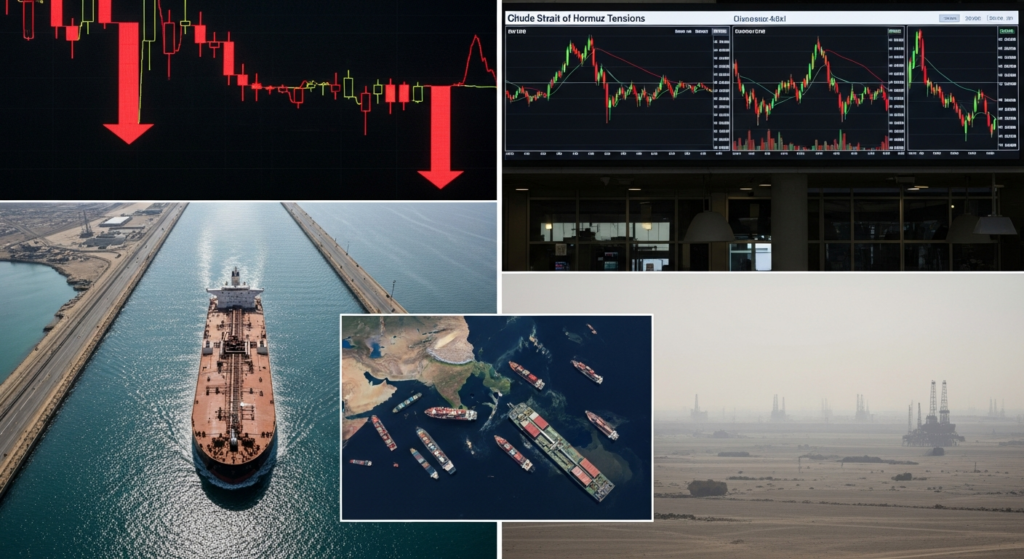
Renewed tensions surrounding the Strait of Hormuz are sending ripples through global oil and stock markets, prompting investors to reassess shipping and conflict risks. The critical chokepoint, through which a significant portion of the world’s oil supply passes, has once again become a focal point for geopolitical concern, leading to immediate reactions in crude prices and equity valuations. These global shifts are poised to exert pressure on various sectors of the economy in Charleston, from the port to local businesses and household budgets.
The Strait of Hormuz, a narrow waterway connecting the Persian Gulf to the open ocean, is strategically vital for global energy markets. Any disruption or perceived threat to shipping in this area typically triggers an immediate spike in oil prices due to supply concerns. Recent reports indicate that these renewed tensions have led to a noticeable uptick in crude oil futures, reflecting fears of potential supply chain interruptions or increased costs associated with navigating the region. Simultaneously, stock markets have shown signs of apprehension, with equity indices reacting as investors weigh the broader economic implications of higher energy costs and geopolitical instability.
For Charleston, a city deeply integrated into global trade and logistics, the repercussions of such distant events can be tangible. The South Carolina Ports Authority, operating Charleston Harbor, is a critical gateway for international commerce. Increased fuel costs for cargo vessels, driven by rising crude prices, could translate into higher shipping rates. This, in turn, impacts the cost of imported goods for local retailers and manufacturers, as well as the competitiveness of exports from the region. Logistics companies operating in and around Charleston may face elevated operational expenses, potentially affecting their profitability and capacity to invest.
Major employers in the Charleston area, such as The Boeing Company (Boeing South Carolina) and Volvo Cars USA (Ridgeville plant), are particularly sensitive to global supply chain disruptions and energy costs. Manufacturing processes rely heavily on a stable and affordable supply of raw materials and energy. Higher oil prices can increase the cost of petroleum-derived components, plastics, and the energy required for factory operations. Furthermore, the transportation of parts and finished products across continents becomes more expensive, potentially squeezing profit margins and influencing investment decisions or hiring patterns within these significant local industries.
Beyond large corporations, small businesses across Charleston could also feel the pinch. Many local enterprises depend on the efficient and cost-effective movement of goods, whether it’s ingredients for restaurants, inventory for boutiques, or supplies for service providers. Elevated transportation costs can force these businesses to absorb higher expenses or pass them on to consumers, potentially impacting local pricing and consumer spending habits. The ripple effect extends to the broader service economy, which relies on a healthy flow of commerce and discretionary income.
Commuters and households in Charleston are likely to experience the most direct impact through rising gas prices at the pump. As global crude oil prices climb, the cost of gasoline typically follows suit, increasing the daily financial burden for residents traveling to work, school, or other activities. This reduction in disposable income can lead to a tightening of household budgets, potentially curbing spending on non-essential goods and services, which could further dampen local economic activity. The cumulative effect of higher energy costs can contribute to inflationary pressures, making everyday living more expensive for families throughout Charleston County.
Even institutions like Joint Base Charleston, a significant military installation and employer, are not entirely immune. While military budgets are complex, sustained increases in fuel costs for operations, training, and logistics can place strain on resources, potentially requiring adjustments in spending priorities. The broader economic climate influenced by these global tensions can also indirectly affect the local contractors and businesses that support the base’s operations.
The volatility stemming from the Strait of Hormuz underscores Charleston’s interconnectedness with global events. While the immediate impact is observed in financial markets, the downstream effects on shipping, manufacturing, local commerce, and household finances are a reminder of how geopolitical developments thousands of miles away can shape the economic landscape of the Lowcountry.
### Why it matters in Charleston
The renewed tensions in the Strait of Hormuz carry significant implications for Charleston’s economic stability and daily life. The South Carolina Ports Authority, a vital economic engine for the region, could face increased operational costs and potential disruptions to its global shipping routes, affecting the flow of goods and the thousands of jobs tied to port activities. For residents, the most immediate consequence will likely be felt at the gas pump, as rising crude prices translate directly into higher fuel costs for commuters across Charleston County. Major employers like The Boeing Company and Volvo Cars USA, deeply embedded in global supply chains, may experience increased manufacturing and transportation expenses, which could influence their local investment and employment strategies. These global developments serve as a stark reminder of how international geopolitical shifts can directly influence local economic conditions and household budgets in Charleston.