CHARLESTON COUNTY — Charleston County is inviting residents, developers and design professionals to weigh in on the first overhaul of its stormwater design manual since 2017, with online public comment open through Sept. 21 on a draft that would sharply expand wetland protection buffers and require new projects to be built for more intense storms.
The stormwater manual sets the rules that engineers and site designers follow on new construction and redevelopment in unincorporated Charleston County. County officials have said the proposed rewrite is aimed at reducing flooding, improving downstream water quality and protecting wetlands, and would require projects to be engineered for higher-intensity rainfall events than the current standards assume.
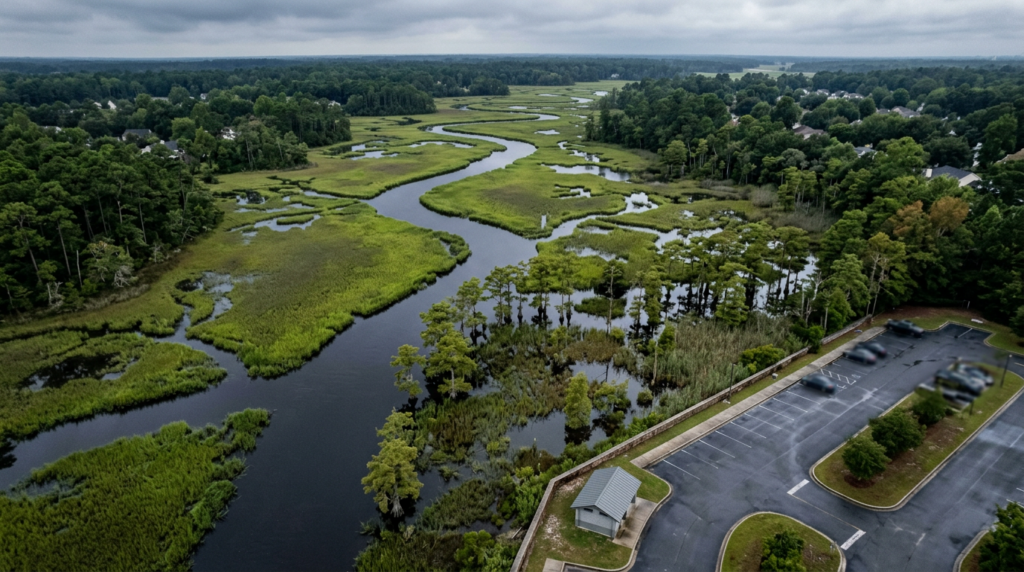
One of the biggest proposed changes involves buffers around wetlands. The draft would raise the required wetland protection buffer from 10 feet to 35 feet, giving those areas more room to filter pollutants before stormwater runs off into creeks, marsh and tidal systems. The additional buffer width is intended to hold back sediment and nutrients that would otherwise reach public waterways during heavy rain.
Other sections of the draft touch on water quantity, water quality, long-term stormwater infrastructure and resilience, and reflect an attempt to keep county standards intact after a shift in federal regulation. The proposed local rules follow the 2023 U.S. Supreme Court decision known as the Sackett ruling, which narrowed the wetlands and waterways subject to federal Clean Water Act protection and effectively pushed more decisions down to state and local governments. Coastal environmental advocates have argued that firmer local buffers can help fill the regulatory gap and give designers clearer expectations at the permitting stage.
The county has posted both a summary of the proposed changes and the full draft manual through its online public-input portal, along with a survey form for written comments. Feedback can also be sent to the county’s stormwater office through its published contact channels. Officials have said comments received by the Sept. 21 deadline will be reviewed before the design manual is finalized and taken to the county for adoption.
Named participants on the record include John Primm, a stormwater project manager with Charleston County Public Works, and Torrey Sanders of the Coastal Conservation League, both of whom have spoken publicly about the changes and the trade-off between clearer design expectations and stronger environmental safeguards.