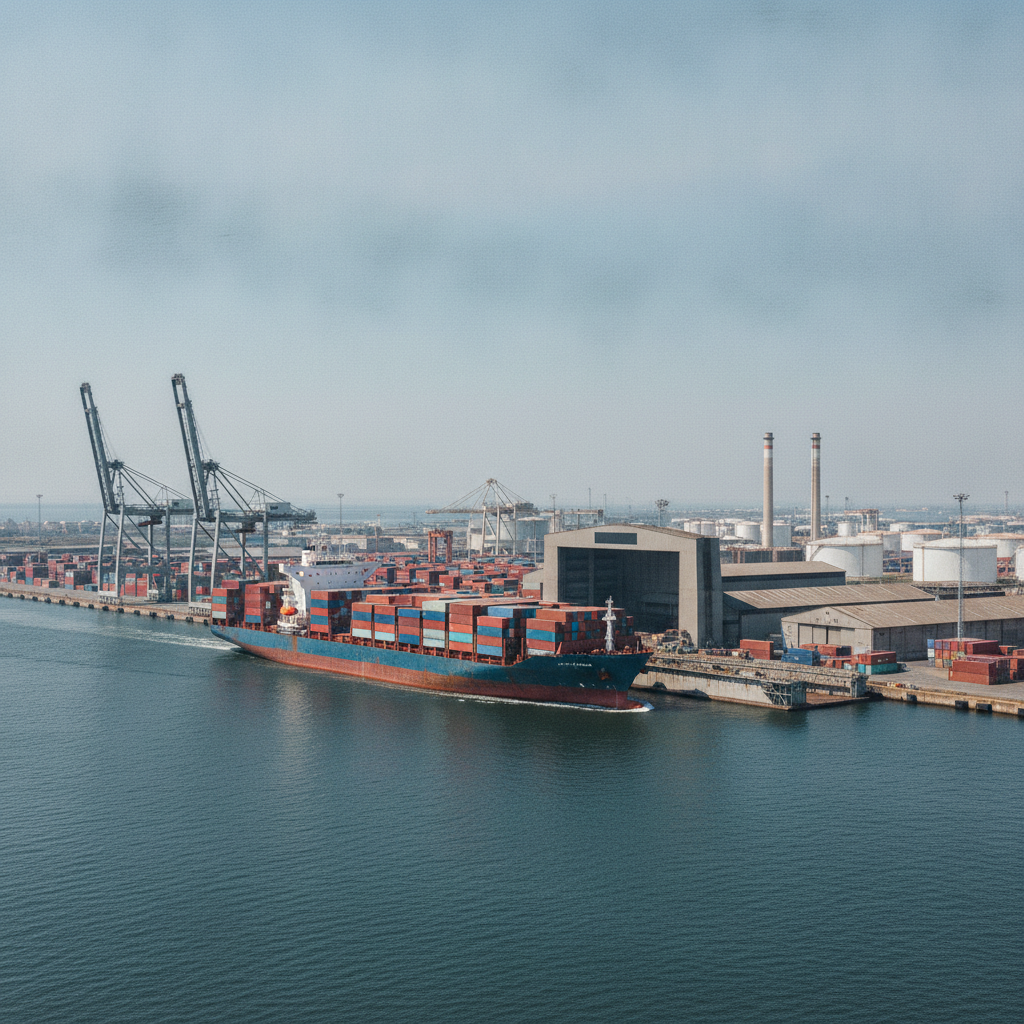
South Carolina Ports and the U.S. Army Corps of Engineers have initiated a feasibility study to explore additional channel depth for the North Charleston Terminal. This agreement, signed on Monday, August 31, 2026, marks the initial step in potentially deepening the stretch of the Cooper River that serves the terminal.
Currently, the channel leading to the North Charleston Terminal is maintained at 48 feet. Charleston Harbor was successfully deepened to 52 feet in 2022, a project that included the shipping channels for SC Ports’ Wando Welch and Hugh K. Leatherman terminals. This earlier deepening allowed larger vessels to access those terminals regardless of tidal conditions and supported two-way vessel traffic.
Extending the 52-foot depth to the North Charleston Terminal would enable all SC Ports container terminals to accommodate the largest vessels, independent of tidal conditions. The U.S. Army Corps of Engineers, Charleston District, will conduct comprehensive engineering, environmental, and economic analyses for this proposed Upper Harbor deepening.
Congress authorized this study through the Water Resources Development Act of 2024, with federal funding subsequently included in fiscal year 2026 appropriations. Micah Mallace, President and CEO of SC Ports, stated that deepening this final stretch would enhance the port’s competitiveness and align with long-term plans to modernize and improve the North Charleston Terminal. Mallace also noted that deeper access would improve logistics for customers and support future cargo growth.
SC Ports Board Chairman Bill Stern highlighted the collaborative efforts of SC Ports, the U.S. Army Corps of Engineers, the SC Legislature, and the Congressional delegation over more than a decade to successfully deepen Charleston Harbor, providing South Carolina with a lasting competitive advantage. Lt. Col. Todd Mainwaring, commander of the U.S. Army Corps of Engineers’ Charleston District, affirmed the agency’s commitment to working with SC Ports and other stakeholders to evaluate navigation improvement options. The feasibility study will assess the technical, environmental, and economic viability of further deepening before the project can advance to subsequent development stages.
Section: More Charleston SC business news