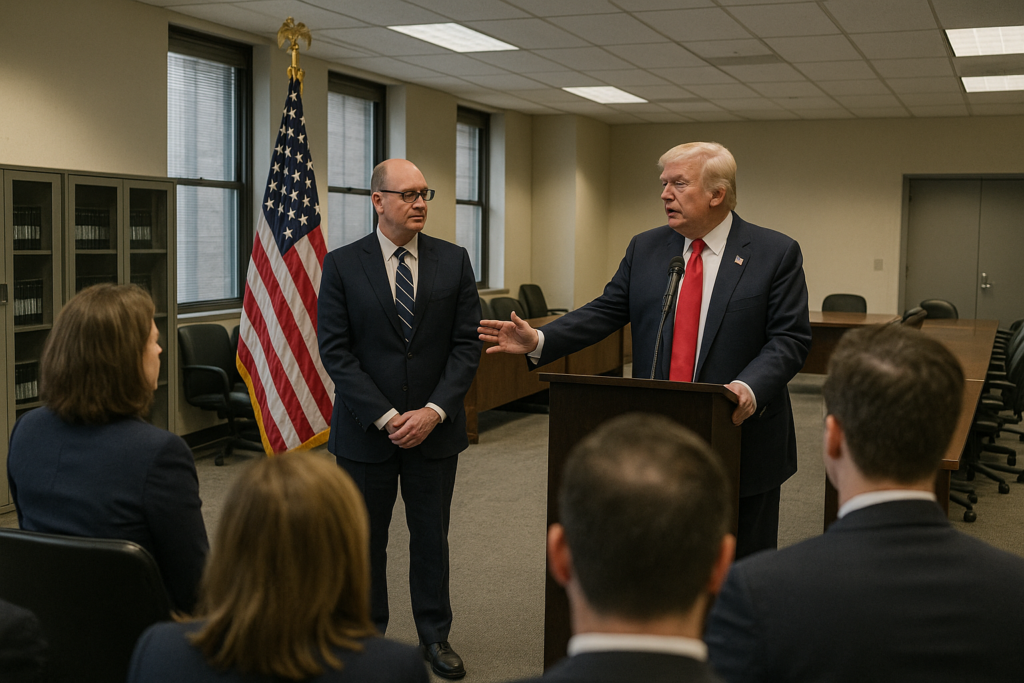
President Trump has announced his intention to nominate James M. McDonald to lead the U.S. Attorney’s Office for the Southern District of New York (SDNY). This position is among the most prestigious federal prosecutor roles in the country, handling high-profile cases that often draw national attention.
McDonald’s nomination comes as the Justice Department undergoes significant changes, particularly in key positions that influence federal law enforcement priorities. He is set to replace Jay Clayton, who has been nominated for a different role within the administration. The SDNY is known for its rigorous prosecution of financial crimes, public corruption, and organized crime, making this appointment a critical one for the administration.
The announcement has generated considerable interest, particularly given the SDNY’s history of tackling complex and politically sensitive cases. McDonald’s background and experience will likely be scrutinized as he prepares for Senate confirmation hearings. His nomination signals the administration’s commitment to maintaining a strong federal presence in New York, a state that is often at the center of major legal battles.
While McDonald’s specific plans for the office remain unclear, the SDNY’s role in federal prosecutions is vital, especially in a city like New York, which is a hub for finance and commerce. The implications of this nomination extend beyond the immediate legal community, as the SDNY’s decisions can have far-reaching effects on national policy and public trust in the justice system.
As the nomination process unfolds, attention will also focus on how McDonald plans to navigate the challenges facing the office, including ongoing investigations and the political climate surrounding federal law enforcement. The outcome of his confirmation could impact various stakeholders, including businesses and residents who are closely watching developments in federal prosecution policies.
In Charleston, the implications of federal law enforcement decisions resonate with local entities, particularly those involved in business and regulatory compliance. The Medical University of South Carolina (MUSC), for instance, operates within a framework that is influenced by federal regulations and oversight, making the leadership of the SDNY particularly relevant to its operations and interactions with federal authorities.