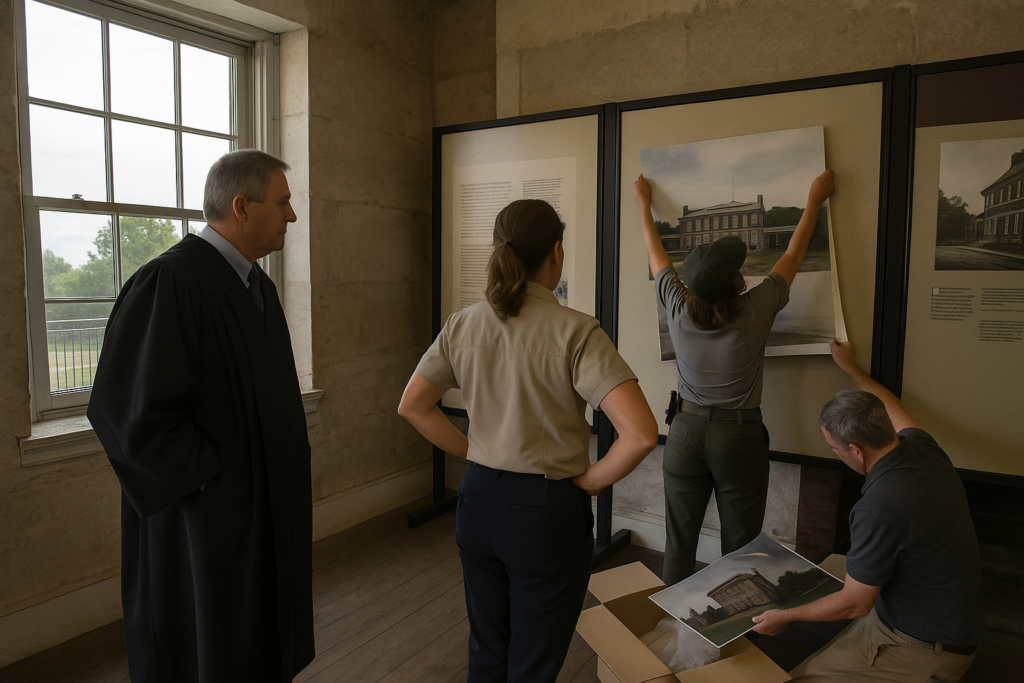
A federal judge has ordered the restoration of exhibits and signs that were changed at national museums, parks, and landmarks due to an executive order aimed at revising content at public history sites. This ruling comes as part of a broader effort to ensure that public history accurately reflects diverse narratives and perspectives.
The judge’s decision requires the federal government to revert the modifications made to these exhibits, which critics argue have sanitized or altered historical facts. The ruling emphasizes the importance of preserving the integrity of public history, ensuring that visitors receive a comprehensive understanding of the past.
As part of the ruling, the government is mandated to provide weekly status reports detailing the progress of the restoration efforts. This oversight aims to maintain transparency and accountability in the restoration process, addressing concerns from historians and the public regarding the accuracy of historical representation.
The implications of this ruling extend to various federally managed sites, including those in Charleston, where local parks and landmarks may be affected. While the specifics of which Charleston sites will be impacted remain unclear, the ruling highlights the ongoing national conversation about how history is presented in public spaces.
Charleston is home to several significant historical sites, including parks such as Marion Square and Waterfront Park, which serve as venues for public engagement and education. The city’s rich history, intertwined with themes of resilience and complexity, underscores the necessity for accurate historical representation in public exhibits.
The National Park Service, which oversees many of these sites, will play a crucial role in implementing the judge’s order. The agency is tasked with ensuring that the historical narratives presented in Charleston and beyond are reflective of the diverse experiences that shape American history. This ruling may lead to a reevaluation of the exhibits and narratives presented at local landmarks, potentially enriching the educational experiences for visitors and residents alike.
In light of this ruling, local historians and educators are likely to engage in discussions about the significance of historical accuracy in public spaces. The restoration process may also provide an opportunity for community involvement, allowing residents to contribute to the dialogue surrounding their shared history.
As the federal government begins to implement the judge’s order, the eyes of Charleston and the nation will be on how these changes unfold. The restoration of these exhibits not only impacts the historical narrative presented but also reflects the community’s commitment to honoring its past with integrity and authenticity.