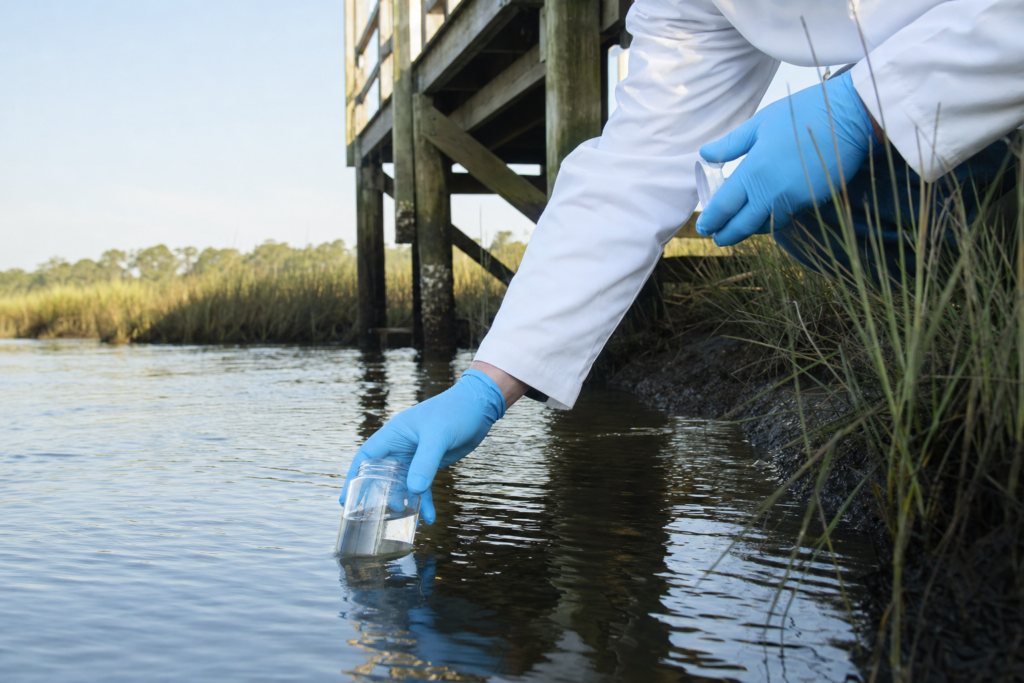
Charleston Waterkeeper is continuing weekly bacteria testing of local creeks and rivers through its Swim Alert program, a decade-old partnership with the College of Charleston that samples 20 popular sites across the Lowcountry every Wednesday from May through October. Samples are analyzed at the college’s downtown laboratories, and results are posted publicly the following day for residents deciding whether to swim, paddle or fish.
The program’s core indicator is Enterococcus, a bacterium routinely used by regulators as a proxy for fecal contamination. Its presence in surface water suggests that other harmful pathogens may also be present, and elevated levels typically follow heavy rain that flushes runoff from streets, marshes and undersized stormwater infrastructure into coastal waterways.
Swim Alert readings have trended lower this year than in previous seasons, an improvement the program has tied to ongoing drought conditions across the region and reduced rainfall totals compared with the wettest recent summers. The 20-site rotation includes heavily used waterways such as Shem Creek and James Island Creek that see regular kayak, paddleboard and shellfish activity.
College of Charleston students volunteer with the program each week and receive hands-on laboratory training in standard water-quality methods, an educational component that has helped sustain the partnership over more than a decade. The volunteer bench for the 2027 sampling season is already being built out, and Swim Alert will again run weekly from May through October.
Testing for the current season is expected to wrap up in October, when water temperatures drop and recreational use falls off. Residents can find the most recent site-by-site readings on the Charleston Waterkeeper program page; residents are encouraged to check results the day after sampling, since bacterial counts can shift quickly with rainfall and tide.