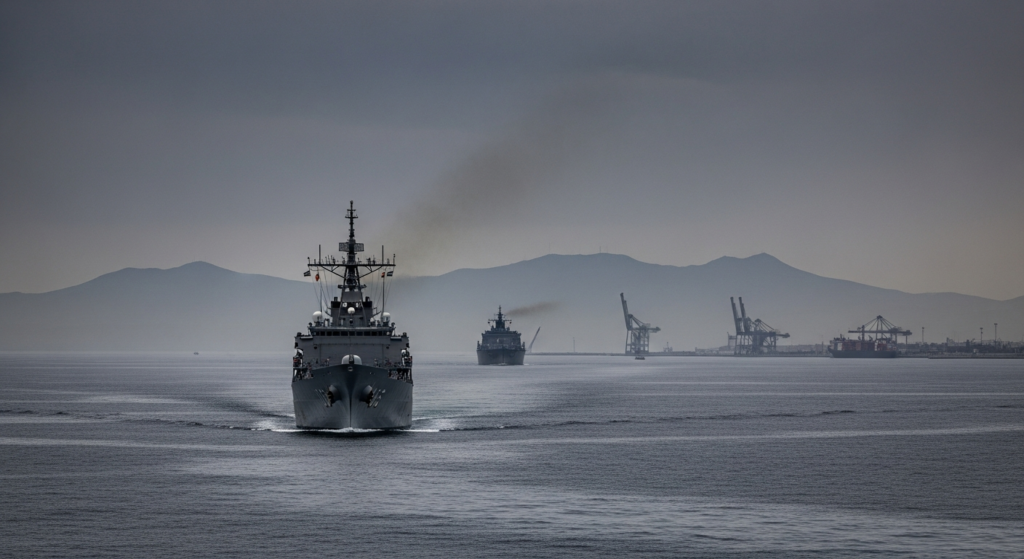
United States military actions in Iran, following reported attacks on commercial vessels near the critical Strait of Hormuz, have introduced new complexities into global shipping and energy markets. These developments, coupled with the imposition of new oil-related sanctions, are contributing to an environment of heightened risk for maritime trade worldwide.
International reporting indicates that the U.S. strikes were a response to recent incidents targeting ships in a waterway vital for global oil transit. The Strait of Hormuz, a narrow choke point between the Persian Gulf and the Gulf of Oman, is one of the world’s most strategically important maritime passages, through which a significant portion of the world’s seaborne oil passes daily. Disruptions or increased tensions in this region can have far-reaching economic consequences, influencing everything from crude oil prices to the cost of consumer goods dependent on global supply chains.
The new sanctions targeting Iran’s oil sector are designed to further restrict the country’s ability to export crude, a move that could tighten global oil supplies and potentially lead to upward pressure on fuel prices. For a city like Charleston, with its deep-water port and reliance on international trade, such geopolitical shifts are closely watched. While no immediate, verified local impacts on fuel prices or port operations in Charleston have been reported, the broader trends of increased shipping risk and fluctuating energy costs can indirectly affect the local economy over time.
The Port of Charleston, a major economic engine for the region, handles a diverse array of cargo, connecting South Carolina businesses to markets across the globe. Any sustained increase in shipping insurance premiums or rerouting of vessels due to perceived risks in international waters could eventually translate into higher operational costs for importers and exporters utilizing the port. Furthermore, the presence of Joint Base Charleston, a significant military installation, means that global geopolitical events resonate directly with a substantial portion of the local population, including military families and personnel who monitor international stability.
The confluence of military action, shipping vulnerabilities, and economic sanctions underscores the interconnectedness of global affairs and local economies. As the situation near the Strait of Hormuz continues to evolve, businesses and residents in Charleston remain attentive to how these international developments might influence the flow of goods and the cost of living in the Lowcountry.
### Why it matters in Charleston
Events unfolding thousands of miles away near the Strait of Hormuz carry tangible, if often indirect, implications for Charleston. As a major port city, Charleston’s economy is deeply intertwined with global shipping and trade. Disruptions in key international waterways, or shifts in global energy policy like new oil sanctions, can influence everything from the cost of goods arriving at the Port of Charleston to the price of gasoline at local pumps. Moreover, Joint Base Charleston serves as a critical hub for national defense, meaning that international security developments are not abstract but directly affect the lives and readiness of military personnel and their families who call Charleston home. The city’s strategic position as a logistical gateway and a military center makes it particularly sensitive to the ripple effects of such geopolitical tensions.