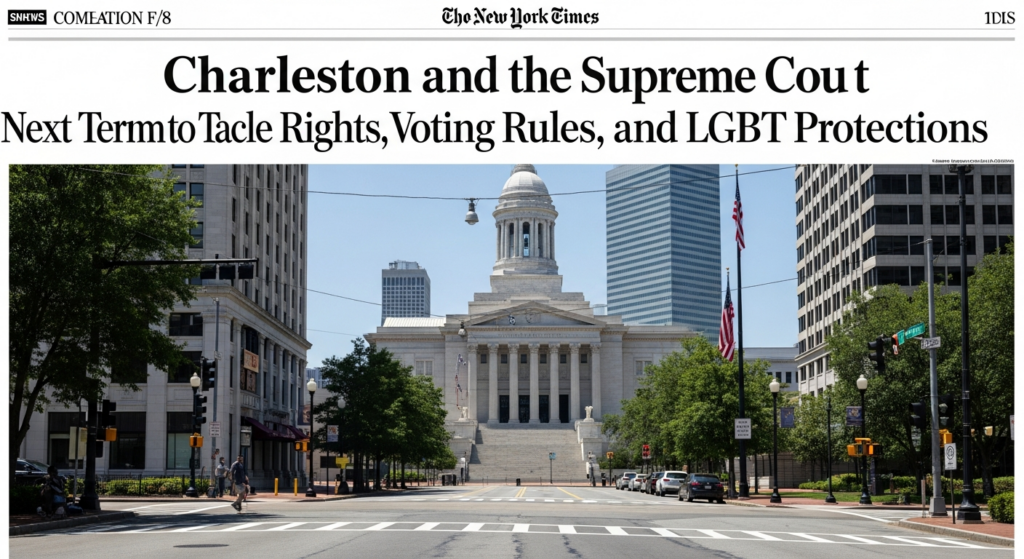
The Supreme Court is preparing for a new term that will bring several high-stakes legal battles to the forefront, addressing issues ranging from the scope of gun control to the intricacies of voter registration and the intersection of religious freedom with LGBT rights. These cases, while originating at the federal level, carry profound implications for states and localities, including Charleston, as they shape the legal landscape for years to come.
Among the most closely watched disputes are those concerning assault-style rifle restrictions. These cases will require the Court to revisit the Second Amendment, potentially clarifying the extent to which states and municipalities can regulate certain types of firearms. The legal arguments often center on the balance between individual gun ownership rights and public safety concerns, a debate that has intensified nationwide. Decisions from the Court in this area could either affirm existing state and local regulations or significantly curtail them, prompting legislative adjustments across the country, including in South Carolina.
Another critical area on the docket involves voter-registration rules. Challenges to state-level procedures for registering citizens to vote could redefine access to the ballot box. These cases often delve into questions of federal election law, state sovereignty, and the constitutional right to vote. The Court’s rulings could impact how elections are administered, potentially affecting voter turnout and the integrity of electoral processes in Charleston County and beyond. The specifics of how individuals register, maintain their registration, and cast their ballots could all be subject to reinterpretation based on the Court’s upcoming decisions.
The Court will also confront complex questions surrounding LGBT-related religious-rights. These cases typically involve conflicts between First Amendment claims of religious freedom and anti-discrimination protections for LGBT individuals. The Court has previously grappled with these tensions, and the upcoming term is expected to further refine the legal boundaries of these rights. Outcomes in these cases could influence employment practices, public accommodations, and other aspects of daily life, affecting individuals and institutions throughout Charleston.
Finally, the Court is set to review cases concerning immigration detention procedures. These disputes often involve questions of due process, the authority of federal agencies, and the rights of individuals held in immigration custody. While often seen as a federal issue, the Court’s interpretations of immigration law and procedure can have ripple effects, influencing policies and practices that resonate across communities.
The Supreme Court’s role as the final arbiter of constitutional law means its decisions have a broad reach, shaping the legal framework for federal, state, and local governments. As these cases unfold, they will undoubtedly spark national conversations and legal analyses, with their eventual outcomes setting precedents that will guide policy and legal interpretation for decades.
### Why it matters in Charleston
The upcoming Supreme Court term holds particular significance for Charleston, as the decisions rendered will directly influence various aspects of local governance and community life. Rulings on gun policy, for instance, could impact public safety initiatives and law enforcement practices within Charleston County, potentially altering the legal tools available to address gun violence. Similarly, changes to voter-registration rules could directly affect the administration of elections by the Charleston County Government, influencing how residents participate in local, state, and federal elections. Furthermore, decisions on LGBT rights and religious freedom could shape policies at major local employers like the Medical University of South Carolina (MUSC) and the College of Charleston, impacting workplace environments and community inclusivity. These national legal developments will require close attention from local leaders and residents alike, as their effects will be felt across the Lowcountry.