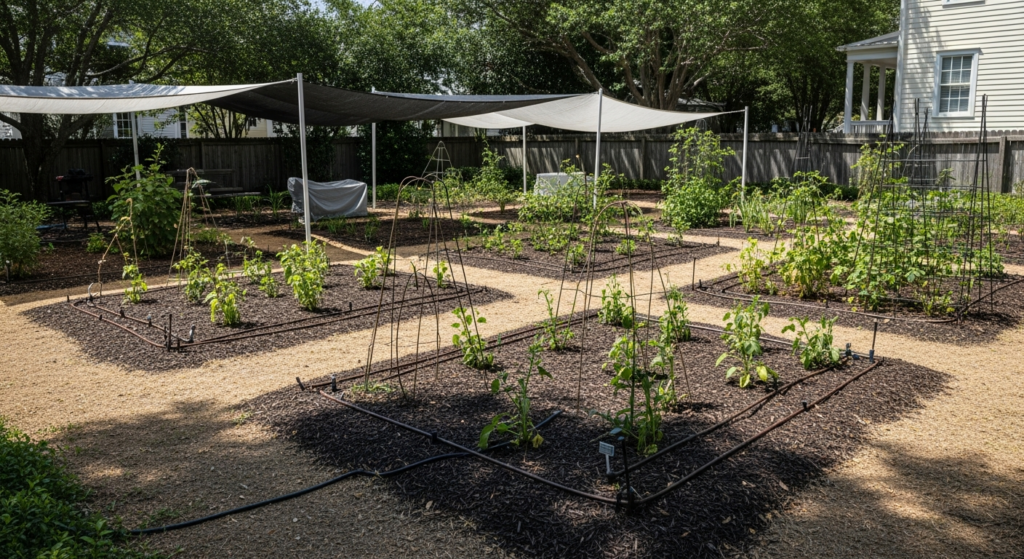
Charleston residents are increasingly seeking guidance on protecting their home gardens as summer temperatures continue to challenge plant health. Current demand for heat-wave gardening advice highlights a proactive approach among local enthusiasts to mitigate the effects of intense sun and high humidity on their landscapes.
Gardening sources and horticulturalists underscore several key strategies for maintaining plant vitality during prolonged periods of heat. Foremost among these is the practice of deep watering, which encourages roots to grow deeper into the soil, making them more resilient to surface drying. Shallow, frequent watering can lead to superficial root systems that are highly susceptible to heat stress. Experts recommend watering early in the morning or late in the evening to minimize evaporation and allow water to penetrate effectively before the day’s heat sets in. Watering during the hottest parts of the day can be inefficient and, in some cases, harmful to foliage.
Strategic shading also plays a crucial role in protecting vulnerable plants. Temporary shade structures, such as shade cloths or even strategically placed umbrellas, can shield delicate plants, new plantings, and heat-sensitive varieties from the most intense midday sun. This is particularly important for plants that are not native to full-sun environments or those showing signs of wilting despite adequate watering. Positioning taller, more heat-tolerant plants to cast natural shade on smaller, more sensitive ones can also be an effective, natural solution in a well-planned garden.
Mulching is another essential technique for conserving soil moisture and regulating soil temperature. A layer of organic mulch, such as pine straw, wood chips, or compost, around the base of plants helps to reduce water evaporation from the soil surface, suppress weed growth that competes for water, and keep the soil cooler. This protective layer acts as an insulator, buffering the soil from extreme temperature fluctuations and providing a more stable environment for root systems. In Charleston’s humid climate, mulch also contributes to soil health as it breaks down over time.
Prioritizing stressed plants is critical when resources are limited. Gardeners are advised to focus their efforts on newly planted specimens, which have not yet established robust root systems, and any plants that are visibly struggling with the heat. Signs of stress can include persistent wilting, yellowing leaves, or stunted growth. Providing extra attention, such as supplemental watering or temporary shade, to these plants can significantly improve their chances of survival and recovery. Established, heat-tolerant plants generally require less intervention but still benefit from consistent care.
These practices are particularly relevant in Charleston, where the summer season brings consistent high temperatures and humidity. Adapting gardening routines to these conditions ensures that local landscapes remain vibrant and healthy, contributing to the city’s distinctive aesthetic while promoting sustainable gardening practices.
### Why it matters in Charleston
The effective management of gardens and green spaces during Charleston’s intense summer heat directly impacts the aesthetic and ecological health of the region. From the historic gardens of South of Broad to the community plots in Hampton Park Terrace, the vitality of local flora contributes significantly to the quality of life and the city’s appeal. The Charleston County Parks and Recreation Commission, which oversees numerous public green spaces like James Island County Park and Waterfront Park, employs similar strategies to maintain its extensive plantings. Successful gardening practices help preserve the character of residential neighborhoods and public areas, mitigating the stress on plants and ensuring that Charleston’s natural beauty continues to thrive despite challenging weather conditions.