
Charleston, January 24, 2026
The South Carolina Ports Authority and Norfolk Southern have reached a significant agreement to resolve a long-standing dispute over the Union Pier property in Charleston. This agreement allows for redevelopment plans that aim to revitalize the waterfront and contribute positively to the local economy, showcasing effective negotiation in overcoming challenges for successful urban development.
Charleston
Charleston Ports and Norfolk Southern Resolve Union Pier Land Dispute
A significant agreement has been reached between the South Carolina Ports Authority (SC Ports) and Norfolk Southern, bringing an end to a long-standing disagreement over the future of the pivotal Union Pier property in Charleston. This resolution clears a path for potential redevelopment, underscoring the spirit of pragmatic problem-solving that often drives economic progress in our Lowcountry community.
This settlement represents a crucial step forward for Charleston SC business and the broader Charleston County economy. The ability of major entities to navigate complex issues and reach mutually beneficial outcomes is a testament to an environment that, while sometimes challenging, fosters strategic negotiation and a focus on long-term growth. Such resolutions are often vital for unlocking private investment and ensuring that valuable urban assets can contribute optimally to community prosperity, rather than remaining mired in prolonged contention.
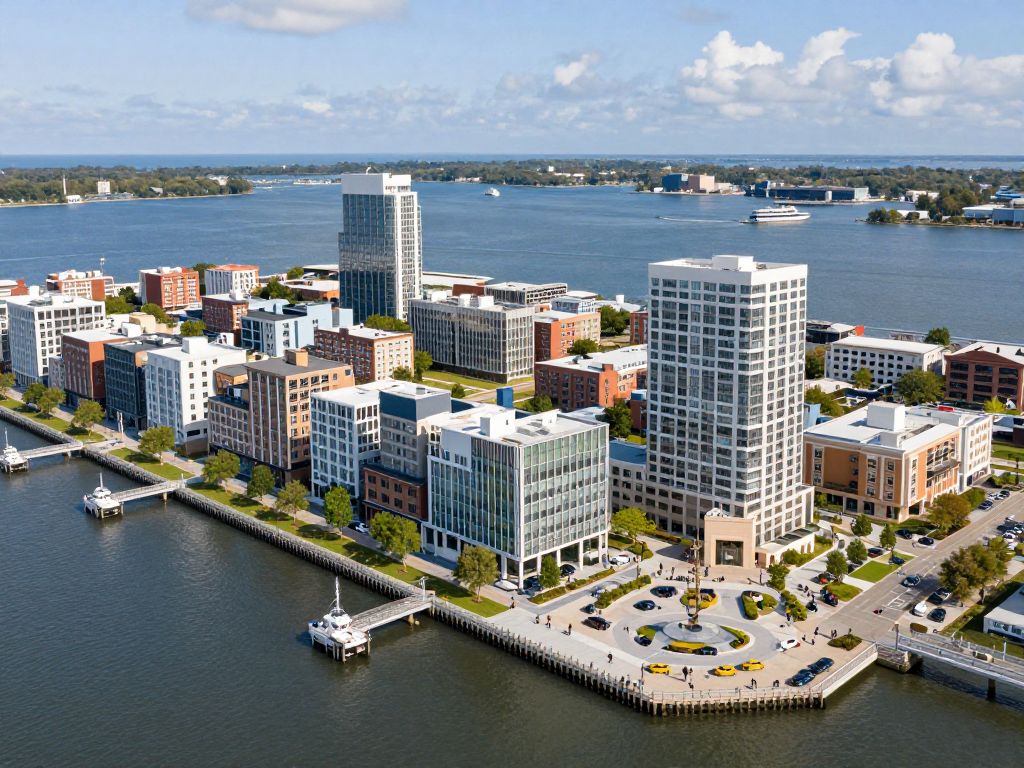
The Union Pier site, a prominent waterfront parcel, has long been a subject of interest due to its strategic location and potential for transformative development. The dispute centered on a historical deed restriction that sparked varied interpretations regarding the land’s permissible uses, ultimately highlighting the need for clarity to advance future projects and bolster Lowcountry economic growth.
The Genesis of the Union Pier Land Debate
The heart of the disagreement originated from a 1957 deed when Southern Railway, a predecessor to Norfolk Southern, conveyed land at Union Pier to the State of South Carolina. This deed included a specific stipulation that the property was to be utilized “for exclusively public purposes.” Decades later, as SC Ports sought to modernize and strategically manage its extensive property portfolio, this clause became a focal point. SC Ports had ambitious plans to redevelop a portion of Union Pier into a vibrant mixed-use area, envisioning a blend of housing, commercial shops, and public civic spaces along the waterfront.
Norfolk Southern’s Position and SC Ports’ Counter
Norfolk Southern maintained that the 1957 deed’s restriction remained valid and enforceable, asserting that the land’s use should strictly adhere to its “exclusively public purposes” mandate. To release this restriction and enable SC Ports’ proposed redevelopment, Norfolk Southern sought a payment of $36 million. Conversely, SC Ports argued that the original restriction was put in place for tax reasons at the time of the transfer and was no longer applicable or legally binding, particularly given their subsequent acquisition of the property through eminent domain. The Ports Authority had even sought a judicial ruling to invalidate Norfolk Southern’s claims, aiming to clear the path for the sale and development project.
A Path to Resolution: The Settlement Details
After a period of negotiation, the two entities successfully reached an agreement. The South Carolina Ports Authority finalized a settlement payment of $9.9 million for the development of Union Pier in fiscal year 2024. This agreement represents a crucial compromise, allowing SC Ports to move forward with its strategic plans for the Union Pier property, which is vital for the continued evolution of Charleston’s waterfront and the broader Charleston County economy.
Implications for Charleston’s Economic Landscape
This resolution is a positive development for Charleston small business and large-scale development alike. It demonstrates that even significant disagreements can be resolved through negotiation, leading to outcomes that can stimulate economic activity. The ability to unlock valuable waterfront property for diverse uses, beyond traditional port operations, can attract new businesses, create jobs, and enhance the urban fabric, contributing to overall Lowcountry economic growth. Such projects, driven by innovative private sector engagement and clear regulatory frameworks, are essential for a thriving local economy.
Union Pier’s Enduring Role and Future Potential
Beyond the recent dispute, Union Pier Terminal itself plays an important role in the port’s operations as a dedicated break-bulk and roll-on/roll-off (RO-RO) terminal. It features on-dock rail service, connected by both CSX and Norfolk Southern, along with 2,410 feet of container berth space and over 500,000 square feet of rail-served transit shed. The ability to redefine portions of such a historic and functional site for modern economic needs, while respecting its legacy, is a testament to strategic urban planning and the potential for South Carolina entrepreneurs to thrive in evolving environments.
Broader Impact of SC Ports and Norfolk Southern Collaboration
The South Carolina Ports Authority is a significant economic engine for the State-level, contributing a nearly $87 billion economic impact annually and supporting approximately 260,000 jobs statewide. The collaborative spirit between SC Ports and Norfolk Southern extends beyond Union Pier. Norfolk Southern is a key partner in various State-level infrastructure initiatives aimed at enhancing the efficiency of the region’s supply chain, including the Navy Base Intermodal Facility in North Charleston and the Inland Port Greer. These partnerships are essential for ensuring that goods move efficiently, supporting countless businesses and jobs across South Carolina.
Conclusion: Forward Momentum for Charleston
The settlement between SC Ports and Norfolk Southern over the Union Pier land marks a decisive moment for Charleston. It underscores the capacity of key economic drivers to overcome challenges through agreement, paving the way for future development that can significantly benefit the community. By resolving this intricate land dispute, Charleston positions itself for continued entrepreneurial innovation and economic expansion. We encourage all residents and local businesses to stay engaged in the ongoing discussions surrounding Charleston’s dynamic economic future and to support initiatives that foster sustainable growth and opportunity.
Frequently Asked Questions About the SC Ports and Norfolk Southern Settlement
Here are answers to common questions regarding the recent agreement concerning Union Pier land:
- What was the core of the dispute between SC Ports and Norfolk Southern regarding Union Pier?
- The conflict between SC Ports and Norfolk Southern revolved around the interpretation of a 1957 deed for Union Pier land. The deed specified the property was to be used ‘for exclusively public purposes.’
- What did SC Ports intend to do with the Union Pier land?
- SC Ports aimed to sell a portion of Union Pier for a mixed-use redevelopment, including housing, shops, and civic space along the waterfront.
- What was Norfolk Southern’s demand regarding the Union Pier restriction?
- Norfolk Southern asserted its rights under the 1957 deed, claiming the land must remain for public uses, and sought $36 million to release the restriction.
- What was SC Ports’ argument against Norfolk Southern’s claim?
- SC Ports contended the restriction was originally for tax purposes and was no longer legally binding, particularly after they acquired the land through eminent domain.
- What was the financial term of the settlement between SC Ports and Norfolk Southern?
- The South Carolina Ports Authority made a $9.9 million settlement payment for the development of Union Pier in fiscal year 2024.
- What is the economic impact of SC Ports on the state of South Carolina?
- SC Ports contributes significantly to the State-level economy, generating a nearly $87 billion economic impact annually and supporting 260,000 jobs statewide.
- How does Union Pier Terminal contribute to port operations?
- Union Pier Terminal is a dedicated break-bulk and roll-on/roll-off (RO-RO) terminal with on-dock rail service connected to both CSX and Norfolk Southern. It has 2,410 feet of container berth space and over 500,000 square feet of sprinkler-protected and rail-served transit shed.
Key Features of the SC Ports and Norfolk Southern Union Pier Settlement
| Feature | Description | Scope |
|---|---|---|
| Parties Involved | South Carolina Ports Authority (SC Ports) and Norfolk Southern | State-level |
| Subject of Dispute | Use of Union Pier land based on a 1957 deed restriction for “exclusively public purposes” | Charleston |
| SC Ports’ Proposed Use | Mixed-use redevelopment, including housing, shops, and civic space along the waterfront | Charleston |
| Norfolk Southern’s Initial Demand | $36 million to release the deed restriction | State-level |
| Settlement Amount | $9.9 million payment by SC Ports for Union Pier development | State-level |
| Timing of Payment | Fiscal Year 2024 | State-level |
| Union Pier Terminal Role | Dedicated break-bulk and roll-on/roll-off (RO-RO) terminal with on-dock rail service | Charleston |
| SC Ports’ Statewide Economic Impact | Nearly $87 billion annually, supporting 260,000 jobs | State-level |
Deeper Dive: News & Info About This Topic
HERE Resources
Unlocking Homeownership: Charleston’s Proactive Steps
College of Charleston Launches Major Hospitality School
College of Charleston Launches New Hospitality School
College of Charleston Launches New Hospitality School
Charleston and South Carolina Focus on Energy-Driven Growth
Charleston Leaders to Explore European Designs for Union Pier
Historic Bennett Rice Mill Restoration Completed in Charleston
Charleston Celebrates Restoration of Historic Bennett Rice Mill Facade
Donation of Carroll Building to College of Charleston
College of Charleston Receives Major Donation for Business School Expansion