

News Summary
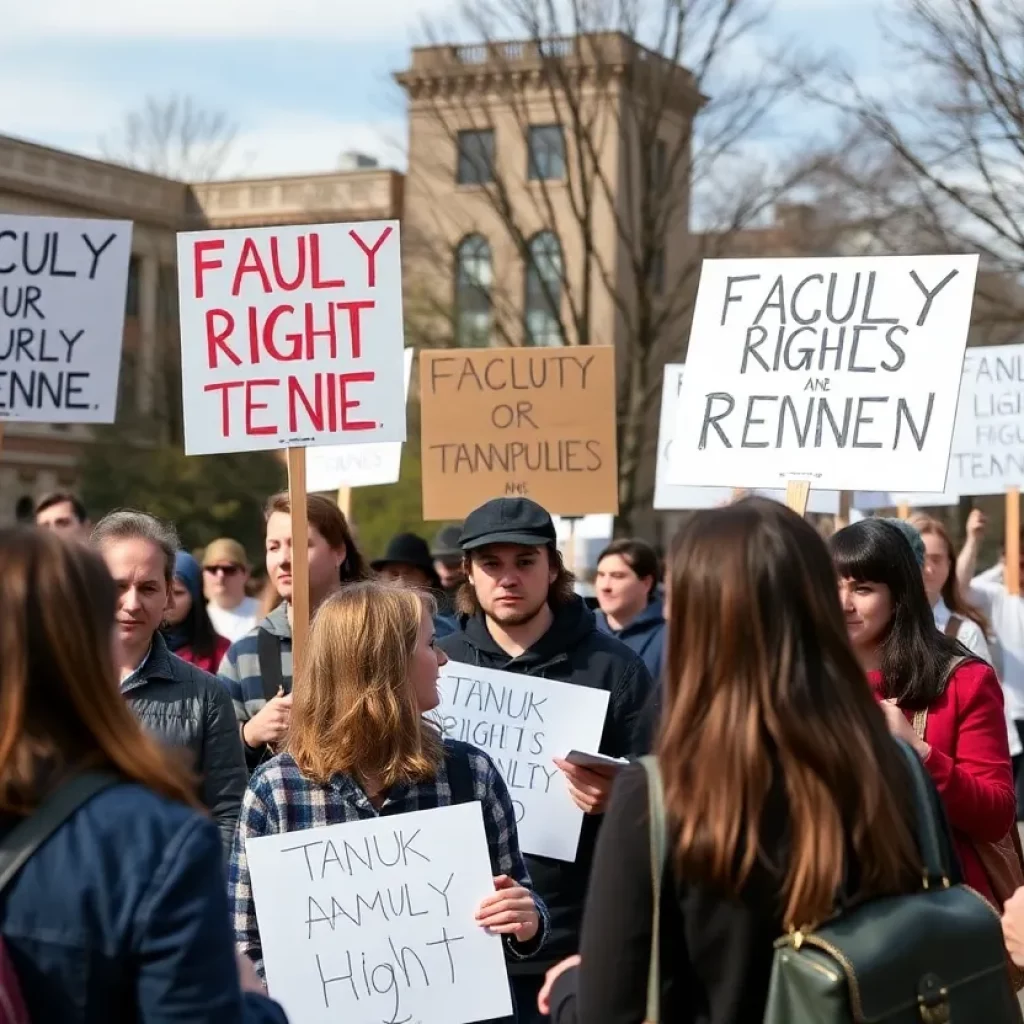
Emporia State University faces a lawsuit from 11 tenured professors challenging their terminations without due process, amidst proposed legislation seeking to alter tenure rights. This legal conflict raises critical questions about the future of tenure and academic freedom in Kansas and has garnered significant backlash from educational institutions statewide.
Legal Turmoil at Emporia State University: Lawsuit and Controversial Bill Shake Academic Foundations
Emporia State University (ESU) has found itself engulfed in legal drama as a group of 11 tenured professors has launched a lawsuit challenging their termination without adequate due process. The professors, who were laid off in 2022, allege that their dismissals were a violation of their rights under the 14th Amendment, an assertion that has garnered significant attention within the academic community.
At the heart of this unfolding saga is ESU’s general counsel, who has generated controversy not only by overseeing the layoffs but also by authoring House Bill 2348. This proposed legislation seeks to overhaul the concept of tenure in Kansas higher education, aiming to strip tenured faculty of the property rights traditionally associated with this status. If passed, the bill would empower universities and the Kansas Board of Regents to revoke any special tenure-related benefits, potentially impacting both current and future faculty.
Contentious Changes to Tenure:
The implications of House Bill 2348 are far-reaching. It seeks to redefine tenure in a manner that undermines its long-established principles by suggesting that it would no longer guarantee job security through protections against unfair dismissal. This philosophy marks a notable shift in a trend observed among Republican lawmakers in various states who are actively working to weaken tenure rights in public higher education.
Reaction from significant educational institutions in Kansas has been overwhelmingly negative. The state’s prominent research universities, alongside the Board of Regents, have voiced their strong opposition to Lovett’s bill, highlighting the potential dangers of diminishing protections for faculty members. This resistance stems from concerns that the legislation could have dire consequences for the academic workforce, thereby impacting the quality of education and research capabilities in Kansas.
A Response to Financial Pressures:
The foundations of the professors’ lawsuit lie in the rationale provided by ESU for the layoffs, which was purportedly based on financial duress. The American Association of University Professors has responded to these actions with censure, citing a troubling lack of due process in addressing the terminations. According to legal experts, a judge’s recent ruling in favor of the professors indicates that they possess property rights linked to their positions, complicating the university’s efforts to move forward with the layoffs unchallenged.
The ongoing legal battle raises pressing questions regarding the legitimacy of Lovett’s legislative proposal, which he presented as an individual endeavor. Critics argue that such actions by a university official compromise the integrity of the university system, especially since the bill could be seen as a direct response to the faculty’s lawsuit. Some observers have raised ethical concerns regarding potential violations of state policies when university officials undertake private legislative actions without informing their institutions.
A Divisive Discussion:
The discussions surrounding House Bill 2348 have sparked vigorous debate in legislative hearings, with staunch proponents of tenure emphasizing its indispensable role in safeguarding academic freedom. As the bill faces considerable backlash from faculty members and university administrators alike, the future of tenure at ESU and beyond hangs in the balance. Many argue that undermining these protections could deter top talent from coming to Kansas institutions, hindering the state’s educational reputation and economic potential.
Critics also emphasize that Lovett’s assertion—that academic freedom does not rely on tenure—presents a dangerous oversimplification. They maintain that tenure remains a critical mechanism for protecting faculty voices, particularly in contentious political times when academic discussions can quickly become polarized.
The Road Ahead:
The fate of both the lawsuit and the proposed legislative changes remains uncertain. Despite skepticism from Governor Laura Kelly about the bill’s chances of passing, the situation is evolving rapidly, signaling a potential turning point in Kansas higher education. The outcome of this legal dispute and the associated legislation could set a precedent for how tenure and faculty rights are treated in the future, affecting countless educators and institutions across the state.
Deeper Dive: News & Info About This Topic
HERE Resources
Additional Resources
- Kansas Reflector: A Kansas bill would end tenure for university professors as it currently exists
- Inside Higher Ed: Kansas bill threatens tenure
- The Chronicle of Higher Education: Kansas bill would alter tenure for professors
- The Washington Post: Kansas bill seeks to eliminate tenure protections for professors
- Kansas City Star: Kansas university faces backlash over tenure changes
- Wikipedia: Tenure
- Google Search: Kansas tenure law
- Google Scholar: Tenure in higher education
- Encyclopedia Britannica: Tenure
- Google News: Kansas tenure lawsuit

Author: STAFF HERE CHARLESTON
The CHARLESTON STAFF WRITER represents the experienced team at HEREcharleston.com, your go-to source for actionable local news and information in Charleston, Charleston County, and beyond. Specializing in "news you can use," we cover essential topics like product reviews for personal and business needs, local business directories, politics, real estate trends, neighborhood insights, and state news affecting the area—with deep expertise drawn from years of dedicated reporting and strong community input, including local press releases and business updates. We deliver top reporting on high-value events such as the Spoleto Festival USA, Charleston Wine + Food Festival, and the MOJA Festival. Our coverage extends to key organizations like the Charleston Metro Chamber of Commerce and the Charleston Museum, plus leading businesses in tourism and maritime industries that power the local economy such as South Carolina Ports Authority and the Charleston Visitor Center. As part of the broader HERE network, including HEREaiken.com, HEREbeaufort.com, HEREchapin.com, HEREcharleston.com, HEREclinton.com, HEREcolumbia.com, HEREgeorgetown.com, HEREgreenwood.com, HEREgreenville.com, HEREhiltonhead.com, HEREirmo.com, HEREmyrtlebeach.com, HEREnewberry.com, HERErockhill.com, HEREspartanburg.com, HEREaustin.com, HEREcollegestation.com, HEREdallas.com, HEREhouston.com, and HEREsanantonio.com, we provide comprehensive, credible insights into South Carolina's dynamic landscape.