
Charleston SC, January 26, 2026
Recent insights into the real estate market highlight increasing wealth gaps emerging in less expected regions, particularly in the South, including South Carolina. As the luxury housing segment diverges from traditional market patterns, investors and homeowners must adapt to these changes. This evolving landscape presents opportunities, especially in areas like Charleston, where significant market dynamics drive high-end demand, significantly different from typical home values.
Charleston, SC –
Real Estate’s Shifting Sands: Unpacking Wealth Gaps in Unexpected Places
The narrative of real estate wealth often conjures images of coastal metropolises or sprawling tech hubs. However, recent data reveals a compelling, and perhaps surprising, truth: the most significant disparities in real estate wealth are emerging in less expected regions. This shift underscores dynamic market forces, entrepreneurial spirit, and the varying impacts of investment and migration across the nation.
For South Carolina entrepreneurs and homeowners, understanding these evolving market patterns is crucial. While a robust economy often signifies widespread prosperity, these insights highlight the segmentation within local housing markets, where luxury tiers can operate distinctly from typical housing, creating pronounced gaps. It’s a testament to the diverse economic landscapes taking shape, driven by both private investment and the choices of individuals seeking new opportunities and lifestyles.
The Southern Shift: Where Wealth Gaps Are Widening
Contrary to common perception, many of the nation’s widest real estate wealth gaps are not concentrated in the traditional high-cost coastal cities of the Northeast or West Coast. Instead, a notable trend shows these disparities are increasingly prominent in the South. Florida, in particular, stands out, with five metropolitan areas ranking in the top 10 on a recent list of cities showcasing the widest luxury gaps in real estate.
This geographic realignment is a significant indicator of economic shifts, reflecting where capital and high-net-worth individuals are choosing to invest and reside. It highlights areas experiencing rapid growth and development, attracting both affluent buyers and new businesses, thereby shaping the local economic landscape in unique ways.
Charleston’s Position in the Evolving Landscape
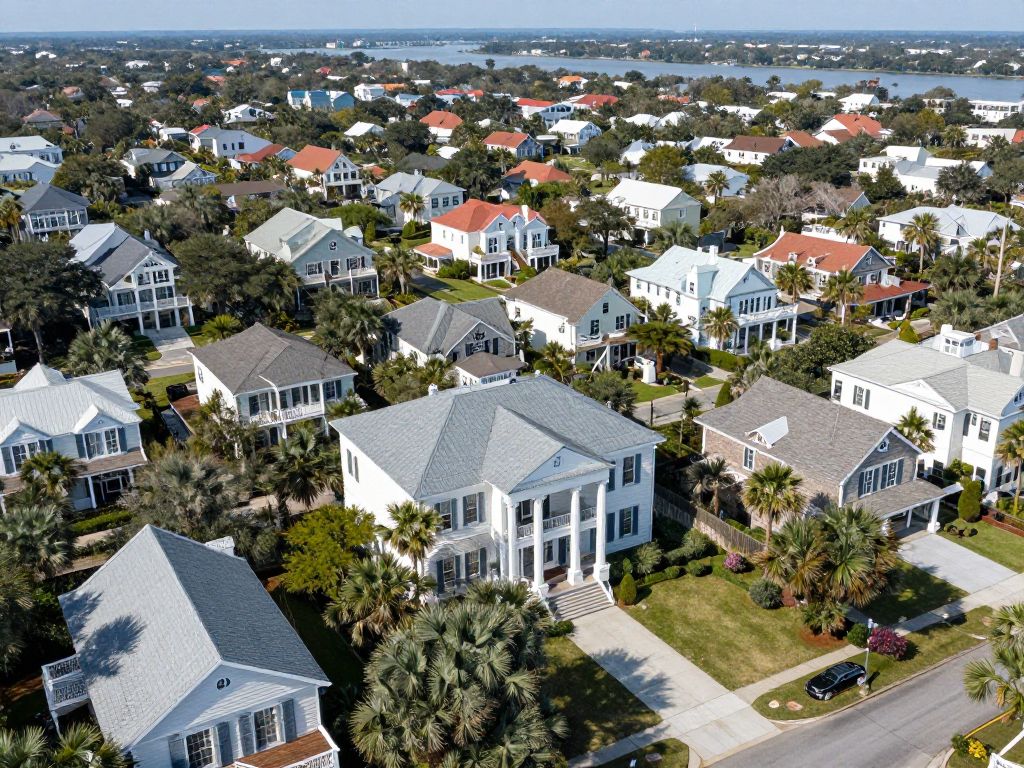
Our very own Charleston-North Charleston, S.C., metropolitan area finds itself among these regions with noticeable real estate wealth gaps. Data indicates that the entry point for the 10% most expensive listings in the Charleston-North Charleston metro starts at $1,959,417. This figure represents a multiple of 4.0 compared to the local median listing price and 4.9 times the national median listing price. This places the Lowcountry in a category of markets where the luxury segment operates with a distinct separation from the broader housing market, signaling a robust high-end demand that is largely independent of typical home values. This segmentation can be a positive sign of a thriving upscale market, attracting significant investment and contributing to certain sectors of the Charleston County economy.
Dissecting the Luxury-to-Median Divide
Nationwide, the entry point for luxury homes, defined as the 90th percentile of listing prices, was approximately $1.19 million in December. This amount was roughly three times the national median home listing price of $399,950. However, in cities with the widest gaps, the multiple between luxury and median prices is considerably higher. For instance, in Bridgeport-Stamford-Danbury, Connecticut, the multiple is 5.4, while in Naples-Marco Island, Florida, it’s 5.0. Miami-Fort Lauderdale-West Palm Beach, Florida, shows a multiple of 4.9. These figures underscore that in certain highly segmented markets, the luxury real estate sector can behave quite differently from the rest of the housing market.
According to Realtor.com senior economist Anthony Smith, significant gaps between luxury and typical home prices are not inherently a negative signal. Instead, they often indicate highly segmented markets where the luxury tier operates on its own trajectory. In such environments, even minor shifts in the high-end market can lead to noticeable changes in luxury pricing without necessarily impacting the median home price. This perspective suggests a resilience in the broader housing market, even as the ultra-luxury segment experiences rapid appreciation.
Drivers of Disparity: Migration and Investment
The observed widening of wealth gaps in real estate, particularly in the South, is significantly influenced by the migration of high-net-worth individuals. Florida, for example, has seen an influx of affluent residents, partially driven by favorable tax structures and lifestyle appeal compared to other high-cost metros. Miami has even surpassed the New York City metro area in the number of $1 million-plus listings. A substantial portion of demand in the Miami metro, 26.3%, originates from the New York metro, illustrating a direct link between these migration patterns and local market dynamics.
This trend speaks to the power of personal choice and entrepreneurial mobility. Individuals and businesses are increasingly seeking environments that offer not just favorable economic conditions, such as Florida’s lack of state income tax, but also a quality of life characterized by climate advantages and a growing presence of finance, private equity, and emerging tech firms. These factors collectively fuel private investment in real estate, particularly at the high end, contributing to the distinct market segmentation observed.
The Broader Wealth Landscape: Homeowners vs. Renters
Beyond the luxury-to-median home price gap, there’s a broader wealth divide at play between homeowners and renters Nationwide. Projections from the Federal Reserve Survey of Consumer Finance indicate that the median net worth of homeowners is expected to reach $430,000 in 2025, significantly higher than the projected $10,000 for renters. This stark contrast underscores the critical role home equity plays in wealth building, offering a financial safety net, opportunities for investment, and refinancing options.
In regions like Miami, homeowners have experienced substantial equity gains, nearly double the national figure. For a single-family home purchased in Q4 2009 and sold in Q4 2024 in Miami, home equity gains were $555,900, compared to the U.S. average of $306,600. Similarly, for Miami condos over the same period, gains were $342,600 versus the U.S. average of $252,000. These figures emphasize how strategic real estate investment can foster significant personal achievement and contribute to individual financial resilience.
Conclusion
The evolving landscape of real estate wealth gaps presents a nuanced picture of economic growth and market segmentation. While the concentration of luxury markets in the South and the distinct behavior of high-end properties might seem surprising, they reflect underlying forces of entrepreneurial innovation, private investment, and strategic migration. For the Charleston SC business community and residents, these trends highlight the importance of understanding local market dynamics and fostering policies that support balanced growth while celebrating the success of South Carolina entrepreneurs. By remaining engaged in Lowcountry economic growth and supporting Charleston small business initiatives, our community can navigate these shifts effectively, ensuring that prosperity is both robust and broadly accessible.
Frequently Asked Questions About Real Estate Wealth Gaps
Where are real estate’s biggest wealth gaps located?
Real estate’s biggest wealth gaps are increasingly concentrated in the South, with Florida having five metros ranked in the top 10 nationally.
Which city has the most $1 million-plus listings?
Miami specifically dethroned New York City as the metro with the most $1 million-plus listings in the country.
What is the national entry point for luxury homes?
Nationwide, the entry point of luxury, defined as the 90th percentile of listing prices, was approximately $1.19 million in December. This price was about three times the national median home listing price of $399,950.
Is Charleston-North Charleston, S.C., among cities with wide luxury gaps?
Yes, Charleston-North Charleston, S.C., is explicitly mentioned in the table of “Luxury Markets With the Widest Gaps Between Median and Luxury Prices.” The 10% most expensive listings in the Charleston-North Charleston metro start at $1,959,417. This represents a multiple of 4.0 to the local median listing price and 4.9 to the national median listing price.
Are wide real estate wealth gaps a warning sign?
According to Realtor.com senior economist Anthony Smith, “Big gaps between luxury and typical home prices aren’t automatically a warning sign.” They often point to markets that are highly segmented, where luxury behaves differently from the rest of the housing market.
What factors contribute to widening real estate wealth gaps?
Factors contributing to widening real estate wealth gaps include the migration of high-net-worth individuals, often seeking favorable tax structures and lifestyle advantages, and significant private investment in luxury properties.
What is the projected wealth gap between homeowners and renters Nationwide?
Based on the latest Federal Reserve Survey of Consumer Finance, the median net worth of homeowners is projected to reach $430,000 in 2025 versus $10,000 for renters Nationwide.
Key Features of Real Estate Wealth Gaps
| Feature | Description | Scope |
|---|---|---|
| Primary Location of Widest Gaps | Predominantly in the South, with Florida having five metros in the top 10. | Nationwide |
| Luxury Entry Point (90th Percentile) | $1.19 million in December. | Nationwide |
| Multiple of Luxury to National Median Home Price | Approx. 3.0 times the national median home listing price ($399,950). | Nationwide |
| Charleston-North Charleston Luxury Listing Start Price | $1,959,417 for the 10% most expensive listings. | Local |
| Charleston-North Charleston Multiple to Local Median Price | 4.0 times. | Local |
| Charleston-North Charleston Multiple to National Median Price | 4.9 times. | Local |
| Top City for $1M+ Listings | Miami (dethroned New York City). | Nationwide |
| Projected Homeowner Median Net Worth (2025) | $430,000. | Nationwide |
| Projected Renter Median Net Worth (2025) | $10,000. | Nationwide |
| Miami Single-Family Home Equity Gain (Q4 2009 – Q4 2024) | $555,900 (nearly double the U.S. average of $306,600). | State-level (Miami) |
| Miami Condo Equity Gain (Q4 2009 – Q4 2024) | $342,600 (compared to the U.S. average of $252,000). | State-level (Miami) |
| Migration Impact (New York to Miami Demand) | 26.3% of Miami metro demand originates from New York metro. | State-level (Miami) |
Deeper Dive: News & Info About This Topic
HERE Resources
United Community Expands Down Payment Assistance Program