
Sarasota Bay, Florida, July 23, 2025
News Summary
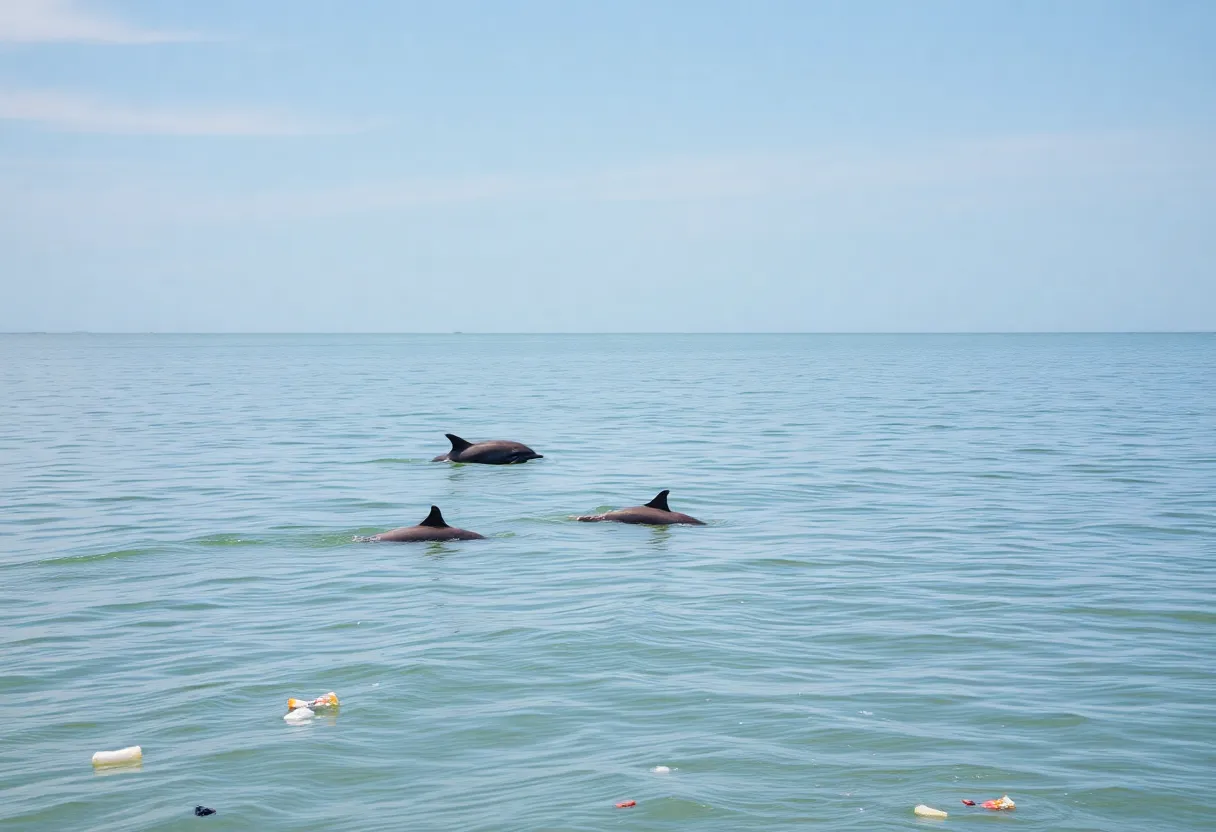
A recent study has found alarming levels of phthalates, chemicals from plastics, in bottlenose dolphins near Florida’s urban coastlines. Conducted by the College of Charleston and Brookfield Zoo, the research showed that 75% of dolphins in Sarasota Bay tested positive for phthalates, compared to 33% in less populated Barataria Bay. These findings highlight the potential health risks posed by plastic pollution not only to marine life but also to humans, reinforcing the need for better pollution management.
Charleston, South Carolina – A new study has unveiled concerning levels of phthalates, chemicals commonly linked to plastics, found in bottlenose dolphins residing near urban coastlines in Florida. The research published in *Frontiers in Marine Science* highlights stark differences in chemical exposure between dolphins in urban areas like Sarasota Bay and those in less populated regions such as Barataria Bay.
The study initiated by the College of Charleston and conducted in tandem with Brookfield Zoo Chicago’s Sarasota Dolphin Research Program revealed that 75% of dolphins in Sarasota Bay tested positive for detectable levels of phthalates—most notably higher than levels commonly found in humans. This alarming statistic indicates the growing impact of plastic pollution not just on dolphins, but potentially on broader marine ecosystems.
Phthalates are versatile chemicals integral to plastic manufacturing, utilized for their flexibility and durability. These substances are now found in over 95% of the human population, raising concerns about their potential health risks as they are recognized as endocrine disruptors. Such chemicals can adversely affect mammalian hormonal systems, leading to serious development and reproductive challenges. Prior studies have linked phthalate exposure to various human health issues, including heart problems and neurological disorders.
According to the data, 73% of Sarasota Bay dolphins had detectable levels of phthalates, compared to only 33% of Barataria Bay dolphins. Urine analysis indicated that both populations contained traces of mono-2-ethylhexyl phthalate (MEHP); however, monoethyl phthalate (MEP) was uniquely found in the Sarasota Bay sample group. MEHP is often associated with PVC products, while MEP is typically linked to personal care items, such as perfumes, suggesting a direct correlation with human activity.
This study represents a crucial step in understanding the environmental risks faced by urban dolphin populations, which may suffer greater exposure due to human influence around coastal areas. Researchers emphasized the necessity for further investigation into how environmental factors, including rainfall and storms, affect contaminant levels in dolphins. The research also considers the effects of storm events and algal blooms, which may worsen the exposure of dolphins to harmful chemicals in their habitats.
The historical context of dolphin populations in Sarasota spans over 55 years, providing invaluable data for evaluating the long-term impacts of environmental changes on phthalate exposure. This research will assist wildlife managers and conservationists in addressing the implications of plastic pollution on dolphin communities, highlighting the pressing need for better management of urban runoff and pollution control.
Experts caution that the observed phthalate exposure in dolphins could reflect greater ecological health issues within marine environments, potentially affecting other marine species and even posing risks to human health. The findings underline a significant relationship between urbanization, changing weather patterns, and escalating plastic pollution in marine ecosystems.
Ongoing studies will further explore how dolphins metabolize phthalates and the chemical pathways of exposure originating from their surroundings. As concerns about plastic pollution continue to rise globally, understanding its implications on marine life, including iconic species like the bottlenose dolphin, becomes increasingly vital for environmental stewardship.
FAQs
What are phthalates, and why are they concerning?
Phthalates are chemicals used to make plastics more flexible and durable. They are concerning because they are recognized as endocrine disruptors, which can negatively impact hormone systems in both animals and humans.
How does urbanization affect dolphin health?
Urbanization can lead to increased pollution and runoff entering the ocean, which results in higher exposure to harmful chemicals for dolphins and other marine life living near coastal areas.
What are some of the effects of phthalate exposure?
Phthalate exposure can lead to various health issues, including reproductive problems, developmental issues, heart problems, and neurological disorders in mammals, including humans.
Key Features of the Study
| Feature | Sarasota Bay Dolphins | Barataria Bay Dolphins |
|---|---|---|
| Percentage with Detectable Phthalates | 75% | 33% |
| Detected Phthalate Types | MEHP, MEP | MEHP |
| Source of MEP | Personal Care Products | No Presence |
| Human Urine Contamination | Higher than dolphins | N/A |
| Research Timeframe | 55 Years | N/A |
Deeper Dive: News & Info About This Topic
HERE Resources
Additional Resources
- Post & Courier: College of Charleston participates in chemical exposure study
- Wikipedia: Phthalates
- Oceanographic Magazine: Are Florida’s dolphins at risk from plastics in rain?
- Google Search: Dolphin health impacts of urbanization
- The Cool Down: Study reveals exposure of Florida dolphins to chemicals from plastics
- Encyclopedia Britannica: Dolphin
- National Geographic: Dolphins show traces of plastic chemicals, study finds
- Google Scholar: Dolphins phthalates study
- The Inertia: Researchers found that dolphin pee is loaded with our throw-away chemicals
- Google News: Plastic pollution dolphins
- Earth.com: Study finds human chemical compounds in dolphins
- Wikipedia: Plastics

Author: STAFF HERE CHARLESTON
The CHARLESTON STAFF WRITER represents the experienced team at HEREcharleston.com, your go-to source for actionable local news and information in Charleston, Charleston County, and beyond. Specializing in "news you can use," we cover essential topics like product reviews for personal and business needs, local business directories, politics, real estate trends, neighborhood insights, and state news affecting the area—with deep expertise drawn from years of dedicated reporting and strong community input, including local press releases and business updates. We deliver top reporting on high-value events such as the Spoleto Festival USA, Charleston Wine + Food Festival, and the MOJA Festival. Our coverage extends to key organizations like the Charleston Metro Chamber of Commerce and the Charleston Museum, plus leading businesses in tourism and maritime industries that power the local economy such as South Carolina Ports Authority and the Charleston Visitor Center. As part of the broader HERE network, including HEREaiken.com, HEREbeaufort.com, HEREchapin.com, HEREcharleston.com, HEREclinton.com, HEREcolumbia.com, HEREgeorgetown.com, HEREgreenwood.com, HEREgreenville.com, HEREhiltonhead.com, HEREirmo.com, HEREmyrtlebeach.com, HEREnewberry.com, HERErockhill.com, HEREspartanburg.com, HEREaustin.com, HEREcollegestation.com, HEREdallas.com, HEREhouston.com, and HEREsanantonio.com, we provide comprehensive, credible insights into South Carolina's dynamic landscape.