
Myrtle Beach, February 20, 2026
Local discussions are gaining momentum around the potential development of a new music venue on the former Myrtle Beach Pavilion site. Nearly twenty years after its closure, this idea aims to revitalize the oceanfront area while promoting community investment and entrepreneurial spirit in South Carolina. As Myrtle Beach endeavors to enhance its entertainment landscape, the initiative reflects a focus on creating sustainable growth through cultural infrastructure. This development is expected to attract tourism and benefit local businesses, showcasing the city’s commitment to economic vitality.
Myrtle Beach’s Pavilion Site: A New Rhythm for Economic Growth?
Nearly two decades after the iconic Myrtle Beach Pavilion closed, local discussions are sparking about the potential for a new music venue to revitalize the oceanfront, reflecting entrepreneurial spirit and community investment across South Carolina.
Myrtle Beach, South Carolina’s vibrant coastal city, is continually exploring avenues for economic growth and community enrichment. The site of the former Myrtle Beach Pavilion, a beloved amusement park that closed its gates nearly 20 years ago, remains a focal point for envisioning the city’s future entertainment landscape. This ongoing dialogue underscores the dynamic nature of the region’s tourism economy and the innovative spirit of South Carolina entrepreneurs striving to enhance visitor experiences and local prosperity.
The pursuit of new development opportunities, particularly in prime oceanfront real estate, highlights how forward-thinking communities adapt and evolve. As cities like Myrtle Beach consider significant investments in cultural and entertainment infrastructure, it offers valuable insights for other areas, including the broader Charleston SC business community and the Charleston County economy, in fostering sustainable growth through strategic planning and private sector engagement.
The Legacy of the Myrtle Beach Pavilion
The Myrtle Beach Pavilion Amusement Park, first established in 1948, became an iconic symbol of family entertainment on the Grand Strand, offering decades of thrills and memories. However, in March 2006, owner Burroughs & Chapin announced the park’s closure at the end of that season, citing financial instability as the reason, with plans for real estate redevelopment. Despite a popular “Farewell Season,” the park officially held its last public operating day on September 24, 2006, followed by a special “Last Ride” event on September 30. Demolition of the 11-acre site at 9th Avenue North and Ocean Boulevard occurred between December 2006 and summer 2007, leaving a significant vacant space in the heart of the city.
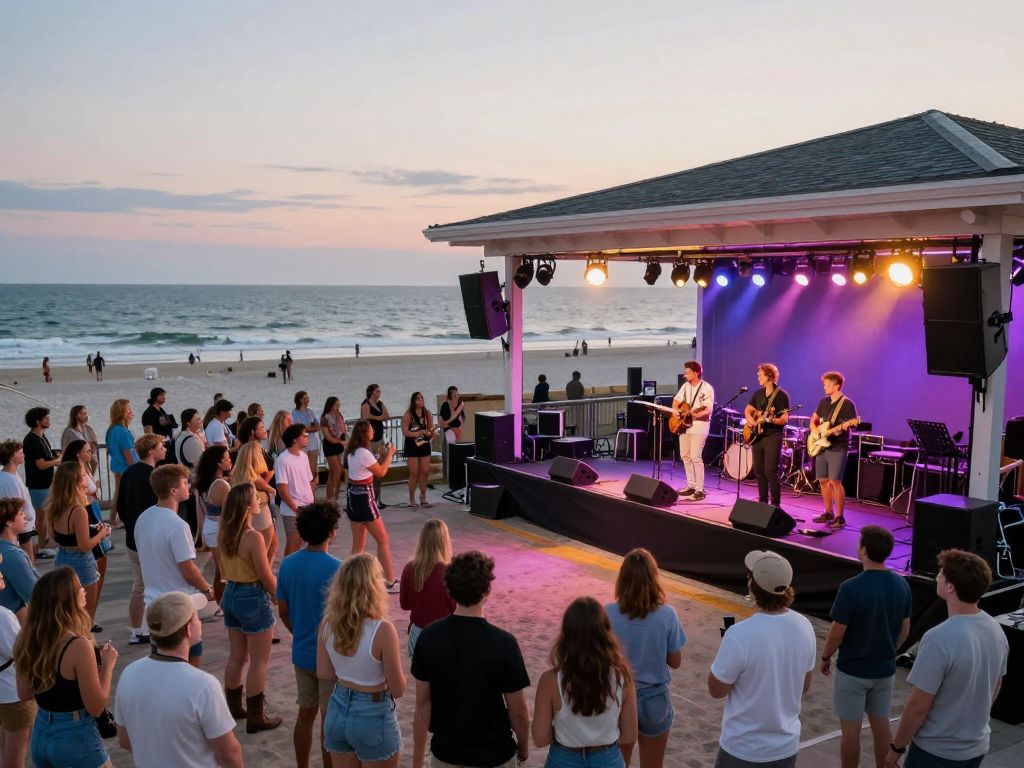
In the years following its closure, the former Pavilion site saw various temporary uses. In 2010, the land was incorporated into a new mile-long oceanfront Myrtle Beach Boardwalk, which included a live music stage and beach sand volleyball courts. A zipline attraction was added in 2012, operating until early 2024. A proposal for a temporary carnival in 2013 by an out-of-town business faced resistance from the Myrtle Beach city council, reflecting a preference for more permanent and integrated development that benefits local businesses and aligns with the city’s long-term vision.
A New Vision for Entertainment and Economic Vitality
The idea of a new music venue on the former Pavilion site taps into the robust demand for live entertainment that significantly contributes to the tourism economy. The success of events like the Carolina Country Music Fest (CCMF), which began in 2015 and is held on the oceanfront lawn between 8th and 9th Avenue North—adjacent to the former Pavilion land—demonstrates the substantial economic impact of such attractions. The CCMF alone brings a significant economic impact, with over $50 million spent within city limits during the long weekend.
Beyond the Pavilion site, Myrtle Beach city leaders are actively investing in the arts and entertainment sector. Confirmed plans are underway for a new $22.3 million performing arts theater, to be developed within two historic buildings in the city’s arts and entertainment district. This project will transform three Main Street properties into an 800,000-square-foot complex featuring a 300-seat theater. Financed in part by tax credits, the Downtown Redevelopment Corporation will lease the theater to Myrtle Beach Theater Owner LLC for a 50-year period. Mayor Brenda Bethune has characterized this as an investment in “human infrastructure,” aiming to attract talent and stimulate further business development in the area, a strategy that could also benefit the overall Charleston County economy.
The Economic Ripple Effect of Live Music
The establishment of dynamic music venues generates a considerable economic ripple effect, far beyond ticket sales. Nationwide, independent venues, festivals, and promoters contributed an estimated $153.1 billion to the US GDP in 2024, including attendee spending on things like lodging, dining, and local supply chains. This sector directly employed over 316,000 people and supported a total of 908,000 jobs, with contractors and vendors factored in, paying $51.7 billion in wages and benefits. Additionally, travel to attend shows and events generated $10.6 billion in tourism spending nationwide in 2024.
Music venues are powerful catalysts for economic growth, fostering social connections, boosting local culture, and shaping a city’s identity. For instance, The Orion Amphitheater in Huntsville, Alabama, a $55 million city investment, yielded an estimated $85 million in annual economic impact, with half its visitors coming from outside the region, filling hotels, restaurants, and local shops. Major industry players are also recognizing this potential; Live Nation is investing $1 billion nationwide to build and revitalize 18 U.S. music venues, an initiative projected to generate $2.9 billion in total economic impact from construction and $1.4 billion in annual economic impact for local communities once operational.
Fostering Innovation and Navigating Regulation in South Carolina
The potential for a new music venue on Myrtle Beach’s oceanfront aligns with a broader trend of entrepreneurial innovation within South Carolina’s robust tourism economy. Tourism remains a cornerstone of the state’s prosperity, attracting millions of visitors annually and creating lucrative opportunities for various business ventures. The state’s Department of Commerce actively supports new business development, particularly in sectors like technology, tourism, and real estate, demonstrating a commitment to fostering an environment where South Carolina entrepreneurs can thrive.
However, the regulatory landscape also plays a critical role in facilitating or hindering such ambitious projects. South Carolina is identified as the 36th most regulated state in the US, with its Code of Regulations containing 83,372 restrictions and nearly 5 million words as of 2023. Research indicates that excessive regulation can correlate with slower economic growth. While permits are rightfully required for professional entertainment events to ensure safety and compliance, streamlining these processes and maintaining a business-friendly environment are crucial for attracting and accelerating private investment in large-scale developments that promise significant job creation and contribute to overall economic growth.
Community Engagement and Future Prospects
The discussion surrounding the former Pavilion site is part of Myrtle Beach’s ongoing commitment to enhancing its appeal for both residents and visitors. The city has outlined major developments for 2026, including continued renovations at the Myrtle Beach Convention Center, the new Performing Arts Theater, and Pelicans Ballpark, alongside new attractions like downtown Flavor Town, the Pickleport Pickle Ball Complex, and the South Coast Beer Project. These initiatives reflect a strategic approach to maintaining a vibrant economy and reinforcing Myrtle Beach’s position as a premier destination, providing a valuable case study for Charleston SC business leaders considering similar civic and private investments.
Investing in modern, appealing entertainment options is vital for coastal communities to remain competitive and attractive. The potential for a new music venue or a re-imagined entertainment complex on such a historically significant site presents a unique opportunity for both substantial local investment and continued economic growth throughout South Carolina.
The future of Myrtle Beach’s oceanfront, particularly the former Pavilion site, offers a compelling example of how a community can honor its past while boldly innovating for future prosperity. By embracing entrepreneurial vision, fostering sound public-private partnerships, and thoughtfully managing the regulatory environment, South Carolina can continue to create opportunities that benefit its residents and visitors alike. We encourage our readers, especially those engaged in Charleston SC business, to stay informed and participate in discussions that shape the economic vitality of our state’s remarkable coastal regions. Supporting local businesses and engaging in community development are crucial for fostering a thriving future for all South Carolinians.
Frequently Asked Questions
When did the Myrtle Beach Pavilion close?
The Myrtle Beach Pavilion Amusement Park officially held its last public operating day on September 24, 2006, closing permanently due to financial instability and plans for real estate development.
What replaced the Myrtle Beach Pavilion on its former site?
The 11-acre site of the former Myrtle Beach Pavilion became largely vacant after demolition between December 2006 and summer 2007. In 2010, the land was incorporated into a new mile-long oceanfront Myrtle Beach Boardwalk, which includes a live music stage and beach sand volleyball courts. A zipline attraction was added in 2012, which closed in early 2024.
Is Myrtle Beach building any new music or performing arts venues?
Myrtle Beach city leaders have confirmed plans for a new $22.3 million performing arts theater, to be situated within two historic buildings in the city’s arts and entertainment district. This project will transform three Main Street properties into a complex featuring a 300-seat theater.
What is the economic impact of music venues and festivals?
Nationwide, independent venues, festivals, and promoters contributed an estimated $153.1 billion to the US GDP in 2024, including attendee spending. They directly employed over 316,000 people and supported a total of 908,000 jobs, with contractors and vendors factored in, paying $51.7 billion in wages and benefits. Events like the Carolina Country Music Fest in Myrtle Beach bring over $50 million in economic impact to the city during a long weekend.
How does regulation impact economic growth in South Carolina?
South Carolina is identified as the 36th most regulated state in the US, with its Code of Regulations containing 83,372 restrictions and nearly 5 million words as of 2023. Research indicates that excessive regulation can correlate with slower economic growth, suggesting that streamlining processes for business development can be crucial for fostering economic growth.
Key Features of Myrtle Beach Entertainment Development
| Feature | Details | Scope |
|---|---|---|
| Myrtle Beach Pavilion Closure | Closed September 24, 2006, due to financial instability. Demolition between December 2006 and summer 2007. | Local |
| Former Pavilion Site Uses | Incorporated into new mile-long oceanfront Myrtle Beach Boardwalk in 2010, including a live music stage. A zipline attraction (2012-early 2024). | Local |
| New Performing Arts Theater | $22.3 million project confirmed. Transforms three Main Street properties into an 800,000-square-foot complex with a 300-seat theater. Financed partly by tax credits. | Local |
| Carolina Country Music Fest (CCMF) Impact | Over $50 million economic impact within Myrtle Beach city limits during its long weekend. Held near the former Pavilion site. | Local |
| Nationwide Economic Impact of Live Venues (2024) | $153.1 billion in total economic output (US GDP). Supported 908,000 jobs. Generated $10.6 billion in tourism spending. | Nationwide |
| South Carolina Regulatory Environment | 36th most regulated state in the US (2023 data). 83,372 restrictions and nearly 5 million words in its Code of Regulations. | State-level |
Deeper Dive: News & Info About This Topic
HERE Resources