
News Summary
Lincolnville, a town in Charleston County, faces significant challenges in addressing failing septic systems, with a costly $1 million project needed for sewer infrastructure. The population discrepancy between census estimates and local officials highlights urgent infrastructure needs. Growing health concerns from contaminated water sources necessitate immediate action, supported by limited county funding. Future plans include extending sewer lines to serve more homes, aiming to create a healthier environment for the historic community.
Lincolnville, a small town located in Charleston County, is facing a significant challenge as it attempts to address the costly replacement of failing septic systems with a new sewer infrastructure. The estimated price tag for connecting homes to the sewer system stands near $1 million. With a growing population, the urgency for these improvements is becoming increasingly apparent.
The U.S. Census Bureau estimates that Lincolnville has about 1,150 residents. However, local officials, including Mayor Enoch Dickerson, III, contend that the actual population may be closer to 2,500. This discrepancy highlights the community’s rapid growth and the need for updated utilities and infrastructure.
Septic Systems at Risk
As many of the town’s existing septic systems fail, the risk of raw sewage contaminating nearby water sources has heightened. Notably, during rainfall events, the malfunctioning systems pose a significant threat to local waterways and lakes. The executive director of the North Charleston Sewer District reported a case where a 55-gallon drum was being used as a makeshift septic tank, further illustrating the dire condition of some properties.
The North Charleston Sewer District has identified 22 properties with failing septic systems, essential to address in an effort to prevent environmental hazards and improve community health. Unfortunately, the development and connection plans have been hampered by funding issues, leaving many residences without adequate sewer services.
Financial Hurdles
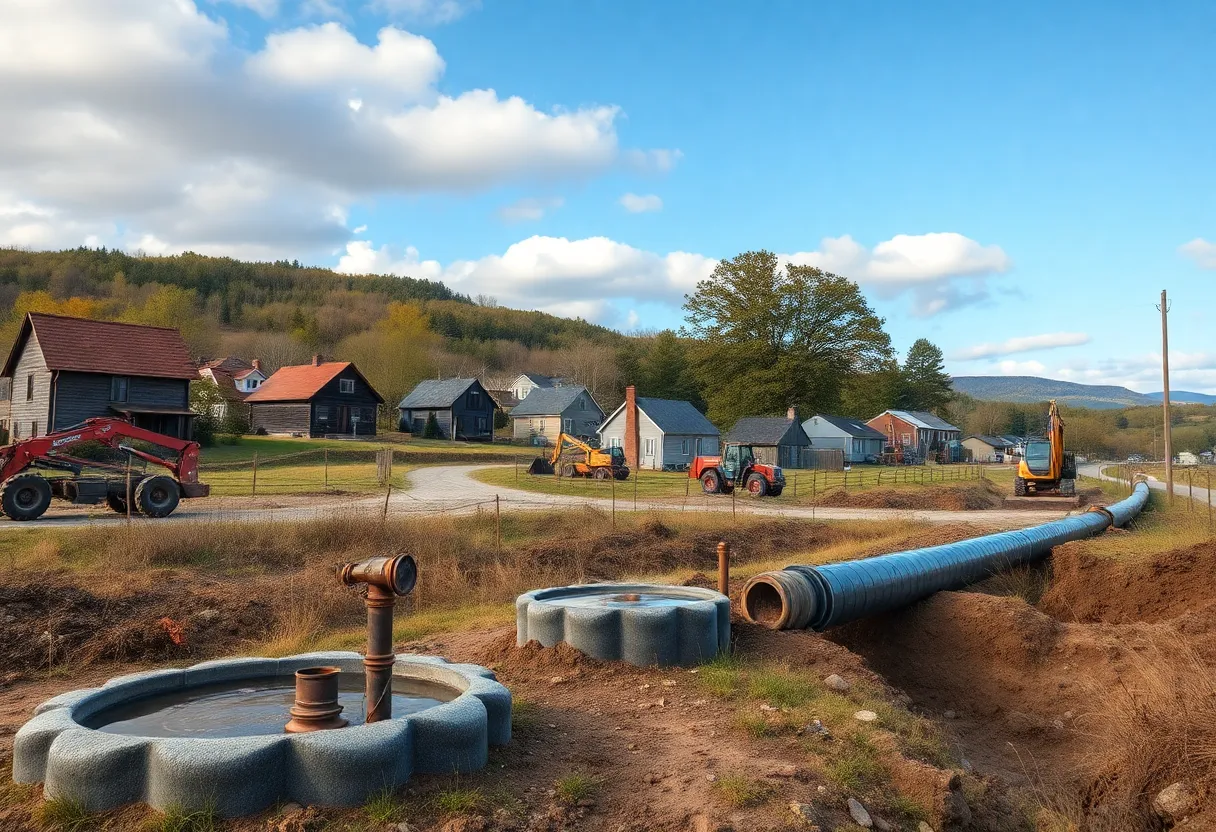
Connecting neighborhoods to a centralized sewer system is costly—it has been reported that nearly $1 million is required to connect just nine homes to new sewer lines while another three homes are linked to existing systems. A major setback occurred when a $1.2 million state grant, originally allocated for small sewer system improvements, was rescinded. This payment retraction forced the area to scale back from four planned sewer extensions to just one, primarily due to the classification of the sewer district as a larger entity.
Despite these setbacks, some funds have been sourced to cover the mounting costs. Charleston County has provided $600,000 towards the project, with the North Charleston Sewer District contributing an additional $360,000. Part of the county funding specifically targets connection fees for lower-income residents, ensuring these households receive the necessary assistance.
Future Plans
Looking ahead, plans are in place to extend one sewer line by 2,500 feet. This extension aims to serve six additional homes and facilitate service for nine vacant lots, which could increase housing availability in this rapidly growing community.
Community Background
Lincolnville has a rich history, founded in 1889 by Black residents following the Civil War. Positioned between North Charleston and Summerville, the town is characterized by its historic charm, including one of the smallest jails ever constructed in South Carolina. However, the community grapples with limited financial resources, just a few employees, and the operation of a volunteer fire department.
As Lincolnville navigates these pressing infrastructure challenges, it mirrors a broader issue faced by other historic communities across Charleston County. Many of these areas are similarly dealing with outdated septic systems and the transition to modern sewer systems to address public health and environmental concerns.
Efforts to enhance the town’s sewer systems create an opportunity for Lincolnville to improve living conditions for its residents, ensuring a healthier and more sustainable future for this historical community.
Deeper Dive: News & Info About This Topic
HERE Resources
Additional Resources
- Post and Courier: Lincolnville’s Failing Septic Systems
- Wikipedia: Sewer System
- Pen Bay Pilot: Elections 2024 Candidates
- Google Search: Septic Systems in Lincolnville
- Pen Bay Pilot: Lincolnville Select Board Candidate Issues
- Google Scholar: Lincolnville Infrastructure Issues
- Encyclopedia Britannica: Sewage Systems
- Google News: Lincolnville Sewer Infrastructure


Author: STAFF HERE CHARLESTON
The CHARLESTON STAFF WRITER represents the experienced team at HEREcharleston.com, your go-to source for actionable local news and information in Charleston, Charleston County, and beyond. Specializing in "news you can use," we cover essential topics like product reviews for personal and business needs, local business directories, politics, real estate trends, neighborhood insights, and state news affecting the area—with deep expertise drawn from years of dedicated reporting and strong community input, including local press releases and business updates. We deliver top reporting on high-value events such as the Spoleto Festival USA, Charleston Wine + Food Festival, and the MOJA Festival. Our coverage extends to key organizations like the Charleston Metro Chamber of Commerce and the Charleston Museum, plus leading businesses in tourism and maritime industries that power the local economy such as South Carolina Ports Authority and the Charleston Visitor Center. As part of the broader HERE network, including HEREaiken.com, HEREbeaufort.com, HEREchapin.com, HEREcharleston.com, HEREclinton.com, HEREcolumbia.com, HEREgeorgetown.com, HEREgreenwood.com, HEREgreenville.com, HEREhiltonhead.com, HEREirmo.com, HEREmyrtlebeach.com, HEREnewberry.com, HERErockhill.com, HEREspartanburg.com, HEREaustin.com, HEREcollegestation.com, HEREdallas.com, HEREhouston.com, and HEREsanantonio.com, we provide comprehensive, credible insights into South Carolina's dynamic landscape.