
News Summary
Researchers at MUSC have developed an innovative immunotherapy for treating acute myeloid leukemia (AML), led by Dr. Sophie Paczesny. This promising treatment, utilizing a bispecific antibody, aims to target both leukemic and regulatory immune cells, offering hope for patients with limited options. While further testing is required before human trials, the collaborative initiative is funded by the NIH and spans several prestigious institutions. The research aims to revolutionize AML treatment and enhance cancer therapy overall.
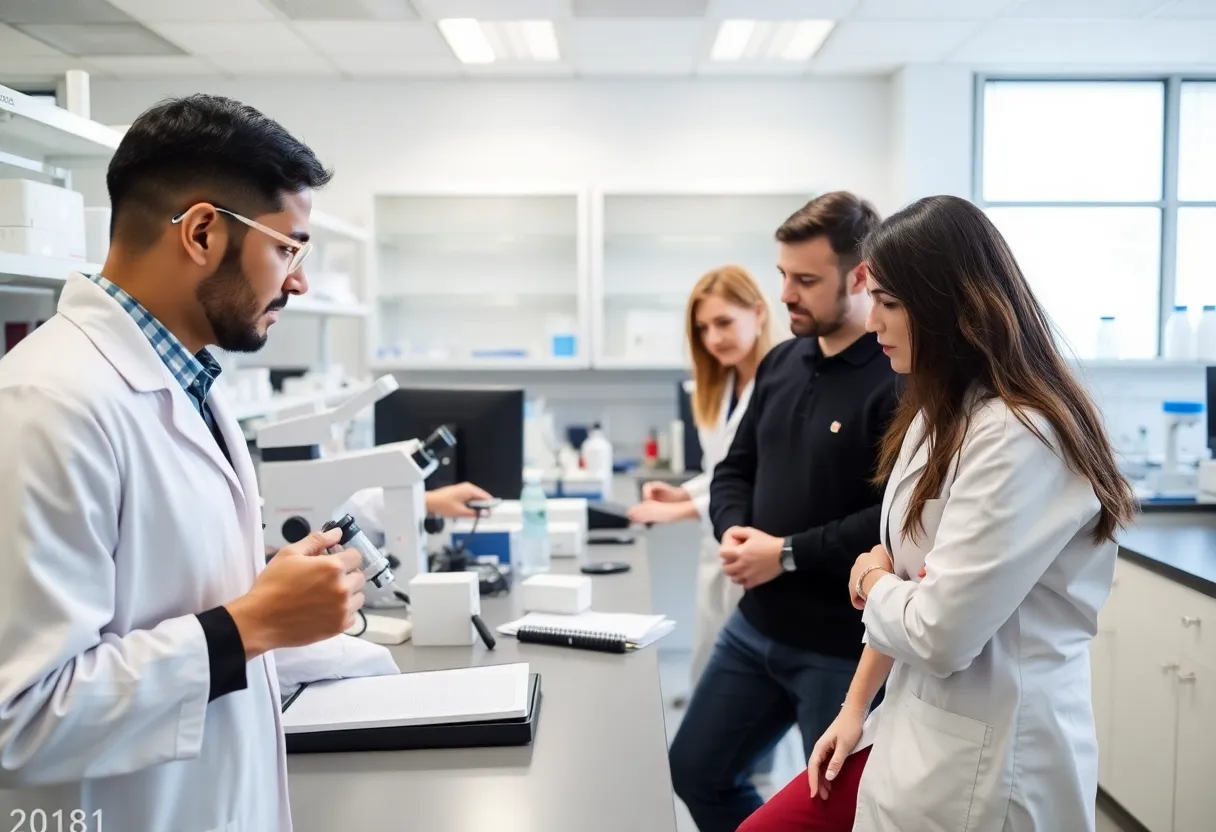
Charleston, SC – Researchers at the Medical University of South Carolina (MUSC) have made significant strides in the treatment of acute myeloid leukemia (AML) through the development of an innovative immunotherapy. This breakthrough, spearheaded by Dr. Sophie Paczesny, the principal investigator and co-leader of the Cancer Immunology Program at the Hollings Cancer Center, holds promise for patients who currently have limited treatment options.
AML is projected to result in approximately 22,010 new cases and 11,090 deaths in the United States in 2025, according to estimates from the American Cancer Society. As the sixth most common type of cancer, the need for effective treatments is critical. Despite progress in understanding the disease, the only currently curative option is bone marrow transplantation, which carries risks such as graft versus host disease and complications during recovery.
The newly developed immunotherapy utilizes a bispecific antibody that employs a dual targeting approach. This method aims to attack both leukemic cells and regulatory immune cells, achieving a killing effect that is unprecedented in its efficacy against AML. While efforts to target specific mutations within leukemic cells have made progress, a definitive cure remains elusive.
Dr. Paczesny, driven by personal encounters with AML patients, emphasized the longstanding commitment of the research team. Over the past eight years, their efforts have led to these promising advances, but further testing is required before transitioning to human clinical trials. The total timeline for this research is projected to span 10 to 12 years, with aspirations to treat the first patient within the next two years.
This research initiative has received full funding from the National Institutes of Health, with a budget nearing $4 million. The collaborative project involves four prominent institutions: Indiana University, MUSC, Nemours Children in Florida, and Memorial Sloan Kettering in New York City. Together, these institutions are working to develop not only effective treatments for AML but also broader applications in cancer therapy.
In summary, the advancements made by the MUSC research team at the Hollings Cancer Center offer hope for the future of AML treatment. With innovative techniques such as bispecific antibodies and dual targeting, there is optimism that these approaches may one day revolutionize care for leukemia patients and potentially enhance treatment strategies across various cancers. As researchers continue their work, the focus remains on patient outcomes and successfully bringing these developments into clinical practice.
Deeper Dive: News & Info About This Topic
HERE Resources
Additional Resources


Author: STAFF HERE CHARLESTON
The CHARLESTON STAFF WRITER represents the experienced team at HEREcharleston.com, your go-to source for actionable local news and information in Charleston, Charleston County, and beyond. Specializing in "news you can use," we cover essential topics like product reviews for personal and business needs, local business directories, politics, real estate trends, neighborhood insights, and state news affecting the area—with deep expertise drawn from years of dedicated reporting and strong community input, including local press releases and business updates. We deliver top reporting on high-value events such as the Spoleto Festival USA, Charleston Wine + Food Festival, and the MOJA Festival. Our coverage extends to key organizations like the Charleston Metro Chamber of Commerce and the Charleston Museum, plus leading businesses in tourism and maritime industries that power the local economy such as South Carolina Ports Authority and the Charleston Visitor Center. As part of the broader HERE network, including HEREaiken.com, HEREbeaufort.com, HEREchapin.com, HEREcharleston.com, HEREclinton.com, HEREcolumbia.com, HEREgeorgetown.com, HEREgreenwood.com, HEREgreenville.com, HEREhiltonhead.com, HEREirmo.com, HEREmyrtlebeach.com, HEREnewberry.com, HERErockhill.com, HEREspartanburg.com, HEREaustin.com, HEREcollegestation.com, HEREdallas.com, HEREhouston.com, and HEREsanantonio.com, we provide comprehensive, credible insights into South Carolina's dynamic landscape.