

News Summary
Activists in Charleston have initiated ‘Fasting Fridays,’ a nationwide monetary boycott aimed at combating white supremacy and raising awareness of systemic racial injustice. The initiative coincides with the tenth anniversary of the Emanuel A.M.E. Church shooting and advocates for economic equality. Participants are encouraged to refrain from spending every Friday, supporting local marginalized businesses instead. The movement seeks to create dialogue around various societal issues and push for policy changes through collective action.
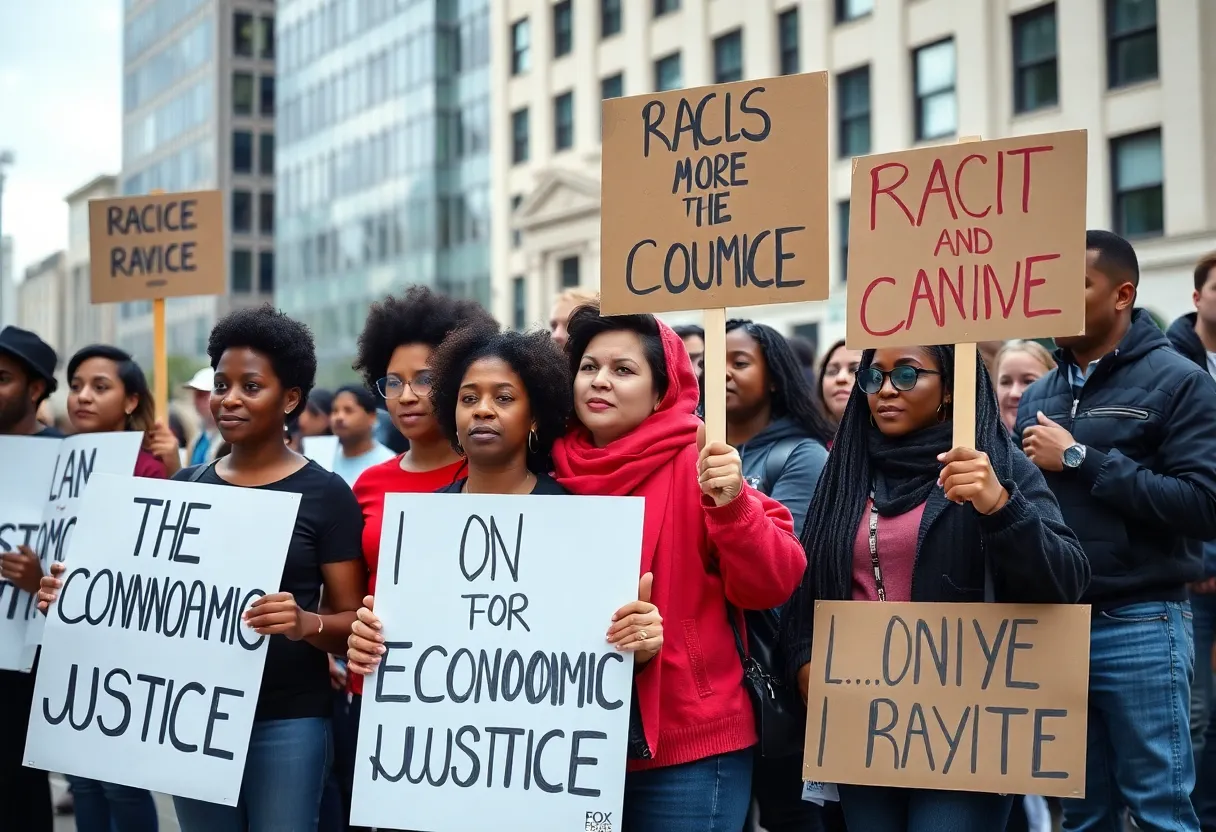
Charleston – A coalition of activists from the Charleston area has launched a nationwide monetary boycott known as “Fasting Fridays” to combat white supremacy and promote social change. Currently in its second week, the initiative encourages people across the United States to refrain from spending money every Friday, with a focus on creating awareness of systemic racial injustice and economic disparities experienced by marginalized communities.
The initiative, spearheaded by the national Everyday People movement, is particularly significant as it coincides with the tenth anniversary of the tragic mass shooting at Emanuel A.M.E. Church, where nine church members lost their lives. Organizers are advocating for increased attention to the threats posed by white supremacists, particularly in terms of job security and the safety of immigrant communities.
Participation in the Fasting Fridays movement encompasses a wide range of stakeholders, including community leaders, faith representatives, political organizations, and grassroots groups. Approximately 15 collaborative organizations contributed to the planning of the boycott, representing a united front against racism and economic injustice across the country.
The movement sets forth ten benchmarks for the federal government to measure progress on essential issues, including diversity, equity, and inclusion, reproductive rights, trans health, immigration, policing, disability justice, education, economic justice, the situation in Palestine, and environmental concerns. This broad focus aims to highlight the interconnected nature of these issues and how they collectively contribute to systemic injustice.
Advocates assert that shared financial power can influence unjust systemic practices and drive meaningful change. They highlight that supporting local black and marginalized businesses during this boycott will further the message of economic equality and empowerment.
The Fasting Fridays movement is a continuation of historical activism strategies, reminiscent of actions such as the Montgomery Bus Boycott. Recent events included a press conference at the Circular Congregational Church, where organizers discussed the boycott’s aims and its importance in the current social climate. Notably, the city denied a permit for an initial march that was planned to commence at the former site of the Calhoun Statue, prompting organizers to adjust their plans to ensure that their message still reached the public.
This initiative is not merely a response to past atrocities but a direct reaction to ongoing racial injustices and systemic inequality in America. Fasting Fridays aims to draw public attention to the persistent violence and economic hardships faced by marginalized communities throughout the country.
As the initiative evolves, supporters emphasize the importance of collective action and sustained pressure on decision-makers. By dedicating Fridays to fasting from consumerism, participants are invited to reflect on the implications of their financial habits and the powerful impact of their collective stance against white supremacy and economic disparity.
The ongoing movement reflects a broader shift in social consciousness, inviting participants to engage in dialogue about the intersectionality of various societal issues. Fasting Fridays challenges individuals to reconsider their consumption patterns in light of the social justice struggles that continue to enliven discussions across the nation.
In conclusion, the Fasting Fridays boycott serves as both a remembrance of lives lost to racial violence and a rallying cry for substantive change. It aims to empower communities and affect local and national policies through mindful, collective financial action.
Deeper Dive: News & Info About This Topic
HERE Resources
Additional Resources
- Charleston City Paper: Charleston Group Launches Economic Boycotts on Fridays
- ABC News 4: Charleston Activists Call for Weekly Economic Protest
- WPDE: Charleston Faith Leaders Launch Fasting Fridays Boycott
- Post and Courier: Ramadan Food in Relation to Palestine
- Post and Courier: Lack of Lenten Friday Fish Frys Around Charleston


Author: STAFF HERE CHARLESTON
The CHARLESTON STAFF WRITER represents the experienced team at HEREcharleston.com, your go-to source for actionable local news and information in Charleston, Charleston County, and beyond. Specializing in "news you can use," we cover essential topics like product reviews for personal and business needs, local business directories, politics, real estate trends, neighborhood insights, and state news affecting the area—with deep expertise drawn from years of dedicated reporting and strong community input, including local press releases and business updates. We deliver top reporting on high-value events such as the Spoleto Festival USA, Charleston Wine + Food Festival, and the MOJA Festival. Our coverage extends to key organizations like the Charleston Metro Chamber of Commerce and the Charleston Museum, plus leading businesses in tourism and maritime industries that power the local economy such as South Carolina Ports Authority and the Charleston Visitor Center. As part of the broader HERE network, including HEREaiken.com, HEREbeaufort.com, HEREchapin.com, HEREcharleston.com, HEREclinton.com, HEREcolumbia.com, HEREgeorgetown.com, HEREgreenwood.com, HEREgreenville.com, HEREhiltonhead.com, HEREirmo.com, HEREmyrtlebeach.com, HEREnewberry.com, HERErockhill.com, HEREspartanburg.com, HEREaustin.com, HEREcollegestation.com, HEREdallas.com, HEREhouston.com, and HEREsanantonio.com, we provide comprehensive, credible insights into South Carolina's dynamic landscape.