
Charleston, September 23, 2025
News Summary
The Commercial Club in Charleston, established in the early 1900s, aimed to promote economic growth but faced challenges leading to its conversion into the Timrod Inn in 1918. Despite its brief existence, the club played a significant role in the local business community. The Timrod Inn later became a popular hotel but was ultimately demolished in the 1960s. Today, the site represents a missed chapter in Charleston’s history.
Charleston
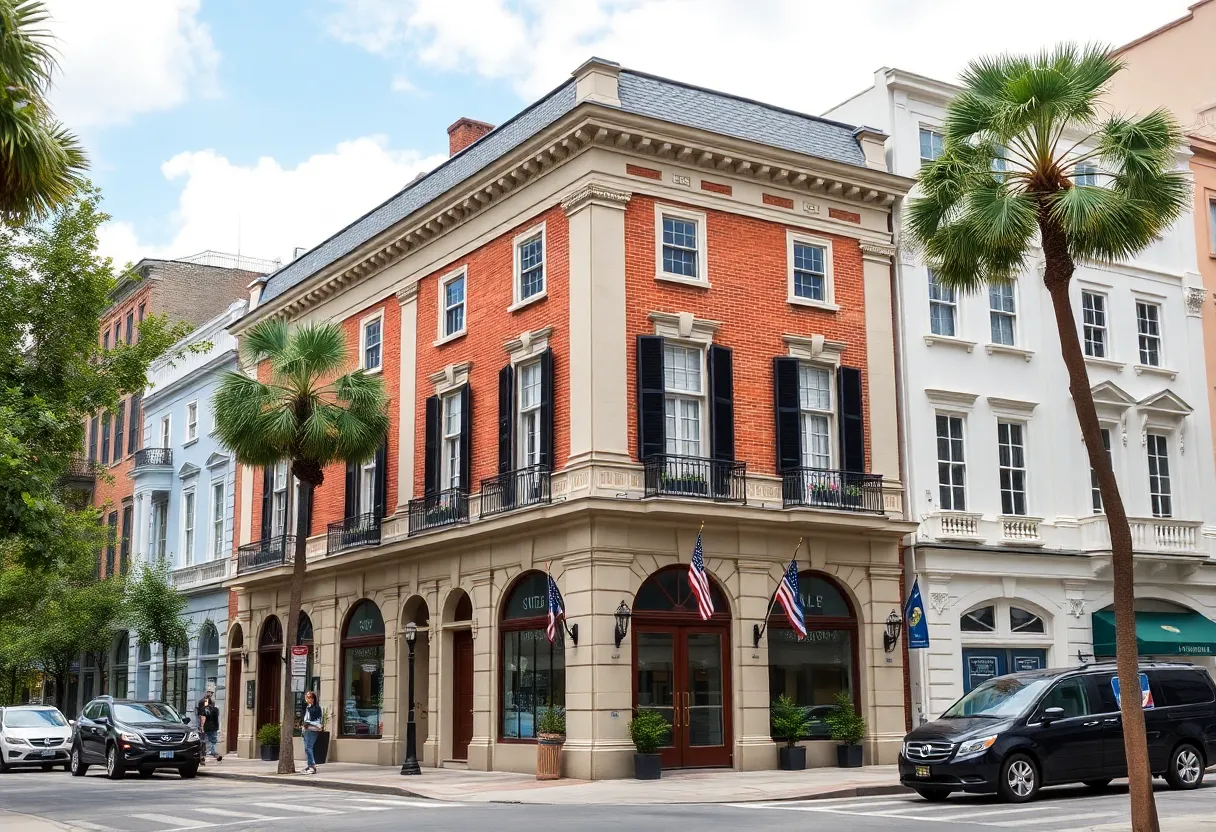
The Commercial Club Building, located at 101 Meeting St. in Charleston, was established in the early 1900s but met its demise in the 1960s. This building, meant to foster commercial and industrial growth, ultimately struggled to gain traction and was repurposed into the Timrod Inn in 1918 before being demolished decades later.
Challenges Facing Charleston
In the last four decades of the 19th century, Charleston faced numerous obstacles including the aftermath of the Civil War, the challenges of Reconstruction, Federal troop occupation, natural disasters like hurricanes and an earthquake, as well as the decline of the rice and cotton industries. These hardships prompted city leaders to seek economic renewal as the 20th century approached.
The Rise of the Commercial Club
The South Carolina Inter-State and West Indian Exposition, which took place between 1901 and 1902, served as a significant turning point for Charleston, catalyzing efforts for change. The Evening Post announced the opening of the Commercial Club on September 27, 1902, shortly after the Exposition’s early closure. The club was designed to promote commercial endeavors and provide shared office space for professionals and businessmen in Charleston, aiming to bolster the local economy.
Membership and Structure
The Commercial Club’s members included influential organizations such as the Charleston Chamber of Commerce, Cotton Exchange, Young Businessmen’s League, and Real Estate Exchange. The location of the Commercial Club was carefully chosen after evaluating various sites. Ultimately, city planners decided to rehabilitate four Georgian row houses known as Smith’s Row. Originally constructed by W.B. Smith, Smith’s Row boasted a strategic position behind the Charleston County Courthouse, across from City Hall, and adjacent to the Hibernian Society.
Architectural Transformation
Architect A.W. Todd played a key role in transforming the structures by removing roofs to add a fourth floor and applying stucco to create a cohesive façade. The club was remarkable for its architectural features, including a three-story piazza complemented by a fourth-floor balcony, adding grandeur to the building.
Facilities and Amenities
The Commercial Club was equipped with retail spaces catering to businesspeople, including a barbershop, haberdashery, coffee shop, and drug store on the first floor. Dining services featured one large dining room along with two smaller dining rooms, reading rooms, and recreational areas for bowling and billiards. The venue aimed to facilitate informal encounters and discussions among members.
Decline and Transformation
Despite the initial ambitions, the Commercial Club proved to be short-lived and largely unsuccessful, leading to its conversion into the Timrod Inn in 1918. Managed by Mary A. Storfer, the Timrod Inn opened on January 3, 1918, and sought to address a unique need within the community. The inn was named after a memorial bust of poet Henry Timrod, which was situated across the street in Washington Park.
The Timrod Inn Era
Over time, the Timrod Inn emerged as one of Charleston’s notable hotels, alongside other well-known accommodations like the Charleston Hotel. The establishment evolved through various ownerships and was recognized for its coffee shop, which became a hub for local lawyers and politicians to exchange ideas, influencing municipal policies and actions. Discussions regarding potential conversions of parts of the Timrod Hotel into apartments or offices occurred, but none were realized.
Closing Chapter
By the 1960s, the Timrod Hotel was deemed outdated, particularly due to the lack of on-site parking. In 1963, the hotel’s last four residents were instructed to vacate, leading to its demolition in the following year. Today, the site is occupied by a small park and the Charleston County Treasurer’s Office, marking a poignant chapter of history lost to urban development.
FAQ
What was the Commercial Club?
The Commercial Club was established to promote commercial and industrial growth in Charleston by creating a shared office space for professionals and businessmen.
What event catalyzed the establishment of the Commercial Club?
The South Carolina Inter-State and West Indian Exposition, which occurred in 1901-02, served as a catalyst for change leading to the club’s establishment.
When did the Commercial Club open?
The Evening Post announced the opening of the Commercial Club on September 27, 1902.
What was the Timrod Inn?
The Timrod Inn was the rebranded Commercial Club that opened on January 3, 1918, and aimed to fill a distinct need in the community.
Why was the Timrod Hotel demolished?
By the 1960s, the Timrod Hotel was considered outdated, leading to its final closure and demolition in 1964 due to the lack of on-site parking.
Key Features of the Commercial Club and Timrod Inn
| Feature | Description |
|---|---|
| Location | 101 Meeting St., Charleston |
| Opening Date | September 27, 1902 |
| Original Purpose | Promote commercial and industrial growth |
| Notable Members | Charleston Chamber of Commerce, Cotton Exchange, Young Businessmen’s League |
| Transformation Year | Converted to Timrod Inn in 1918 |
| Demolition Year | 1964 |
| Current Site Use | Small park and Charleston County Treasurer’s Office |
Deeper Dive: News & Info About This Topic
HERE Resources
Lawyers Shaping the Future of Sports Stadiums at SLA Conference
Significant Residential Development Planned in West Ashley
Construction Begins on Magnolia Landing: Charleston’s Mixed-Use Community
New Mixed-Use Community Develops in Charleston
Additional Resources
- WOWK TV: WV Weather History
- Wikipedia: Weather in South Carolina
- Spectrum Local News: January 2025 Weather Recap
- Google Search: Charleston Weather History
- Fox Weather: Flash Flood Threat
- Encyclopedia Britannica: Charleston
- Weather.com: Charleston Travel Destination Info
- Google News: Timrod Inn Charleston


Author: STAFF HERE CHARLESTON
The CHARLESTON STAFF WRITER represents the experienced team at HEREcharleston.com, your go-to source for actionable local news and information in Charleston, Charleston County, and beyond. Specializing in "news you can use," we cover essential topics like product reviews for personal and business needs, local business directories, politics, real estate trends, neighborhood insights, and state news affecting the area—with deep expertise drawn from years of dedicated reporting and strong community input, including local press releases and business updates. We deliver top reporting on high-value events such as the Spoleto Festival USA, Charleston Wine + Food Festival, and the MOJA Festival. Our coverage extends to key organizations like the Charleston Metro Chamber of Commerce and the Charleston Museum, plus leading businesses in tourism and maritime industries that power the local economy such as South Carolina Ports Authority and the Charleston Visitor Center. As part of the broader HERE network, including HEREaiken.com, HEREbeaufort.com, HEREchapin.com, HEREcharleston.com, HEREclinton.com, HEREcolumbia.com, HEREgeorgetown.com, HEREgreenwood.com, HEREgreenville.com, HEREhiltonhead.com, HEREirmo.com, HEREmyrtlebeach.com, HEREnewberry.com, HERErockhill.com, HEREspartanburg.com, HEREaustin.com, HEREcollegestation.com, HEREdallas.com, HEREhouston.com, and HEREsanantonio.com, we provide comprehensive, credible insights into South Carolina's dynamic landscape.