

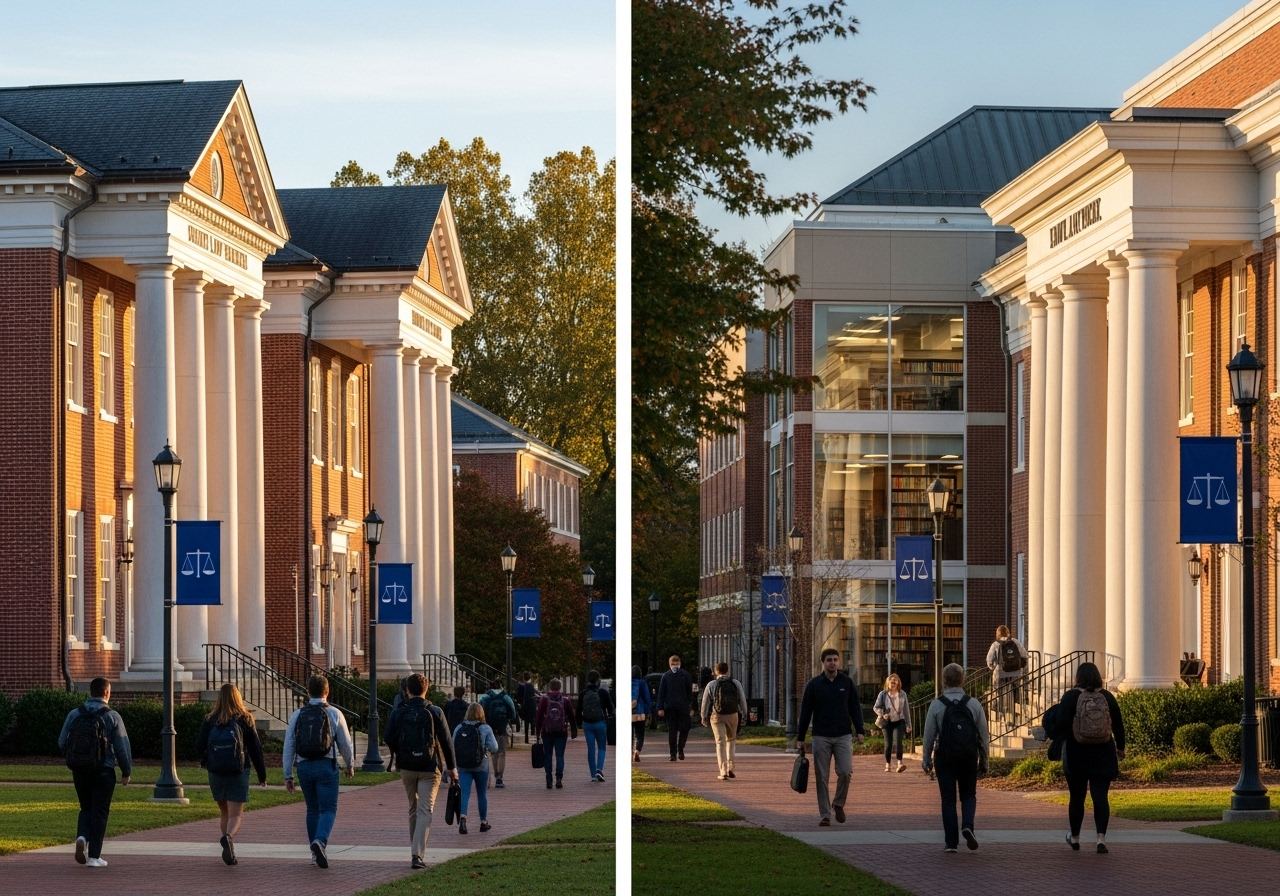
Charleston & Columbia, South Carolina, August 29, 2025
Charleston: A Comparative Look at Two South Carolina Law Schools
Charleston sits at the center of this discussion because it hosts the Charleston School of Law, one of only two ABA-accredited law schools in South Carolina. The other institution, the University of South Carolina Joseph F. Rice School of Law, is located in Columbia. Both schools serve students aiming to practice law in the Southeast, but they differ in history, structure, selectivity, and outcomes. This article unpacks those differences and highlights what each school offers to prospective students weighing their options.
Historical and Institutional Context
The two law schools began under very different circumstances. The University of South Carolina School of Law traces its roots back into the 19th century and operates as a public, non-profit institution within a major research university. That legacy comes with an expansive alumni presence across the state, longstanding ties to state institutions, and a broad set of academic offerings.
By contrast, the Charleston School of Law is a much newer, private law school founded in 2003. It operates on a for-profit model and stakes its reputation on focused, practical legal education in a smaller, urban campus setting. Both schools are accredited by the American Bar Association and participate in shared professional networks, yet their institutional cultures and resource profiles reflect their different origins.
Rankings and Reputation
Rankings are one way applicants and employers assess relative reputation. Recent U.S. News & World Report figures place the University of South Carolina substantially higher in national rankings than Charleston. The University of South Carolina appears in the top 100 tier of law schools, while Charleston occupies a lower tier in the same ranking system. Rankings are one lens among many—they reflect selectivity, peer assessment, faculty resources, and graduate outcomes—but they also influence perceptions among employers and potential students.
Admissions and Student Profile
Admissions statistics provide a snapshot of incoming classes and institutional selectivity. The University of South Carolina enrolls students with higher median LSAT scores and undergraduate GPAs and admits a smaller share of applicants, suggesting a more competitive intake profile. In contrast, Charleston admits a larger portion of applicants and has lower median LSAT and GPA figures. These differences affect classroom composition, peer networks, and sometimes the pace of academic support services.
| Metric | Charleston School of Law | University of South Carolina School of Law |
|---|---|---|
| Acceptance Rate | 53.1% | 34% |
| Median LSAT | 153 | 160 |
| Median Undergraduate GPA | 3.49 | 3.7 |
| First-Time Bar Passage (recent) | 63.9% | 76.9% |
| Listed Tuition (2024) | $46,134 | Varies by residency and program |
These figures illustrate clear contrasts: the University of South Carolina is more selective on paper and posts higher bar passage outcomes. Charleston’s admissions profile suggests opportunities for a broader range of applicants and a different classroom dynamic.
Bar Passage and Academic Preparation
Passing the bar exam is the ultimate academic hurdle for law graduates who want to practice. Recent first-time bar passage rates show an edge for the University of South Carolina over Charleston. A higher passage rate can reflect factors such as incoming academic preparation, curriculum alignment with the exam, the intensity of bar-support programs, and institutional emphasis on licensure outcomes.
That said, raw percentages do not capture every nuance. Smaller class sizes can allow for personalized instruction and targeted bar coaching, and a school’s partnership with local legal organizations may provide practical experience that indirectly supports exam readiness. Prospective students should investigate the specific bar prep resources each school provides: dedicated exam courses, alumni-led review programs, tutoring, and performance tracking.
Faculty, Teaching, and Student Experience
Charleston has drawn attention for its accessible faculty and positive evaluations of classroom instruction. External reviews and rankings have placed the school highly for faculty accessibility and the quality of teaching. Those recognitions suggest a faculty that prioritizes student interaction and mentorship, which can be decisive for learners who benefit from frequent, close guidance.
The University of South Carolina offers a broader faculty base with scholars and practitioners across a wider range of specialties. Its longer history and university resources enable clinics, research centers, and interdisciplinary opportunities that appeal to students seeking diverse academic tracks or research-focused careers.
Alumni Network and Professional Outcomes
Alumni presence matters for job placement, mentorship, and long-term professional mobility. The University of South Carolina has a substantially larger alumni footprint across South Carolina’s legal community, reflected in a higher number of alumni recognized on regional professional lists. That translates into deeper professional networks and often more doors for internship and hiring opportunities within state institutions, law firms, and corporate legal departments.
Charleston’s alumni base is smaller but concentrated in a key metropolitan area known for litigation, real estate, and maritime business. For students aiming to practice in Charleston or nearby coastal regions, a smaller but locally focused alumni network can be a strong asset.
Cost, Scholarships, and Financial Considerations
Tuition is a practical concern for most applicants. Charleston publishes a tuition figure in the mid-$40,000s for the academic year cited; public law schools like the University of South Carolina generally have differentiated tuition for in-state and out-of-state students and a broader array of state-supported financial aid. When comparing costs, applicants should factor in scholarships, living expenses, the potential for part-time work, and expected debt loads relative to projected starting salaries.
Financial calculus should also consider employment outcomes. A school that yields higher starting salaries or stronger placement in private firms may justify higher tuition for some students, while others may prioritize lower debt and regional public-service career paths.
Special Programs and Institutional Strengths
Each school has distinct programmatic strengths. Charleston emphasizes experiential learning and has received recognition for providing strong resources for women law students. Small classes and a city-center setting support clinic work, local internships, and hands-on practica.
The University of South Carolina leverages university-scale resources: specialized centers, clinics with broader reach, and interdisciplinary collaborations. Its size supports a variety of concentration areas—administrative law, health law, and others—that draw students with specialized career goals.
How to Choose: Practical Guidance
Choosing between these two law schools depends on several practical considerations:
– Career geography: If you plan to practice in Charleston or the Lowcountry, the local connections and focused placement of the Charleston School of Law can be advantageous. For statewide mobility or national aspirations, the University of South Carolina’s broader alumni network can be helpful.
– Academic fit: Students who prefer smaller classes and high faculty accessibility may thrive in Charleston’s environment. Those seeking extensive academic specializations or university resources might lean toward the University of South Carolina.
– Bar exam priorities: If maximizing first-time bar passage odds is a top objective, the University of South Carolina’s higher pass rate is a notable point in its favor. However, individual dedication and use of bar-prep resources are decisive variables.
– Cost and debt: Compare net cost after scholarships. Public in-state tuition often means lower total borrowing for residents, while private tuition may be offset by institutional aid for select students.
These considerations help applicants align institutional strengths with personal priorities.
Key Takeaways
- University of South Carolina School of Law shows higher selectivity, stronger bar passage rates, and a broader alumni network across the state.
- Charleston School of Law offers notable faculty accessibility, smaller class environments, and targeted resources that benefit students who value mentorship and local placement.
- Deciding factors should include desired practice location, tolerance for debt, preferred learning style, and the importance of bar exam outcomes.
Frequently Asked Questions
What are the main differences in admissions standards between the two schools?
The University of South Carolina typically admits applicants with higher median LSAT scores and GPAs and accepts a smaller percentage of applicants, while Charleston has a higher acceptance rate and lower median LSAT/GPA figures, reflecting different levels of selectivity and class composition.
Which school has better bar passage outcomes?
Recent first-time bar passage rates favor the University of South Carolina. That suggests stronger overall outcomes on the bar exam, though individual preparation and use of school-provided bar resources remain critical.
Is one school significantly cheaper than the other?
Tuition figures vary by residency and year, but Charleston lists tuition in the mid-$40,000s for the cited academic year. Public tuition at the University of South Carolina can be lower for in-state students. Compare net costs after scholarships to assess affordability.
Which school is better for practicing in Charleston specifically?
For attorneys targeting Charleston and the surrounding coastal region, the Charleston School of Law’s local ties and concentrated alumni presence can offer advantages. However, University of South Carolina graduates also practice across the state, including in Charleston.
How much should rankings influence my decision?
Rankings provide useful signals about reputation and outcomes, but they are only one part of the decision. Fit with career goals, financial considerations, instructional style, and geographic preferences often matter more for long-term satisfaction and success.

Author: STAFF HERE CHARLESTON
The CHARLESTON STAFF WRITER represents the experienced team at HEREcharleston.com, your go-to source for actionable local news and information in Charleston, Charleston County, and beyond. Specializing in "news you can use," we cover essential topics like product reviews for personal and business needs, local business directories, politics, real estate trends, neighborhood insights, and state news affecting the area—with deep expertise drawn from years of dedicated reporting and strong community input, including local press releases and business updates. We deliver top reporting on high-value events such as the Spoleto Festival USA, Charleston Wine + Food Festival, and the MOJA Festival. Our coverage extends to key organizations like the Charleston Metro Chamber of Commerce and the Charleston Museum, plus leading businesses in tourism and maritime industries that power the local economy such as South Carolina Ports Authority and the Charleston Visitor Center. As part of the broader HERE network, including HEREaiken.com, HEREbeaufort.com, HEREchapin.com, HEREcharleston.com, HEREclinton.com, HEREcolumbia.com, HEREgeorgetown.com, HEREgreenwood.com, HEREgreenville.com, HEREhiltonhead.com, HEREirmo.com, HEREmyrtlebeach.com, HEREnewberry.com, HERErockhill.com, HEREspartanburg.com, HEREaustin.com, HEREcollegestation.com, HEREdallas.com, HEREhouston.com, and HEREsanantonio.com, we provide comprehensive, credible insights into South Carolina's dynamic landscape.