
Charleston, SC, February 5, 2026
Charleston County officials have unveiled an initial draft of a proposed $4 billion transportation sales tax plan aimed at enhancing local infrastructure and mobility. This initiative, which seeks voter approval in November 2026, is designed to meet the region’s growing transportation demands through strategic investments in roads, public transit, and green spaces. With community engagement at its core, the plan reflects a commitment to civic innovation and sustainable development, ensuring that Charleston adapts as the fastest-growing state in the nation.
Charleston, SC
Shaping Charleston’s Future: Leaders Unveil $4B Transit Plan Draft
Charleston County leaders have presented the initial draft of a proposed $4 billion transportation sales tax plan, offering residents a first look at an initiative designed to enhance local infrastructure and mobility. This proposal aims to address the region’s evolving transportation demands through strategic investments in roads, transit, and green spaces, fostering civic innovation and community growth.
As South Carolina continues its impressive growth trajectory, designated as the nation’s fastest-growing state by the US Census Bureau, the need for robust and adaptable infrastructure becomes increasingly apparent [cite: Original Prompt]. This proactive step by Charleston County reflects a commitment to anticipating future needs and empowering local leadership to craft solutions that benefit the entire community. By focusing on a community-driven approach, the plan seeks to align public priorities with targeted investments, ensuring that the development supports individual achievement and a thriving local economy.
Understanding the Proposed Transportation Sales Tax Extension
Charleston County leaders and residents received their initial preview of a proposed transportation sales tax plan on a recent Monday, an initiative that could significantly reshape how people navigate the Lowcountry. This proposed plan is an extension of an existing half-cent local sales tax program that has been in place since 2004. The current sales tax is scheduled to expire in 2027, making voter approval of an extension in November 2026 crucial to prevent a lapse in revenue for essential transportation projects. In early 2026, the County Council is expected to vote on whether to formally proceed with putting the Transportation Sales Tax (TST) referendum on the ballot.
The new program is framed as a 25-year initiative designed to generate approximately $4.25 billion in funding. This substantial investment aims to address the growing mobility, greenspace, and infrastructure needs of Charleston County, focusing on categories such as roadway infrastructure, public transit, greenbelts, and bicycle and pedestrian improvements. The strategic deployment of these funds underscores a commitment to civic innovation and careful resource management.
Strategic Funding Allocation: A Community-Focused Approach
The initial draft of the transportation sales tax plan outlines a clear allocation of funds across various categories, reflecting a balanced approach to regional development and community priorities. Under this proposed plan, greenbelt projects are earmarked to receive approximately 20% of the total funding. These investments support the preservation of natural spaces, contributing to the quality of life and environmental stewardship in the region.
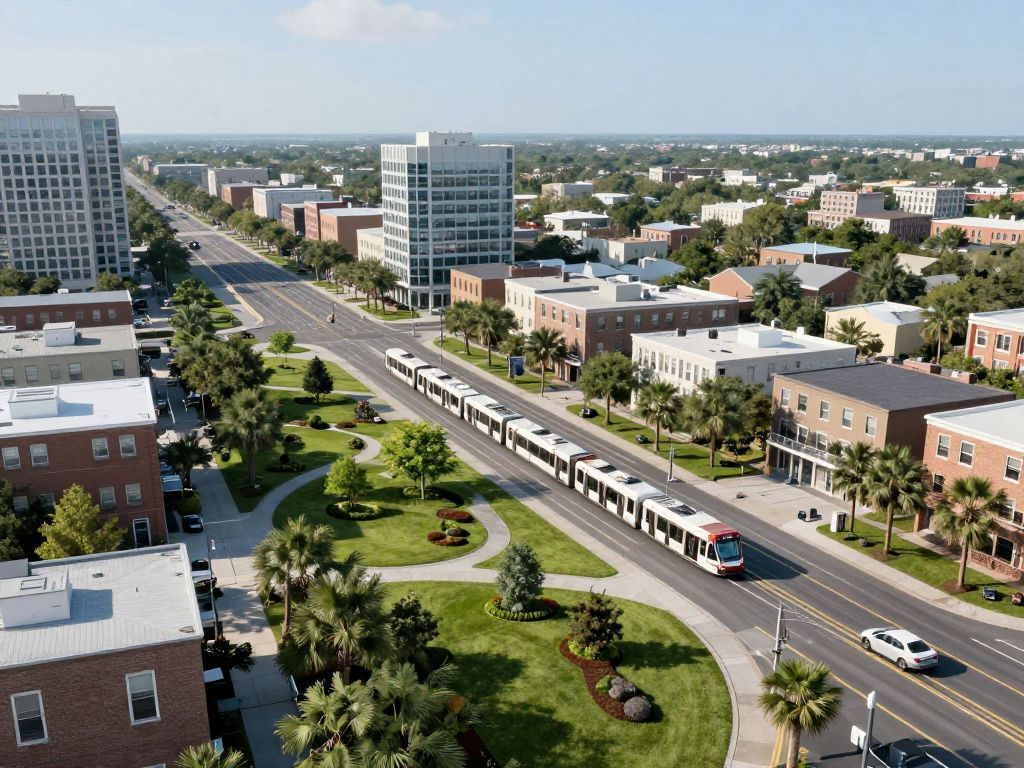
Public transit initiatives are slated to receive just over 15% of the funding, supporting critical services and the continued development of projects like the Lowcountry Rapid Transit. A significant portion, 60%, is allocated to infrastructure. This includes 41% for featured and regional projects, which encompasses debt service, 9% for pavement management, 6% for carryover projects from previous years, 3% for intersection safety, and 1% for signal coordination. Additionally, 5% of the funding is designated for bicycle and pedestrian improvements, aiming to enhance safety and connectivity within the community. This thoughtful distribution aims to maximize the impact of the investment, fostering personal initiative in transportation choices and promoting a more connected Charleston County community.
Leveraging External Investments for Local Impact
The existing transportation sales tax programs have a proven track record of attracting significant outside investment, amplifying the local impact of taxpayer dollars. Since 2004, these programs have collectively generated over $4.56 billion for essential infrastructure, including roads, bridges, transit, and green spaces. A notable aspect of this funding model is the contribution from visitors; approximately 30% of the sales tax funds are generated by Charleston County visitors.
When combined with federal and state matching funds, which have amounted to an additional $1.17 billion, nearly half (48%) of the total investment comes from outside the county. This demonstrates the effectiveness of the sales tax as a mechanism not only for local residents to invest in their community but also for leveraging external economic activity to support critical infrastructure without placing the full burden solely on local taxpayers. This approach highlights the benefits of a limited bureaucracy that can effectively channel diverse funding sources for community growth.
Community Engagement and Shaping Priorities
Charleston County has prioritized extensive public engagement in the development of this transportation sales tax extension. A public input process was initiated in September 2025 by the Charleston County Council, with efforts to gather feedback from residents and municipal partners extending through January 2026. This robust outreach included an online questionnaire, which provided a convenient platform for citizens to share their preferences.
Public listening sessions and community meetings have been integral to this process, allowing county leaders to hear directly from constituents. Upcoming in-person sessions are scheduled, including one in the City of Isle of Palms on February 10, 2026, and another in the Town of Hollywood on February 23, 2026. Additionally, a virtual listening session was held on January 8, 2026, and a meeting with St. Paul’s Democrats is slated for February 26, 2026. For those unable to attend, feedback can still be submitted via email at [email protected]. The public input has been substantial, with one survey alone gathering nearly 29,000 comments from 2,486 respondents, alongside a separate public opinion poll of 693 respondents. Recurring themes from this feedback include concerns about congestion and a desire for visible results in addressing growth, with strong support for safety and bike/pedestrian improvements. This direct involvement of the public in decision-making is a testament to the power of civic involvement in shaping local insights and community growth.
Looking Ahead: A Vision for Charleston’s Connectivity
The proposed transportation sales tax plan represents a forward-thinking vision for Charleston County’s infrastructure and connectivity. By building upon the successes of past programs and integrating extensive community feedback, the plan aims to create a transportation network that is more efficient, safer, and better equipped to handle the demands of a rapidly growing region. The focus on diverse projects, from major roadway improvements to expanded public transit and enhanced green spaces, reflects a holistic understanding of urban development that values both individual achievement and collective well-being.
Residents are encouraged to continue engaging with the process, attending upcoming meetings, and providing feedback. Your participation is vital in ensuring that this significant investment truly reflects the priorities and aspirations of the Charleston County community, contributing to a vibrant future for all. Stay informed about Charleston SC events and how local initiatives are shaping our shared future.
Key Features of the Charleston County Transportation Sales Tax Plan
| Feature | Detail |
|---|---|
| Proposed Funding | $4.25 Billion |
| Proposed Term | 25 years |
| Proposed Sales Tax Rate | Half-cent (extension) |
| Funding for Greenbelt Projects | ~20% |
| Funding for Public Transit | ~15% |
| Funding for Infrastructure | 60% (including regional projects, pavement management, intersection safety, etc.) |
| Funding for Bike/Pedestrian Improvements | 5% |
| Portion of Funding from Outside County | 48% (including 30% from visitors and federal/state matching funds) |
| Referendum Vote (Proposed) | November 2026 |
Deeper Dive: News & Info About This Topic
HERE Resources
Charleston Water System Reinforces West Ashley Infrastructure
Charleston Takes Flight with New Nonstop Breeze Airways Route
Mount Pleasant Welcomes New Land Rover Repair Specialist
Columbia’s Housing Shift: Is Owning Now the Smarter Play?
Charleston’s Saks OFF 5TH to Close Amid Nationwide Retail Shift
Saks OFF 5TH Announces Major Store Closures Nationwide
Breeze Airways Launches New Nonstop Flights to Charleston
North Charleston Festivals Face New Realities
Charleston Marketing Firm Supports Local Startups
Drone Imaging Takes Flight, Boosting Local Business Innovation