
Charleston, South Carolina, August 25, 2025
Charleston’s Premier Trade Schools for Aspiring Electricians and Plumbers
Charleston, South Carolina, combines historic neighborhoods and steady construction activity, creating steady demand for skilled tradespeople. For those aiming to build careers as electricians or plumbers, the city and surrounding Lowcountry offer a mix of formal education, registered apprenticeships, and employer-led training that can lead to licensure, stable pay, and long-term career growth.
Charleston Electrical Training Alliance (CETA) – Apprenticeship Program
The Charleston Electrical Training Alliance runs a registered apprenticeship that blends on-the-job work with classroom instruction. Apprentices rotate through real project sites under the supervision of journeymen, giving them early exposure to commercial, residential, and industrial electrical tasks.
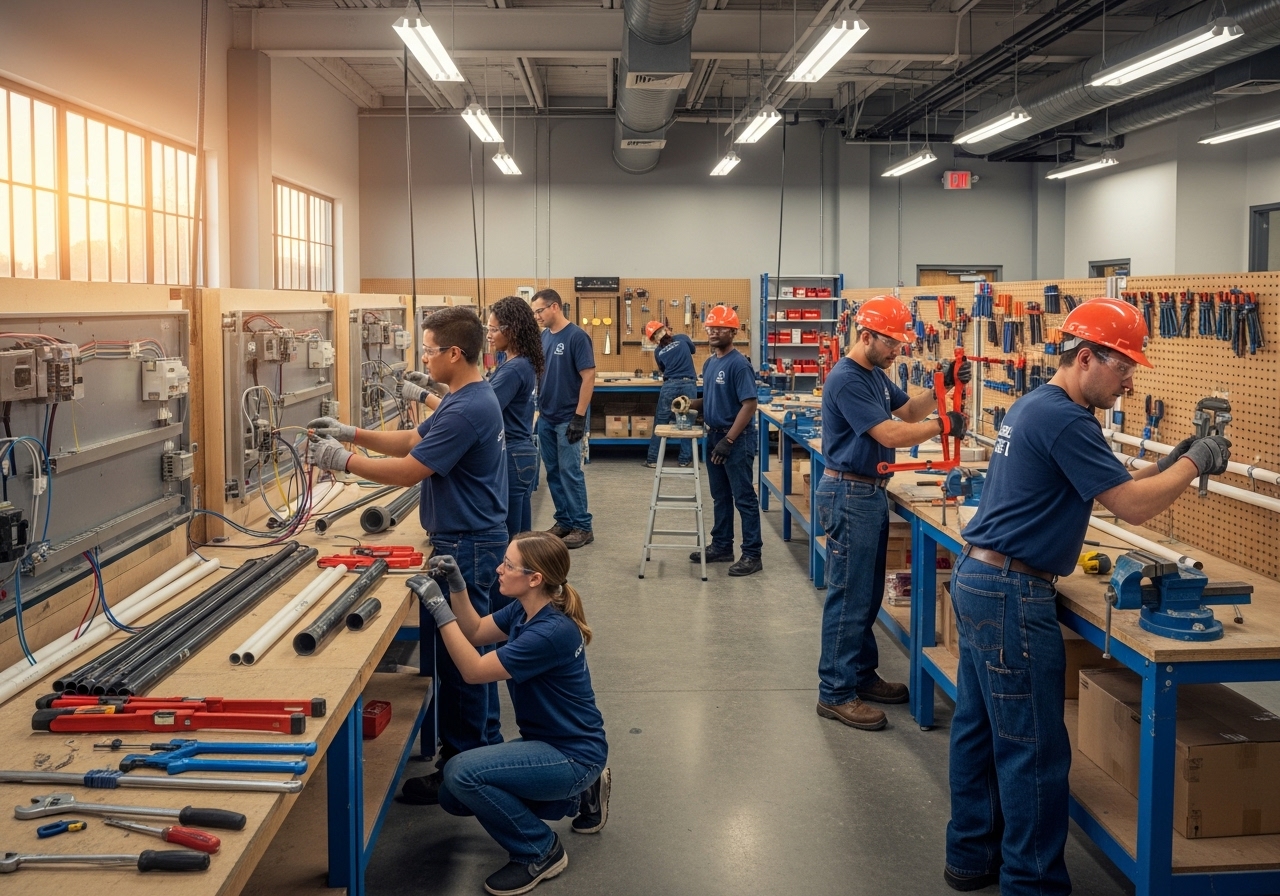
- Hands-On Experience: Apprentices participate in live wiring, conduit bending, motor controls, and troubleshooting while completing supervised service and installation work.
- Structured Timeline: These programs commonly span four to five years, during which apprentices log several thousand hours of on-the-job training alongside several hundred classroom hours.
- Industry Connections: The program links trainees with local contractors and utility projects, which helps explain the program’s solid placement rates for graduates.
The classroom portion emphasizes the National Electrical Code, safety protocols such as NFPA 70E awareness, and system design principles. That combination of practical skill and code knowledge prepares participants for state or local licensing exams and for advancement to journeyman or contractor roles.
Trident Technical College – Electrical Technology Program
Trident Technical College in North Charleston offers certificate and associate degree pathways in Electrical Technology designed for students who prefer a college setting before or during hands-on experience. The curriculum weaves theory with laboratory practice and often pairs students with industry partners for internships or cooperative placements.
- Comprehensive Curriculum: Coursework covers circuit theory, wiring, power distribution, and code requirements aligned with state standards.
- Hands-On Labs: Students spend substantial time in labs practicing installations, conduit work, and control wiring on lab rigs and simulated job environments.
- Credential Options: Options include short-term certificates for entry-level employment and longer associate degrees that support growth into supervisory or technical roles.
Because Trident is regionally accredited, credits can sometimes transfer to other institutions, and the college maintains relationships with local contractors that aid job placement and internship opportunities.
American College of the Building Arts (ACBA)
The American College of the Building Arts focuses on craftsmanship across a range of traditional construction disciplines. While it does not offer dedicated electrician or plumber tracks, its emphasis on construction history, materials science, and hands-on skill contributes to the broader building trades ecosystem in Charleston.
Students and graduates from ACBA often collaborate with trade professionals on historic preservation projects, where coordination with licensed electricians and plumbers is frequent—making ACBA a useful resource for those interested in specialized renovation work.
Plumbing Apprenticeship Opportunities in the Lowcountry
Formal plumbing programs within Charleston are fewer than electrical programs, but apprenticeship pathways remain viable. Local plumbing contractors often sponsor apprentices, combining site training with classroom modules that cover pipefitting, fixtures, drainage, water supply systems, and applicable codes.
- Typical Structure: Plumbing apprenticeships generally last three to five years and require accumulation of on-the-job hours plus related classroom instruction.
- Skill Development: Trainees learn copper and PVC piping, soldering, brazing, backflow prevention, and diagnostics for both residential and commercial systems.
- Licensing Pathway: Practical experience through an apprenticeship is often the most direct route to qualify for state or local licensing examinations for plumbing contractors.
A practical strategy for prospective plumbers is to contact local contractors, trade unions, or the state licensing board to locate registered apprenticeship openings and training partners.
Licensing Requirements for Electricians and Plumbers in South Carolina
Licensure in South Carolina is regulated by state boards and requires combinations of education, documented work experience, and passage of trade-specific exams. For electricians, the South Carolina Department of Labor, Licensing and Regulation oversees licensing categories that may include residential, journeyman, and electrical contractor credentials. Plumbers pursue licensing through the Contractor’s Licensing Board with classifications such as residential specialty and commercial contractor.
Generally, candidates must document an approved training program or a set number of supervised hours, pass written examinations that test code knowledge and trade practice, and maintain continuing education for certain license renewals. Locally, municipalities can add additional registration or permitting requirements, so confirming city-level rules is advisable before taking contracts.
How to Choose the Right Program
Picking a trade school or apprenticeship requires weighing several practical elements. Consider program accreditation and state recognition, the ratio of classroom to hands-on hours, connections to local employers, and support services like career counseling.
Another practical factor is scheduling flexibility. Many apprentices and students work while training, so evening or weekend classes, part-time study, and modular course offerings can make a program feasible without sacrificing income. Also evaluate cost and financial aid options—federal aid, state grants, employer tuition assistance, and union support can significantly reduce out-of-pocket expenses.
Pay, Career Progression, and Local Demand
Electricians and plumbers can expect steady demand in Charleston due to new construction, historic renovations, and maintenance needs. National data places median annual wages for electricians and plumbers near the $55,000–$65,000 range, with local wages varying based on experience, certifications, and whether one works residentially, commercially, or for industrial accounts.
Career progression generally moves from apprentice to journeyman and then to master or contractor level. Gaining specialties—such as HVAC controls, solar electrical systems, or commercial backflow certification—can raise earning potential and open opportunities in project management or business ownership.
Comparison Table: Local Training Options at a Glance
| Program | Type | Typical Duration | Hands-On Component | Credential/Outcome |
|---|---|---|---|---|
| Charleston Electrical Training Alliance (CETA) | Registered Apprenticeship | 4–5 years | Several thousand OJT hours plus classroom labs | Journeyman readiness; qualifies for licensing exams |
| Trident Technical College | Certificate / Associate Degree | 1–2 years (cert./A.A.S.) | Extensive lab work; internships possible | Academic credential; technical readiness |
| American College of the Building Arts (ACBA) | Specialized craftsmanship programs | Varies by program (multi-year) | Studio and shop-based practice | Skilled craft diploma; niche project readiness |
| Local Plumbing Apprenticeships | Employer-sponsored Apprenticeship | 3–5 years | On-the-job training with classroom modules | Qualifies for licensing; journeyman plumber path |
Practical Next Steps for Prospective Trainees
If you are ready to pursue a trade in Charleston, map out a pathway that balances education, hands-on experience, and licensing milestones. Start by contacting program coordinators at CETA and Trident, reach out to local plumbing contractors about apprenticeship openings, and consult the state licensing boards to confirm exam prerequisites and documentation requirements.
Attend industry job fairs, speak with current apprentices and journeymen, and, where possible, spend time on job sites to observe daily tasks and safety practices. These steps will clarify whether you prefer a classroom-led credential route, an employer apprenticeship, or a hybrid pathway.
Key Takeaways
- Charleston supports multiple entry routes into electrical and plumbing careers, including registered apprenticeships and college programs.
- Hands-on training coupled with code-focused classroom instruction is essential for licensure and long-term career mobility.
- Investigate accreditation, employer connections, scheduling flexibility, and local licensing requirements when choosing a program.
FAQ
How long does it typically take to become a licensed electrician in South Carolina?
Most electricians reach journeyman eligibility after about four to five years of apprenticeship-style training, which combines several thousand hours of on-the-job experience with several hundred hours of classroom instruction. Exact timelines depend on program structure and documented hours required by the licensing authority.
Are there college programs that prepare students for electrical work?
Yes. Trident Technical College and similar community colleges offer certificates and associate degrees in Electrical Technology that teach theory, codes, and practical lab work. These programs can be paired with apprenticeships or entry-level employment.
Can I start a plumbing career without going to a technical college?
Yes. Many plumbing careers begin through employer-sponsored apprenticeships that provide on-the-job training combined with classroom modules. These apprenticeships typically lead to the experience requirements needed for licensing examinations.
What should I look for in an apprenticeship or trade program?
Prioritize state recognition or accreditation, a strong hands-on training component, clear pathways to licensure, employer connections or job placement assistance, and scheduling that fits your situation. Financial aid and apprenticeship wages are additional practical considerations.
How do wages progress as I advance in the trade?
Entry-level apprentices earn lower wages that increase with experience. Journeyman and licensed contractors command higher pay, and specialists or business owners typically earn more. Local demand, certifications, and the type of work (residential, commercial, industrial) affect earnings.

Author: STAFF HERE CHARLESTON
The CHARLESTON STAFF WRITER represents the experienced team at HEREcharleston.com, your go-to source for actionable local news and information in Charleston, Charleston County, and beyond. Specializing in "news you can use," we cover essential topics like product reviews for personal and business needs, local business directories, politics, real estate trends, neighborhood insights, and state news affecting the area—with deep expertise drawn from years of dedicated reporting and strong community input, including local press releases and business updates. We deliver top reporting on high-value events such as the Spoleto Festival USA, Charleston Wine + Food Festival, and the MOJA Festival. Our coverage extends to key organizations like the Charleston Metro Chamber of Commerce and the Charleston Museum, plus leading businesses in tourism and maritime industries that power the local economy such as South Carolina Ports Authority and the Charleston Visitor Center. As part of the broader HERE network, including HEREaiken.com, HEREbeaufort.com, HEREchapin.com, HEREcharleston.com, HEREclinton.com, HEREcolumbia.com, HEREgeorgetown.com, HEREgreenwood.com, HEREgreenville.com, HEREhiltonhead.com, HEREirmo.com, HEREmyrtlebeach.com, HEREnewberry.com, HERErockhill.com, HEREspartanburg.com, HEREaustin.com, HEREcollegestation.com, HEREdallas.com, HEREhouston.com, and HEREsanantonio.com, we provide comprehensive, credible insights into South Carolina's dynamic landscape.