
Charleston, South Carolina, August 21, 2025
Charleston’s Shift Toward Technical Education: Understanding the Trend
Charleston is experiencing a clear pivot in how young people and career changers approach postsecondary education. Rather than defaulting to four-year universities, an increasing number of residents are choosing technical colleges, certificate programs, and industry-aligned training. That movement is driven by cost pressures, local employer demand, expanded high-school pathways, and targeted public investments that make shorter, skills-focused programs more attractive and practical.
Why affordability is reshaping choices
Rising tuition and living expenses at many universities have pushed families and students to reconsider the return on a four-year degree. Technical programs commonly take one to two years, carry lower tuition, and often pair with state or institutional scholarships that significantly reduce out-of-pocket costs. For example, statewide initiatives that provide awards of up to $5,000 per year make certificate and associate-level programs immediately more accessible for eligible learners. For households weighing cost, time to completion, and immediate employability, technical pathways frequently emerge as the most pragmatic option.
Beyond sticker price, the structure of technical programs limits the accumulation of student debt. Shorter program lengths and increased availability of need- and merit-based grants mean graduates often enter the workforce with minimal or no college debt, a sharp contrast with four-year degree recipients who may carry substantial balances.
Demand from employers: skills that match openings
Charleston’s economy is diversifying and expanding in sectors that depend heavily on technical talent. Manufacturing, healthcare, logistics, construction trades, and information technology are all hiring in volume. Local companies are looking for workers who can operate modern equipment, maintain industrial systems, support clinical settings, or manage IT infrastructure—skills that many technical curricula deliver directly.
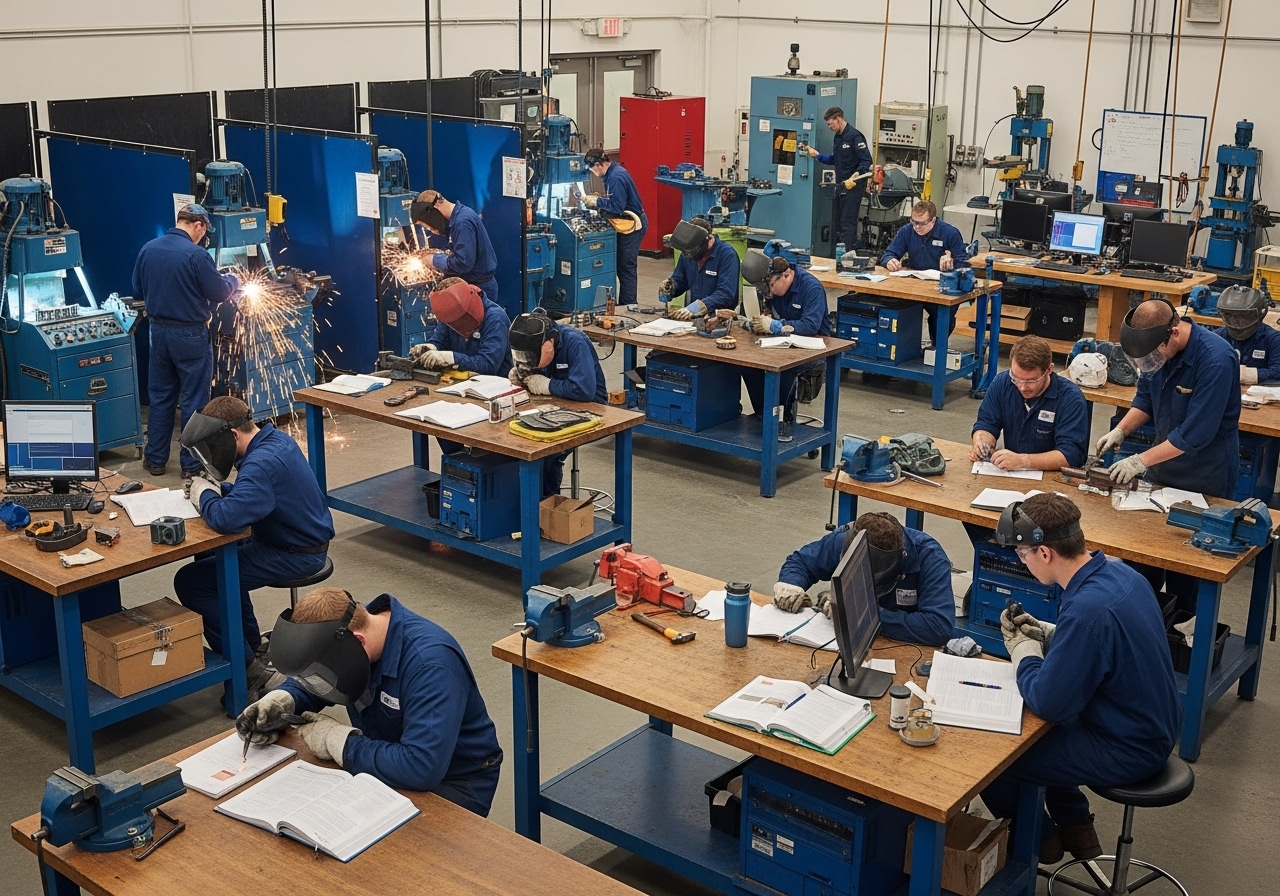
Technical colleges have responded by aligning curricula with employer needs: welding and fabrication courses that mirror shop floor standards, industrial maintenance programs that teach programmable logic controllers and hydraulics, and cyber and AI training tailored for manufacturing contexts. Because these programs are designed with local labor market input, graduates frequently move into jobs with certifications and competencies employers recognize, allowing for rapid workforce entry and faster earnings growth.
Expanded dual enrollment: accelerating credentials while still in high school
School districts and colleges in South Carolina have boosted investment in dual enrollment programs so high school students can earn college credit or industry certificates before graduation. With an annual funding increase of about $3 million, state planners aim to raise participation from roughly 19,000 students to about 25,000 over the coming years. Dual enrollment reduces time-to-degree, lowers student expenses, and introduces younger learners to technical fields early—making it easier for them to pursue targeted certificates or an associate degree immediately after high school.
These programs also help employers by producing a pipeline of multitiered talent: students may graduate with both a high school diploma and a portable credential, such as a commercial driver’s license, welding certification, or HVAC technician certificate.
Public and private investments that expand capacity
To keep pace with rising demand, state and regional budgets have directed significant capital toward technical college expansion. Several recent allocations illustrate the scale of investment: community colleges have received multi-million-dollar grants for building expansions and new facilities—projects such as a $16 million expansion for certain campuses to increase lab and classroom space, and investments approaching $41 million for centers focused on industrial cybersecurity and applied artificial intelligence. These resources buy equipment, create specialized lab space, and support faculty recruitment, allowing institutions to scale programs where local employers need workers most.
Such investments also fund partnerships with industry that supply internships, apprenticeships, and work-based learning—mechanisms that both improve student outcomes and supply employers with job-ready talent.
Institutions in the Charleston region
A handful of local institutions anchor the region’s technical education ecosystem. Trident Technical College serves thousands of students each semester with a broad suite of programs tailored to area employers. The American College of the Building Arts occupies a distinctive niche by combining liberal arts study with intensive training in historic trades and craft-based building skills. Meanwhile, satellite campuses and innovation sites linked to major universities focus on applied research and workforce development in areas such as conservation, energy innovation, and advanced manufacturing.
Collectively, these institutions create layered pathways: short-term certificates, two-year associate degrees, transfer options to four-year schools, and applied research hubs that connect students to local employers.
How technical and four-year pathways compare
Choosing between a technical program and a traditional four-year degree depends on personal goals, finances, and career plans. The table below outlines common distinctions to help prospective students evaluate their options.
| Aspect | Technical Colleges / Certificate Programs | Four-Year Universities |
|---|---|---|
| Typical cost | Lower tuition; many programs can be covered by scholarships and grants | Higher tuition and fees; living costs often increase total expense |
| Program length | 6 months to 2 years | 4 years for a bachelor’s degree |
| Job readiness | Immediate—focused technical skills and industry certifications | Often requires additional on-the-job training or graduate study for specific careers |
| Typical outcome | Certificate, diploma, or associate degree; direct employment in skilled trades or technical roles | Bachelor’s degree; broader academic foundation and potential for graduate study |
| Average starting salary (local context) | Varies by credential—but many technical graduates enter jobs that pay competitive middle-income wages within months | Varies widely by major; professional and technical fields may start higher, while some majors require extra training |
Student experience and career mobility
Technical education doesn’t close off future options. Many students begin with a targeted credential and then stack additional certificates or pursue an associate degree. Transfer agreements between technical colleges and four-year institutions also allow learners to continue their education if they seek a bachelor’s later. This flexibility is important for people who need short-term employment, are retraining mid-career, or want to test a field before committing to a longer degree program.
Apprenticeship and co-op programs provide another bridge to career mobility. Students who complete an apprenticeship often earn while they learn, secure employment with host employers, and gain credits that can be applied toward further credentials.
Challenges and considerations
Despite clear benefits, technical pathways are not a one-size-fits-all solution. Program quality varies; some certificates may lack broad recognition beyond a local labor market. Students must also consider long-term career goals and whether a technical credential aligns with those ambitions. For some professions—such as physicians, lawyers, or research scientists—a university degree remains essential. Equally, colleges and policymakers must guard against under-resourcing technical programs and ensure equitable access to high-quality instruction and facilities.
Data systems that track employment outcomes, earnings, and completion rates are improving but still inconsistent across institutions. Prospective students benefit from reviewing placement rates, employer partnerships, and hands-on training opportunities when choosing a program.
What this means for Charleston’s future workforce
As Charleston’s economy evolves, a robust technical education system will remain a strategic asset. By supplying practical skills, reducing time-to-employment, and creating clear employer pipelines, technical colleges support both individual economic mobility and regional competitiveness. When investments are coupled with employer engagement and transparent outcome data, technical education becomes a dependable pathway to stable careers and local prosperity.
Educational choices are personal, but the trend is clear: more residents are seeing value in credential-focused learning that connects quickly to career opportunities. That shift is reshaping how families plan for education and how employers recruit talent across the Lowcountry.
Key Takeaways
- Affordability and speed make technical programs an attractive alternative to four-year degrees for many Charleston students.
- Programs are increasingly designed to match local industry demand, producing graduates who are ready for immediate employment.
- State funding for dual enrollment and capital projects is expanding capacity and access to technical training.
Frequently Asked Questions
What kinds of jobs do technical programs in Charleston lead to?
Technical programs commonly prepare students for roles such as welding and fabrication technicians, HVAC and electrical technicians, industrial maintenance specialists, nursing assistants and allied health workers, IT support specialists, and logistics roles. Many programs include certifications that employers recognize and prioritize.
How long does it take to complete a typical technical certificate?
Program length varies with the credential. Short-term certificates may be completed in a few months, while diploma or associate programs often require one to two years of study. Dual enrollment options can allow high school students to earn credits before graduating, further shortening time to credential.
Will completing a technical program prevent me from later earning a bachelor’s degree?
No. Many technical colleges have transfer agreements with four-year institutions that let students apply earned credits toward a bachelor’s degree. Students can also stack credentials—starting with a certificate, moving to an associate, and then transferring if desired.
Are employers in Charleston actively recruiting technical graduates?
Yes. Local employers in manufacturing, healthcare, construction, logistics, and technology are recruiting from technical colleges. Partnerships, apprenticeships, and employer advisory boards help ensure curricula align with workforce needs, making technical graduates attractive hires.
What should prospective students look for when choosing a technical program?
Prospective students should examine program accreditation, completion and placement rates, hands-on training opportunities, employer partnerships, available financial aid, and articulation agreements with four-year schools. Visiting campus facilities and talking with advisors and employers can also provide valuable insight.

Author: STAFF HERE CHARLESTON
The CHARLESTON STAFF WRITER represents the experienced team at HEREcharleston.com, your go-to source for actionable local news and information in Charleston, Charleston County, and beyond. Specializing in "news you can use," we cover essential topics like product reviews for personal and business needs, local business directories, politics, real estate trends, neighborhood insights, and state news affecting the area—with deep expertise drawn from years of dedicated reporting and strong community input, including local press releases and business updates. We deliver top reporting on high-value events such as the Spoleto Festival USA, Charleston Wine + Food Festival, and the MOJA Festival. Our coverage extends to key organizations like the Charleston Metro Chamber of Commerce and the Charleston Museum, plus leading businesses in tourism and maritime industries that power the local economy such as South Carolina Ports Authority and the Charleston Visitor Center. As part of the broader HERE network, including HEREaiken.com, HEREbeaufort.com, HEREchapin.com, HEREcharleston.com, HEREclinton.com, HEREcolumbia.com, HEREgeorgetown.com, HEREgreenwood.com, HEREgreenville.com, HEREhiltonhead.com, HEREirmo.com, HEREmyrtlebeach.com, HEREnewberry.com, HERErockhill.com, HEREspartanburg.com, HEREaustin.com, HEREcollegestation.com, HEREdallas.com, HEREhouston.com, and HEREsanantonio.com, we provide comprehensive, credible insights into South Carolina's dynamic landscape.