
Charleston, August 24, 2025
News Summary
Local shrimpers in Charleston are urging lawmakers to establish truth-in-labeling laws that would require restaurants to disclose the origin of their shrimp. This comes after findings revealed that a majority of shrimp served in local restaurants is imported, raising health concerns following a recent FDA contamination warning. The South Carolina Shrimpers Association argues for increased transparency to protect consumers and support local shrimping practices amidst ongoing mislabeling issues.
Charleston Shrimpers Urge for Truth-in-Labeling Laws Following FDA Contamination Warning
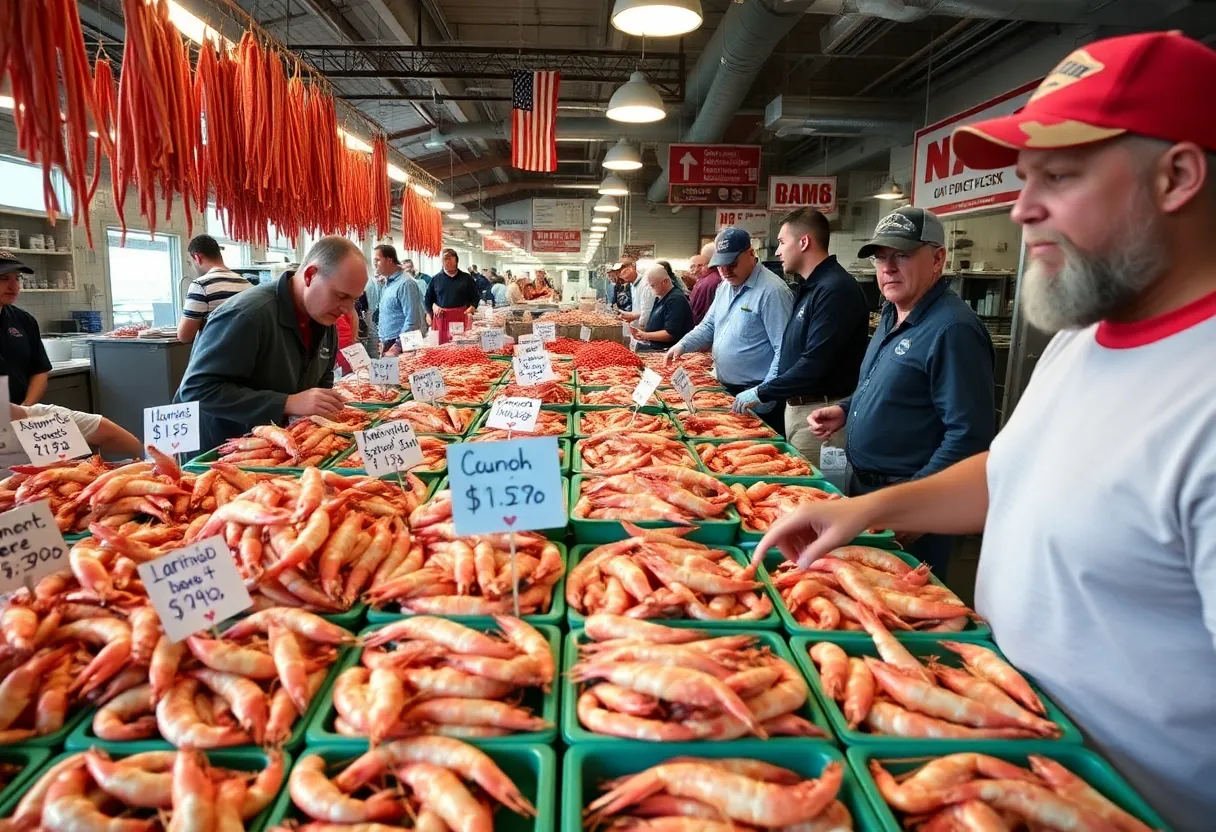
Charleston, South Carolina – Local shrimpers are calling on the South Carolina Legislature to implement truth-in-labeling laws that would mandate restaurants to clearly disclose the origin of their shrimp. This demand comes as a response to recent findings revealing that only four out of 44 restaurants in the Charleston area serve shrimp that is locally sourced. The remaining restaurants were found to be serving shrimp imported from outside the United States.
A Texas research company conducted genetic testing on shrimp served in Charleston restaurants. This testing led the local shrimpers to express their concern that the mislabeling of shrimp is not only prevalent but has been an ongoing issue for many years. In light of these findings, several shrimpers have filed a lawsuit against various restaurants for misrepresenting imported shrimp as local catch.
Health Risks and FDA Alerts
Concerns about the health implications of consuming imported shrimp are growing. Recently, the FDA issued a warning about frozen shrimp imported from Indonesia under the Great Value brand at Walmart. This shrimp was reported to contain the radioactive isotope Cesium-137, which has been linked to increased cancer risk with long-term exposure. Although the contaminated shrimp was detected during a border inspection and had not yet reached U.S. consumers, it raised alarms among local shrimpers about the safety of seafood imports.
In addition, the FDA has placed BMS Foods under Import Alert, effectively halting further imports until they can verify sanitary conditions. These developments highlight the risks associated with seafood imports and the potential public health implications for consumers.
Inspection and Transparency Issues
The South Carolina Shrimpers Association (SCSA) indicates that currently, only 1% of seafood imports are inspected—a statistic that significantly raises public health concerns. The local shrimpers argue that increased transparency is essential for building consumer trust. Many consumers may unknowingly consume imported shrimp believing they are enjoying a local product.
The SCSA’s lawsuit references that similar regulations already exist in other Southern states regarding seafood origin disclosure, advocating for South Carolina to adopt comparable measures. The association notes that states with stricter labeling laws experience significantly lower rates of misrepresentation regarding seafood origins.
Response from Local Restaurants
Some restaurants such as Acme Lowcountry Kitchen and Rappahannock Oyster Bar have been recognized for serving locally sourced shrimp. Conversely, establishments like Hyman’s Seafood have been implicated in the ongoing mislabeling controversy. A number of restaurants have shown interest in rectifying their sourcing practices amidst the scrutiny, with the SCSA advocating for continued efforts to hold non-compliant restaurants accountable.
The push for truth-in-labeling laws reflects a growing movement among local shrimpers seeking to protect their industry and consumers. It aims to ensure that customers are well-informed about the seafood they are consuming, promoting both health and transparency in the market.
Future Actions and Community Impact
As the Charleston shrimping community rallies for change, the hope is that the South Carolina Legislature will respond by instituting necessary regulations to ensure transparency in seafood sourcing. This initiative not only protects the livelihoods of local shrimpers but also serves to ensure the health and safety of seafood consumers in the region.
FAQ
What are truth-in-labeling laws?
Truth-in-labeling laws require restaurants and food vendors to disclose the origin of food products, ensuring transparency for consumers regarding what they are purchasing and consuming.
What was found in the FDA’s recent shrimp contamination warning?
The FDA warned about frozen shrimp imported from Indonesia that was found to contain the radioactive isotope Cesium-137, which poses potential health risks.
How many Charleston restaurants were serving local shrimp?
Out of 44 restaurants tested, only four were found to serve shrimp sourced from South Carolina’s coast.
What do local shrimpers want from the South Carolina Legislature?
Local shrimpers are advocating for laws that require restaurants to disclose the origin of their shrimp, promoting transparency in the seafood market.
Why is transparency in seafood sourcing important?
Transparency helps build consumer trust and ensures that consumers are aware of potential health risks associated with imported seafood.
Key Features of the Article
| Feature | Description |
|---|---|
| Advocacy for Laws | Local shrimpers are pushing for truth-in-labeling laws in South Carolina. |
| Contamination Issues | FDA issued a warning about shrimp containing Cesium-137. |
| Restaurant Sourcing | Only 4 out of 44 tested restaurants served local shrimp. |
| Inspection Rates | Only 1% of seafood imports are inspected in the U.S. |
| Consumer Trust | Transparency in shrimp sourcing is crucial for building trust with consumers. |
Deeper Dive: News & Info About This Topic
HERE Resources
Additional Resources
- Post and Courier: Charleston Shrimpers Restaurant Labeling
- ABC News 4: FDA Bans Shrimp from Indonesia
- Garden & Gun: Shrimp Fraud Allegations
- National Fisherman: Southern States Lay Down the Law on Seafood Labeling
- Count on 2: Local Shrimpers Call for Transparency
- Wikipedia: Shrimp
- Google Search: Charleston Shrimpers
- Google Scholar: Shrimp Labeling Laws
- Encyclopedia Britannica: Shrimp
- Google News: Shrimp Contamination


Author: STAFF HERE CHARLESTON
The CHARLESTON STAFF WRITER represents the experienced team at HEREcharleston.com, your go-to source for actionable local news and information in Charleston, Charleston County, and beyond. Specializing in "news you can use," we cover essential topics like product reviews for personal and business needs, local business directories, politics, real estate trends, neighborhood insights, and state news affecting the area—with deep expertise drawn from years of dedicated reporting and strong community input, including local press releases and business updates. We deliver top reporting on high-value events such as the Spoleto Festival USA, Charleston Wine + Food Festival, and the MOJA Festival. Our coverage extends to key organizations like the Charleston Metro Chamber of Commerce and the Charleston Museum, plus leading businesses in tourism and maritime industries that power the local economy such as South Carolina Ports Authority and the Charleston Visitor Center. As part of the broader HERE network, including HEREaiken.com, HEREbeaufort.com, HEREchapin.com, HEREcharleston.com, HEREclinton.com, HEREcolumbia.com, HEREgeorgetown.com, HEREgreenwood.com, HEREgreenville.com, HEREhiltonhead.com, HEREirmo.com, HEREmyrtlebeach.com, HEREnewberry.com, HERErockhill.com, HEREspartanburg.com, HEREaustin.com, HEREcollegestation.com, HEREdallas.com, HEREhouston.com, and HEREsanantonio.com, we provide comprehensive, credible insights into South Carolina's dynamic landscape.