
Charleston SC, February 18, 2026
Charleston has successfully completed the transformative Low Battery Seawall Repair Project, which enhances flood protection while preserving the historic charm of its waterfront. This project, funded entirely by tourism dollars, has improved the seawall’s resilience, incorporating advanced materials and innovative designs to safeguard the community against future climate challenges. With the addition of public walkway enhancements and upgraded drainage systems, this investment supports both local heritage and economic vitality, creating a lasting impact for residents and visitors alike.
Charleston’s Battery Reborn: A Century of Protection Secured
The Lowcountry’s iconic seawall undergoes a transformative repair, showcasing engineering ingenuity and strategic investment for enduring community resilience and economic vitality.
Charleston, South Carolina, a city celebrated for its rich history and enduring charm, stands as a testament to strategic vision and thoughtful progress. At the heart of its resilience is the historic Low Battery seawall, a vital barrier that has safeguarded the peninsula for over a century. Over time, the relentless forces of nature—from high tides to powerful storms—began to take their toll on this venerable structure, necessitating an ambitious and comprehensive repair project.
The recently completed Low Battery Seawall Repair Project represents more than just a structural upgrade; it symbolizes Charleston’s proactive commitment to protecting its invaluable heritage while fostering an environment ripe for future economic growth. This multi-year endeavor highlights the power of local initiative and prudent financial stewardship, demonstrating how strategic investments in public infrastructure can secure both community well-being and the foundations of a thriving local economy. Financed entirely through tourism dollars, this project exemplifies a self-sustaining model where the city’s economic vitality directly contributes to its physical resilience, benefiting residents and visitors alike for generations to come.
A Foundation for the Future: Fortifying Charleston’s Historic Waterfront
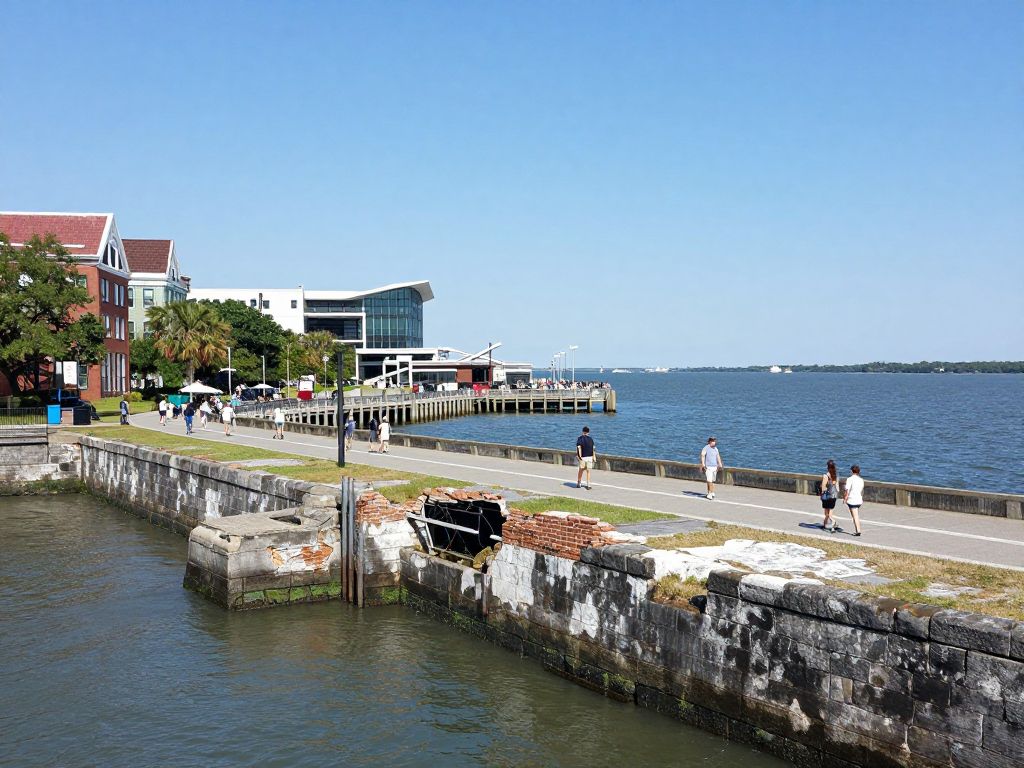
Originally constructed between 1909 and 1919, the Low Battery seawall served as a crucial protective barrier and a beloved waterfront promenade along Charleston’s southernmost peninsula, where the Ashley and Cooper Rivers converge. However, decades of exposure to the elements, rising sea levels, and increasingly intense storms led to significant deterioration, manifesting as cracks, concrete spalling, and failing timber piling connections. Assessments identifying the need for significant repairs began as early as 2004, underscoring the long-term challenge posed by aging infrastructure.
The comprehensive repair project was designed not merely to patch existing damage but to rehabilitate and upgrade the entire seawall system, providing enhanced protection against storm events and higher tidal events. This forward-thinking approach aimed to safeguard the city from future challenges, including anticipated sea-level rise. A key aspect of this restoration was the innovative use of modern materials, such as Mateenbar60™ fiberglass rebar. Unlike traditional steel rebar, this material offers superior corrosion resistance, crucial for the highly saline coastal environment, thus ensuring the seawall’s long-term structural integrity and extending its service life for another century. This adoption of advanced, durable solutions speaks to the spirit of entrepreneurial innovation driving contemporary infrastructure development.
Engineering Excellence and Efficient Execution
The Low Battery Seawall Repair Project was a multifaceted undertaking involving meticulous planning and execution. The City of Charleston enlisted expert design firms like Johnson, Mirmiran & Thompson (JMT) and general contractors such as Gulfstream Construction to bring this ambitious vision to fruition. The project’s scope included raising the seawall’s height by approximately two feet, reaching an elevation of 9.5 feet (NGVD 29), to align with the existing High Battery and provide a more robust defense against coastal flooding.
A notable engineering solution involved underpinning the seawall with micropiles for added stability. This technique was specifically chosen to minimize noise and vibration, thereby reducing disruption to the historic homes located in the vicinity—a prime example of how private sector innovation can tailor solutions to unique local conditions. The project commenced in December 2019 and was structured into four distinct phases, demonstrating a strategic and organized approach to a large-scale public works initiative. This phased construction, with significant segments completed on schedule, showcases the efficiency and dedication of the construction teams and project managers, underscoring a commitment to timely delivery and public benefit. The seawall improvements of Phase 4 are now complete, with crews focusing on the remaining road and utility work.
Beyond Flood Protection: Enhancing Public Spaces and Connectivity
While the primary objective of the Low Battery seawall repair was flood protection, the project’s scope extended significantly to enhance public spaces and improve urban infrastructure. The restoration included the creation of a new 10-foot promenade, designed to be more accessible for both residents and visitors. Complementing this, ADA-compliant ramps, improved walkways, and sidewalks were installed, ensuring that Charleston’s waterfront remains a welcoming and inclusive public asset.
Further enriching the area, the project incorporated new amenities such as a linear park, bicycle lanes, and strategically placed traffic calming tables, transforming the entire corridor into a more functional and aesthetically pleasing community space. Significant upgrades to the area’s drainage system were also implemented, including the replacement of antiquated water and sewer utility mains and services, as well as the installation of high-capacity storm drains with check valves to prevent tidal inundation. Critically, water quality treatment devices were integrated to filter stormwater before it discharges into the Ashley River, demonstrating a commitment to environmental stewardship alongside infrastructure development. These enhancements collectively boost the quality of life for residents, foster community engagement, and create an even more attractive environment for Charleston SC business and Lowcountry economic growth.
Smart Investment for Lasting Prosperity: The Tourism Dollar Impact
The Low Battery Seawall Repair Project, an investment of approximately $70 million to $75 million, stands as a testament to Charleston’s innovative financing strategies. Notably, the entirety of this substantial cost was funded through tourism dollars, meaning that revenue generated by visitors directly contributed to this critical infrastructure upgrade. This approach ensures that local taxpayers are not solely burdened by the costs of essential public works, showcasing a creative and sustainable financial model that leverages the region’s economic strengths.
This method of funding underscores the symbiotic relationship between Charleston’s vibrant tourism sector and its foundational infrastructure. By channeling tourist-generated revenue into such vital projects, the city enhances its appeal, protects its assets, and fortifies its ability to attract further investment and talent. Such strategic allocation of resources demonstrates a proactive and responsible approach to economic stewardship, ensuring that the benefits of a bustling economy are reinvested into the community for long-term resilience and prosperity, directly supporting the Charleston County economy and South Carolina entrepreneurs.
A Model for Urban Resilience and Economic Stewardship
The completion of the Low Battery Seawall Repair Project marks a significant milestone in Charleston’s ongoing efforts to ensure its long-term viability and prosperity. The project has already proven its effectiveness, with no flooding reported in completed sections since construction began, offering a tangible return on investment in terms of flood protection for residents and property owners.
This endeavor serves as a compelling model for urban resilience, illustrating how strategic planning, innovative engineering solutions, and responsible financial management can lead to transformative outcomes. It reflects Charleston’s commitment to preserving its historic character while proactively addressing modern challenges like climate change and sea-level rise. The successful collaboration between the City of Charleston, design firms, and general contractors underscores the value of private sector expertise and highlights the capability of local leadership to orchestrate complex projects for the greater good of the community. This achievement reinforces Charleston’s standing as a hub for both heritage and progressive development, fostering an environment where Charleston small business can thrive and Lowcountry economic growth is sustained for generations.
As Charleston looks to the future, the fortified Low Battery seawall stands as a powerful symbol of the city’s resilience and foresight. This monumental undertaking ensures that future generations will continue to enjoy the beauty and economic vitality of the Lowcountry. We encourage all residents to appreciate this significant investment in our shared future, to support the local businesses that contribute to our vibrant economy, and to remain engaged in the ongoing dialogue about Charleston’s continued growth and success.
Frequently Asked Questions about the Low Battery Seawall Repair Project
- What was the primary purpose of the Low Battery Seawall Repair Project?
- The primary purpose of the Low Battery Seawall Repair Project was to rehabilitate and upgrade the existing seawall, provide increased public waterfront space and enhancements to the promenade, road and drainage improvements, and protect the city from storm events and higher tidal events.
- When was the Low Battery seawall originally constructed?
- The Low Battery seawall was originally constructed in the early 1900s, specifically between 1909 and 1919.
- What innovative material was used in the seawall repair?
- The project utilized Mateenbar60™ fiberglass rebar for corrosion resistance and an extended service life exceeding 100 years.
- How was the Low Battery Seawall Repair Project funded?
- The entire Low Battery Seawall Repair Project, costing approximately $70 million to $75 million, was funded entirely through tourism dollars.
- What are some of the key improvements beyond flood protection?
- Key improvements beyond flood protection include an enhanced public waterfront space and a 10-foot promenade, ADA-compliant ramps, improved walkways, sidewalks, new linear park features, bicycle lanes, traffic calming tables, and upgraded drainage with water quality treatment devices.
Key Features of the Low Battery Seawall Repair Project
| Feature | Description | Scope |
|---|---|---|
| Original Construction Period | Early 1900s (between 1909 and 1919) | Local |
| Primary Goal | Rehabilitate and upgrade seawall, protect from storms/tides, improve public space | Local |
| Seawall Height Increase | Approximately 2 feet, matching High Battery (to 9.5 feet NGVD 29) | Local |
| Innovative Material Used | Mateenbar60™ fiberglass rebar for corrosion resistance and 100+ year lifespan | Local |
| Total Estimated Cost | Approximately $70 million to $75 million | Local |
| Funding Source | 100% tourism dollars | Local |
| Project Start Date | Construction commenced December 2019 | Local |
| Anticipated Completion | Mid-2025 for final phase; full project by 2026 | Local |
| Key Enhancements | 10-foot promenade, ADA ramps, linear park, bicycle lanes, upgraded drainage, water quality treatment | Local |
| Contractors/Designers | JMT (Design), Gulfstream Construction (General Contractor) | Local |
Deeper Dive: News & Info About This Topic
HERE Resources
Charleston Hosts Public Meetings for Transportation Tax Referendum
Charleston Considers Referendum to Extend Transportation Tax
Charleston Hosts Unique Fitness Event: Keep It Moving Tour
Ashley River Crossing Bridge Closure for Construction
Charleston Confronts Severe Flooding Challenges
Construction Begins on Ashley River Crossing Pedestrian Bridge
Charleston City Council Approves $2.5 Million for Flood Resilience
Charleston City Council Approves $2.5 Million Seawall Design
Charleston Schedules Nighttime Lane Closures for Bridge Work
Charleston County Council Approves Major Road Safety Enhancements