

Charleston, South Carolina, September 2, 2025
Charleston School of Law’s Integral Role in South Carolina’s Legal Landscape
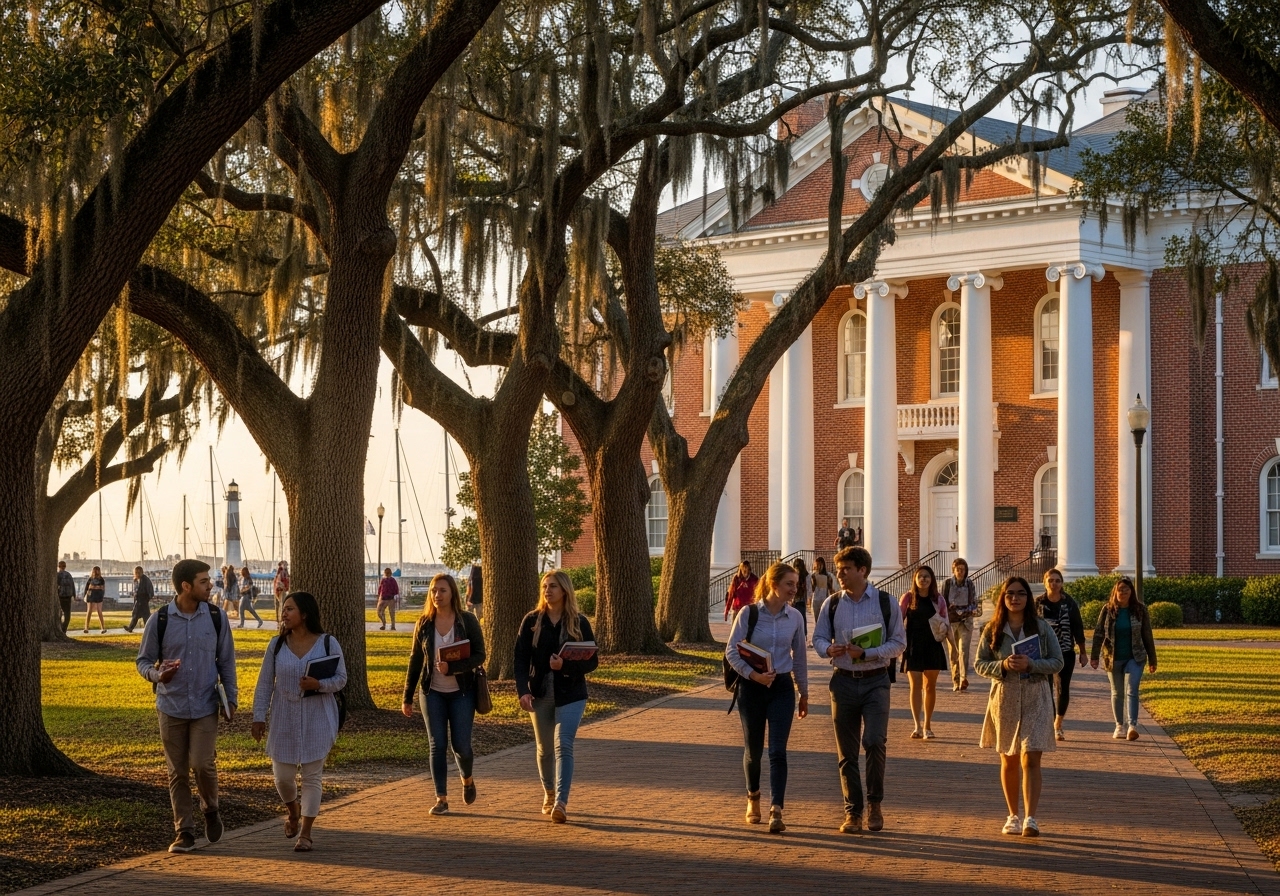
Charleston serves as more than a historic port city and tourist destination; it is also the home of an institution that has reshaped legal education within the state. The Charleston School of Law (CSOL), established in the early 21st century, has positioned itself as a practical, community-oriented law school that prioritizes service, hands-on training, and measurable outcomes for graduates entering the profession.
Foundations, Mission, and Local Roots
The law school’s foundation draws on a long local tradition of legal instruction and civic engagement. Built on a civic-minded heritage that dates back to the 19th century, CSOL launched in 2003 with a mission focused on preparing attorneys who view law as a public service. That mission is reflected in institutional priorities: integrating community work into the curriculum, encouraging public-interest careers, and cultivating lawyers who are conversant with the legal needs of the region. Students leave not only with doctrinal knowledge but also with a lived sense of responsibility to the communities they will serve.
Curriculum That Emphasizes Practice
The academic program at CSOL centers on the Juris Doctor degree, available in both full-time and part-time formats to accommodate different student circumstances. The coursework balances rigorous doctrinal classes with explicit experiential components. Clinics, simulation courses, and supervised externships are woven through the academic sequence so that students repeatedly apply statutory interpretation, advocacy, and negotiation skills in real contexts. This design reduces the gap between classroom theory and courtroom or transactional practice and helps graduates arrive at bar study and job interviews with concrete examples of legal work completed under supervision.
A notable curricular expectation is the school’s public service requirement: every student must complete 50 hours of pro bono or community legal work prior to graduation. That mandate reinforces the program’s principle that law is a public-facing profession and exposes students to a broad range of client needs—housing, family law, benefit appeals, consumer issues—that frequently appear in local practice.
Experiential Opportunities and Clinics
Hands-on learning comes through multiple channels. In-house clinics give students extended responsibility under faculty supervision, such as managing client intake, drafting pleadings, and appearing in court or administrative hearings. Common offerings have included access-to-justice clinics focused on civil legal needs, a criminal prosecution clinic that places students in the courtroom alongside prosecutors, and mediation-focused clinics that develop dispute resolution skills. Externship placements in government offices, public defender’s offices, non-profits, and private firms allow students to observe and contribute to casework that aligns with their interests.
Beyond clinics, students often engage in short-term internships and semester-long placements with judges, state agencies, and community organizations, which provide a range of professional perspectives and networking opportunities. These experiential paths frequently convert into job leads after graduation or into long-term public-interest placements.
Pro Bono Culture and Community Impact
Pro bono service is more than an academic checkbox at CSOL; it is an organizing principle. Since the school began requiring community service, cohorts of students have collectively contributed thousands of hours to assist vulnerable populations. Those hours translate into tangible legal help: document preparation for tenants, advice clinics for low-income veterans, representation in administrative benefit disputes, and legal education workshops in local community centers and schools. The cumulative effect benefits clients and builds sustained ties between the law school and community providers who rely on student assistance to reach underserved populations.
Scholarly Work and Specialized Publications
While emphasizing practice, CSOL maintains an active scholarly presence. Student-run journals and bulletins publish articles on evolving legal subjects and regional concerns. The primary student law review provides a forum for analysis across traditional and contemporary legal topics. A maritime-focused publication reflects Charleston’s coastal context, addressing topics such as admiralty law, port regulation, and maritime commerce. Another journal explores alternative dispute resolution methods, capturing developments in mediation and arbitration that affect practitioners and policymakers alike. These periodicals give students editorial responsibility and the chance to engage in rigorous legal research and writing.
Outcomes: Bar Passage and Employment
Graduate outcomes are a key metric for assessing a law school’s effectiveness. CSOL has made progress in improving bar passage and employment results. In a recent administration of the state bar exam, the school reported a 77% bar passage rate for test-takers during a July examination cycle, which signaled upward momentum from earlier cohorts. Employment disclosures prepared for regulatory purposes have also shown encouraging placement statistics: a majority of graduates secure full-time, long-term positions that require a J.D. within the standard nine-month reporting window, with some past classes reaching roughly 85% in that category according to the school’s disclosures for earlier graduating classes. Those figures indicate that graduates are finding roles in firms, business legal departments, government, and public-interest organizations, although individual outcomes vary by class year and market conditions.
How CSOL Fits into the Statewide Law School Ecosystem
South Carolina’s legal-education landscape includes more than one accredited law program, and prospective students often weigh differences in location, size, clinical offerings, and institutional culture. CSOL’s urban coastal setting contrasts with the other principal state law school located in the Midlands. Each institution presents distinct strengths: Charleston’s program is compact and practice-oriented, while the other public university-backed law school offers a longer historical legacy and broad statewide alumni networks. Students choosing between these options should consider the type of experiential opportunities they want, proximity to potential employers, and the community-service emphasis that best aligns with their career goals.
| Aspect | Charleston School of Law | Joseph F. Rice School of Law (University of South Carolina) |
|---|---|---|
| Location | Charleston, SC | Columbia, SC |
| Founding Year | 2003 | 1867 |
| Approximate Student Body | About 675 | About 600 |
| Pro Bono Requirement | 50 hours required | Generally voluntary; strong clinic participation |
| Clinics and Experiential Options | Access to Justice, Criminal Prosecution, Street Law, Mediation, and externships | Multiple in-house clinics, public-interest placements, and statewide externships |
| Student Publications | Charleston Law Review, Maritime Law Bulletin, Resolved (ADR journal) | South Carolina Law Review, Journal of Law and Education |
Admissions, Student Life, and Career Services
Admissions tend to favor individuals who demonstrate commitment to public service and a readiness for experiential learning. Class profiles reflect a mix of recent college graduates and mid-career professionals seeking day or evening programs. Student life in Charleston leverages the city’s legal community: guest practitioners and judges frequently participate in workshops and adjunct teaching, and local firms and agencies host externs and interns. A focused career-services office provides interview preparation, networking events, and employer outreach tailored to the regional market while also supporting graduates seeking positions outside the immediate geographic area.
Challenges and Opportunities
No law school operates without challenges. Maintaining consistent bar passage improvements, expanding curricular breadth, and strengthening national placement networks are ongoing objectives. At the same time, opportunities emerge from Charleston’s economy—maritime commerce, tourism-related businesses, and a growing tech and regulatory environment present expanding legal niches. The school is positioned to grow its maritime and business law offerings and to deepen partnerships with local courts and agencies, which can enhance student training and community impact.
A Practical and Civic-Oriented Perspective
For students intent on developing practice-ready skills while embracing a civic orientation, CSOL presents a curriculum and environment that emphasize both. The structured clinical experiences, explicit pro bono expectations, and regionally relevant scholarship equip graduates to navigate the demands of contemporary practice. These features also prepare alumni to assume roles that contribute to access to justice and public service across South Carolina.
Key Takeaways
- Public service is central to the school’s identity, with a required 50 hours of community legal work for each student.
- Curriculum blends doctrinal study with significant experiential learning through clinics, externships, and internships that foster practical readiness.
- CSOL maintains active student publications and has shown measurable gains in bar passage and employment outcomes, reflecting an emphasis on professional success and scholarship.
Frequently Asked Questions
- What is the pro bono or community service requirement at the Charleston School of Law?
Each student is required to complete 50 hours of verified pro bono or community legal service before graduation, structured to connect classroom learning with unmet legal needs in the region.
- How does CSOL prepare students for the bar exam?
Preparation includes doctrinal coursework aligned with bar-tested subjects, skills courses that reinforce legal analysis, and targeted bar support resources. The school has achieved notable bar passage rates in recent testing cycles, indicating effective preparation strategies.
- What types of clinics and practical placements are available?
Students can participate in clinics focused on access to justice, criminal prosecution, mediation, and community legal education. Externships and internships place students with judges, government agencies, non-profits, and private law firms to gain supervised real-world experience.
- How do CSOL graduates fare in the job market?
Graduate employment statistics show a substantial portion of alumni securing full-time, long-term, J.D.-required roles within nine months of graduation. Career services supports students with employer outreach, interview preparation, and networking opportunities.
- How does the Charleston School of Law differ from other law schools in South Carolina?
CSOL emphasizes a compact, practice-focused curriculum, a mandatory pro bono component, and publications that reflect the coastal legal environment. Other state law schools offer different scales, networks, and clinic portfolios; applicants should weigh location, culture, and program emphases when choosing.

Author: STAFF HERE CHARLESTON
The CHARLESTON STAFF WRITER represents the experienced team at HEREcharleston.com, your go-to source for actionable local news and information in Charleston, Charleston County, and beyond. Specializing in "news you can use," we cover essential topics like product reviews for personal and business needs, local business directories, politics, real estate trends, neighborhood insights, and state news affecting the area—with deep expertise drawn from years of dedicated reporting and strong community input, including local press releases and business updates. We deliver top reporting on high-value events such as the Spoleto Festival USA, Charleston Wine + Food Festival, and the MOJA Festival. Our coverage extends to key organizations like the Charleston Metro Chamber of Commerce and the Charleston Museum, plus leading businesses in tourism and maritime industries that power the local economy such as South Carolina Ports Authority and the Charleston Visitor Center. As part of the broader HERE network, including HEREaiken.com, HEREbeaufort.com, HEREchapin.com, HEREcharleston.com, HEREclinton.com, HEREcolumbia.com, HEREgeorgetown.com, HEREgreenwood.com, HEREgreenville.com, HEREhiltonhead.com, HEREirmo.com, HEREmyrtlebeach.com, HEREnewberry.com, HERErockhill.com, HEREspartanburg.com, HEREaustin.com, HEREcollegestation.com, HEREdallas.com, HEREhouston.com, and HEREsanantonio.com, we provide comprehensive, credible insights into South Carolina's dynamic landscape.