

Charleston, South Carolina, August 30, 2025
Charleston’s Legal Legacy: The Evolution of Charleston School of Law
Charleston stands among American cities where legal education has deep roots. The city’s engagement with formal legal instruction stretches back to the early 19th century, when local practitioners organized study and debate groups that foreshadowed later law schools in the region. That early institutional impulse resurfaced in the early 21st century as a new generation of judges and lawyers worked to re-establish a law school that would reflect the city’s historic traditions while responding to contemporary demands for practice-ready graduates.
Reviving a Historic Tradition
The modern Charleston School of Law emerged from a desire to reconnect with a citywide tradition of legal discussion and training. Local jurists and bar members who spearheaded the initiative in the early 2000s aimed to create a small, community-centered program that balanced doctrinal instruction with real-world experience. Their plan prioritized skills training—trial advocacy, client counseling, transactional drafting—alongside ethical formation and a clear emphasis on service to the community. The result was an institution designed to produce graduates usable by courts, firms, public interest organizations, and government agencies from the outset of practice.
Inaugural Milestones and Early Cohorts
The law school’s first class arrived in the mid-2000s, with a student body that combined full- and part-time learners to reflect differing professional needs and life circumstances. From the outset, the curriculum sought to integrate intensive classroom work with opportunities for experiential learning: clinical placements, externships, and pro bono projects were built into degree requirements. This approach aimed to reduce the gap between academic theory and daily legal practice, giving students supervised exposure to client work before they took the bar exam.
Accreditation, Standards, and Academic Development
Securing accreditation from the national body that governs entry to the bar was a central task during the school’s formative years. Achieving provisional recognition allowed graduates to pursue licensure, while full accreditation later signaled that the institution met established benchmarks for faculty qualifications, library resources, student services, and outcomes assessment. Accreditation also required the school to monitor bar passage and employment metrics, prompting investments in bar preparation and career services that would show gradual improvements over time.
Embedding Public Service into the Curriculum
A distinctive structural requirement at the school has been mandatory pro bono service for all graduates. Requiring students to complete a set number of hours working on matters that benefit underserved populations ensured that public service was not merely optional but a component of professional formation. Clinics covering civil legal aid, criminal defense support, and transactional assistance for nonprofit organizations gave students supervised, meaningful case experience while expanding legal resources available to the local community.
Institutional Turbulence and Community Response
Like many small law schools navigating the shifting landscape of legal education, the institution faced a period of controversy when ownership changes were proposed. Plans to transition to a different operational model raised concerns among stakeholders about academic quality, student outcomes, and long-term identity. Faculty, alumni, and students engaged in sustained advocacy that emphasized the need to preserve academic standards and the school’s ties to the Charleston legal community. That episode tested governance structures and prompted a reappraisal of strategic priorities.
Leadership Shift and a Path to Nonprofit Status
A leadership change in the mid-2010s marked a turning point. New executive direction focused on financial stabilization, strengthening academic programs, and restoring trust among the bar, judiciary, and alumni network. A deliberate decision to pursue nonprofit status was presented as a way to align institutional incentives with educational mission rather than shareholder return. The shift required reconfiguring governance, fundraising approaches, and long-term planning, but it also opened channels for philanthropic investment and community partnerships that supported student scholarships, faculty development, and facilities improvement.
Academic Outcomes and Bar Performance
Bar passage trends have been a measuring stick for the school’s progress. Over time, targeted support—including specialized bar courses, structured practice exams, and individualized tutoring—aimed to raise the rate at which graduates passed licensing exams on first attempt. Recent reporting showed a notable increase in passage rates that moved the school closer to, and in some instances above, statewide averages. Those gains were presented as evidence that curricular and support reforms were translating into better preparation for licensure and practice.
Campus, Facilities, and the Learning Environment
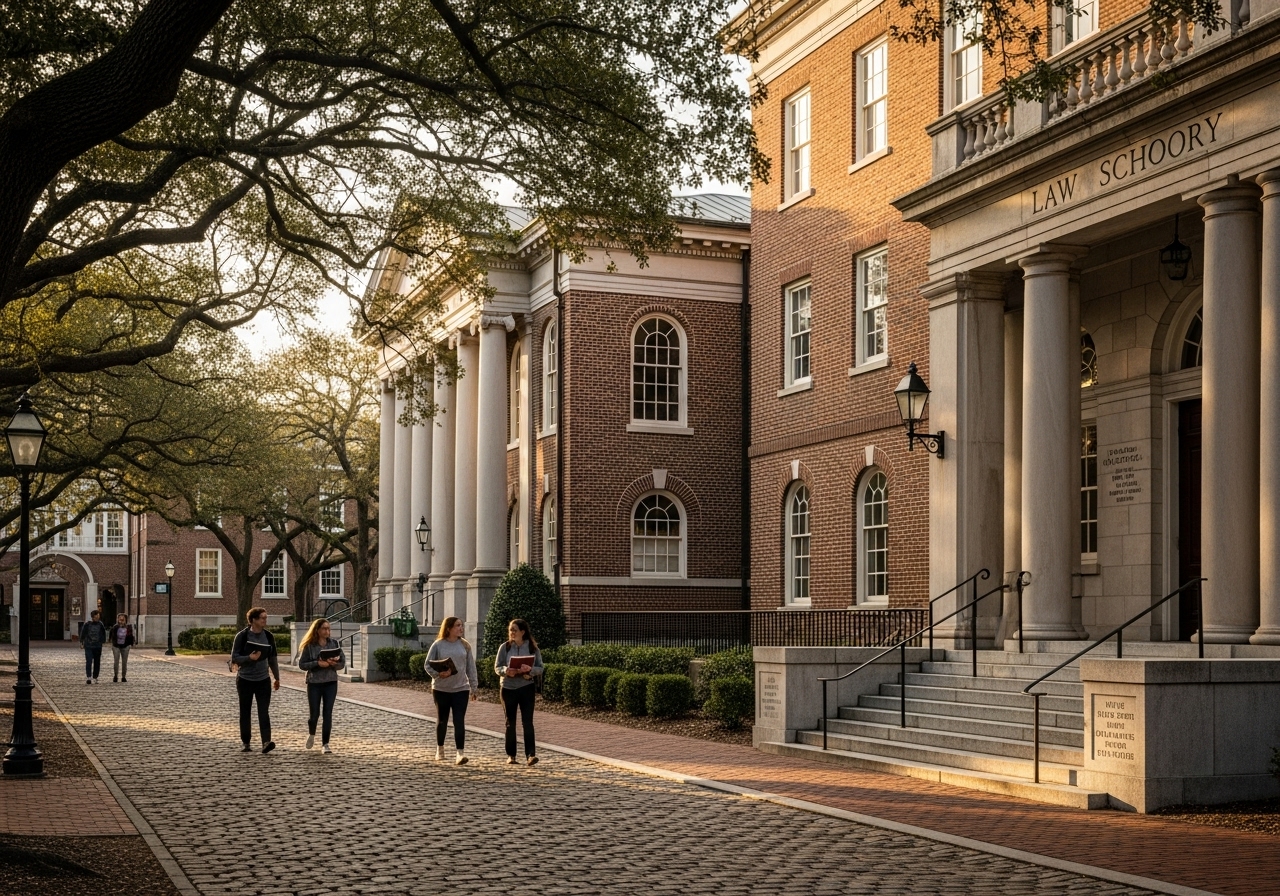
The school’s physical footprint evolved as it expanded student services and consolidated resources. Historic buildings near downtown became home to classrooms and a law library, and later consolidation efforts moved core services into a centralized facility designed to promote collaboration and efficient access to research materials. Such investments reflected an understanding that space matters: well-designed classrooms, moot courtrooms, and library resources contribute directly to the quality of legal training and to student satisfaction.
Scholarly Contributions and Public Conversation
Alongside skills education, the law school maintained scholarly outlets that invited practitioners and academics to engage with contemporary legal debates. A law review provided a forum for analytical articles, practitioner notes, and essays addressing regional and national issues. Contributions from practitioners, judges, and scholars helped bridge the gap between academe and courtroom practice, reinforcing the school’s role as a forum for legal thought within the southeastern United States.
Looking Ahead: Sustaining a Distinctive Mission
As the institution moved toward its second decade, priorities crystallized around sustaining high-quality practice training, improving employment outcomes, and deepening ties to the local bar and judiciary. Efforts to diversify the student body, expand experiential offerings, and secure resources for scholarship aid signaled a long-term strategy focused on access and excellence. The school’s trajectory reflects a balance between honoring a historical legacy of legal instruction and adapting to the practical demands faced by new lawyers.
Timeline of Notable Milestones
| Year | Event | Significance |
|---|---|---|
| 1826 | Local legal study groups formed | Early foundation for legal education in the city |
| 2003 | School established | New institutional commitment to practice-focused legal education |
| 2004 | First entering class | Initial cohort blended full- and part-time students |
| 2006 | Provisional accreditation achieved | Graduates authorized to sit for bar exams |
| 2011 | Full accreditation granted | Affirmed compliance with national standards |
| 2013 | Ownership controversy | Prompted institutional review and stakeholder engagement |
| 2015 | Leadership change and nonprofit transition | Nonprofit transition refocused priorities on education and service |
| 2022 | Marked improvement in bar passage | 77% bar pass rate signaled academic gains |
| 2023 | Campus consolidation | Centralized facilities for classrooms and library |
What Distinguishes This School from Peers?
Several characteristics set the program apart within its region. First, a persistent emphasis on experiential training equips students with courtroom and client-facing skills early in their studies. Second, a structural requirement for pro bono engagement ensures that graduates leave with a demonstrated commitment to civic service. Third, the compact size of the student body has allowed for personalized advising and closer relationships between faculty and students, which can be advantageous in preparing for the bar and for entry-level practice.
Challenges That Remain
Small professional schools often confront financial pressures, shifting applicant pools, and heightened expectations for outcome metrics such as employment and bar passage. Sustaining investments in faculty, clinical programs, and student services requires diversified revenue and active alumni support. The institution’s future depends on balancing growth with the quality controls that produced recent gains, as well as on cultivating partnerships with local courts, firms, and public-sector employers that provide meaningful job pathways for graduates.
Frequently Asked Questions
What is the historical origin of legal education in Charleston?
Legal study in Charleston traces to organized practitioner forums in the early 1800s, which functioned as informal training venues and debate societies that paved the way for later law school efforts in the region.
When was the modern Charleston School of Law founded?
The contemporary institution was established in the early 2000s with a mission to combine doctrinal instruction and practical training for aspiring lawyers.
Does the school require pro bono work?
Yes. A set number of supervised pro bono hours is required for graduation, ensuring that students gain hands-on experience and contribute legal services to underserved communities.
What accreditation does the school hold?
The school achieved provisional national accreditation early in its history and later received full accreditation after meeting established standards for faculty, facilities, and student outcomes.
How has the school addressed past governance challenges?
Leadership changes and a strategic move to nonprofit status were pursued to stabilize governance, realign institutional priorities with educational goals, and open new avenues for philanthropic support and community partnerships.
Key Takeaways
- Charleston’s legal education tradition dates back to the 19th century and informed the founding of the modern law school.
- The school emphasizes experiential learning and mandatory pro bono service to prepare graduates for practice.
- A leadership shift and nonprofit transition helped stabilize governance and support academic improvements, reflected in rising bar passage rates.
The institution’s story is one of renewal and adaptation: a local legal culture reimagined for contemporary practice, attentive to both the rigorous demands of licensure and the civic responsibilities of the bar. As it continues to refine its programs and strengthen ties to the legal community, the school aims to produce graduates equipped to meet the complex challenges of modern practice while honoring a long-standing regional legal tradition.

Author: STAFF HERE CHARLESTON
The CHARLESTON STAFF WRITER represents the experienced team at HEREcharleston.com, your go-to source for actionable local news and information in Charleston, Charleston County, and beyond. Specializing in "news you can use," we cover essential topics like product reviews for personal and business needs, local business directories, politics, real estate trends, neighborhood insights, and state news affecting the area—with deep expertise drawn from years of dedicated reporting and strong community input, including local press releases and business updates. We deliver top reporting on high-value events such as the Spoleto Festival USA, Charleston Wine + Food Festival, and the MOJA Festival. Our coverage extends to key organizations like the Charleston Metro Chamber of Commerce and the Charleston Museum, plus leading businesses in tourism and maritime industries that power the local economy such as South Carolina Ports Authority and the Charleston Visitor Center. As part of the broader HERE network, including HEREaiken.com, HEREbeaufort.com, HEREchapin.com, HEREcharleston.com, HEREclinton.com, HEREcolumbia.com, HEREgeorgetown.com, HEREgreenwood.com, HEREgreenville.com, HEREhiltonhead.com, HEREirmo.com, HEREmyrtlebeach.com, HEREnewberry.com, HERErockhill.com, HEREspartanburg.com, HEREaustin.com, HEREcollegestation.com, HEREdallas.com, HEREhouston.com, and HEREsanantonio.com, we provide comprehensive, credible insights into South Carolina's dynamic landscape.