
Charleston, South Carolina, August 27, 2025
Charleston: A Historic Backdrop for Legal Education
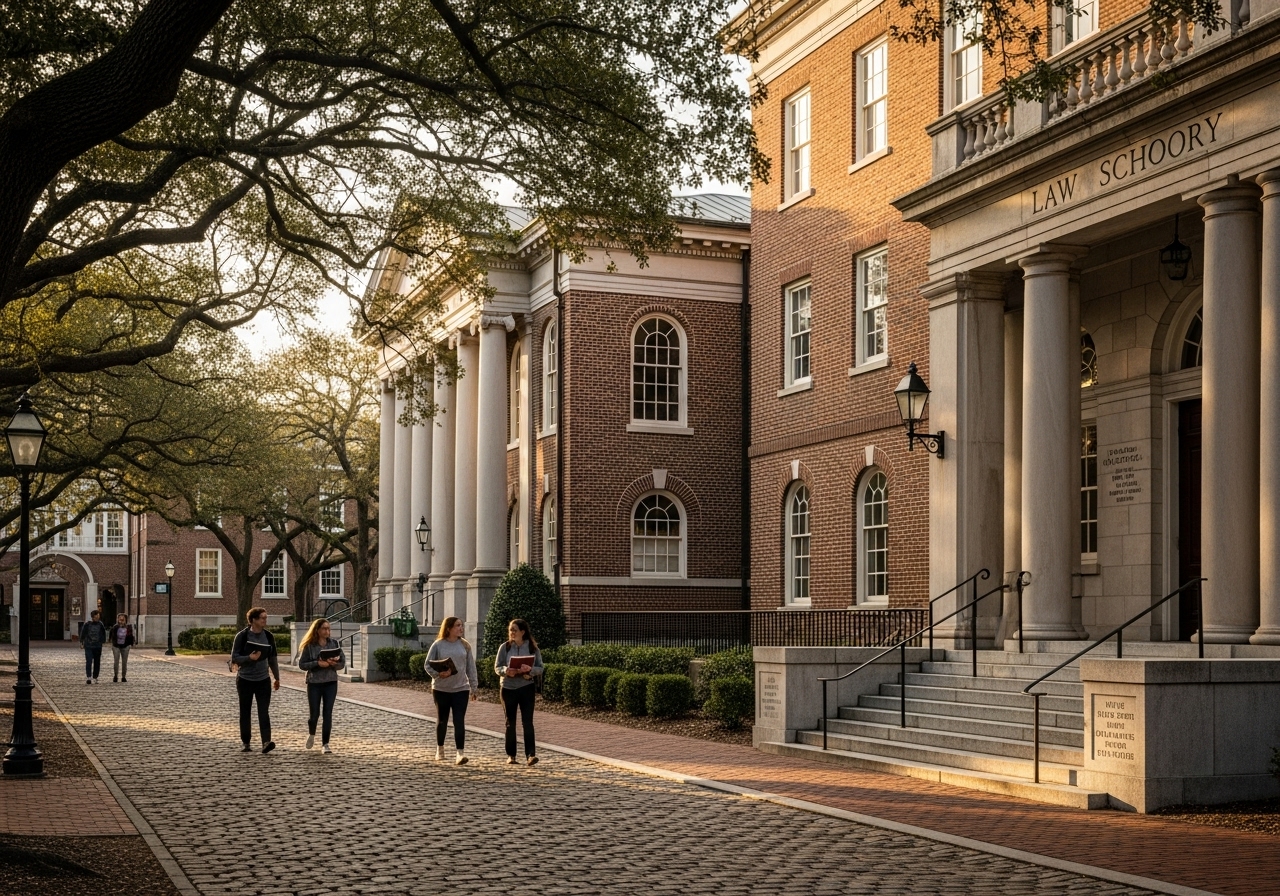
Charleston serves as the setting for a law school that combines regional tradition with contemporary legal training. Nestled among preserved streets and active port facilities, the Charleston School of Law has grown since its founding in 2003 to offer a curriculum and student experience shaped by the city’s civic institutions, court system, and maritime economy. That geographic proximity gives learners a steady stream of practical encounters with litigation, transactional work, and public-interest law that reflect the city’s legal rhythms.
Commitment to Public Service
Public service is woven into the school’s structure rather than treated as an optional extra. Students must complete a minimum of 50 hours of pro bono work before they graduate, and alumni and current students have cumulatively contributed more than 500,000 hours to community legal needs. This mandate creates repeated exposure to client interviewing, case intake, legal research, and project-based advocacy. Examples of the kinds of placements include legal aid clinics assisting low-income tenants, veterans’ legal assistance projects, and municipal partnerships that provide legal resources for underserved neighborhoods. For students, those hours not only fulfill a requirement but often become formative professional experiences that shape career interests.
Experiential Learning Opportunities
Practical training is a major strand of the school’s educational approach. The externship program connects students with over 150 placement sites, ranging from federal and state courts to governmental agencies and boutique law firms. Externships typically place students under direct supervision, granting them responsibility for drafting motions, preparing witnesses, or supporting transactional closings depending on the placement.
Clinical offerings further enlarge hands-on opportunities. Clinics in Family Law and Criminal Prosecution, among others, let enrolled students represent clients or support prosecutors under licensed attorneys’ oversight. These clinical settings demand courtroom procedure familiarity, ethical decision-making in real time, and the communication skills that are difficult to replicate in a classroom. Students often leave these programs with a portfolio of work samples and references that aid job searches.
Supportive and Accessible Faculty
The faculty culture emphasizes mentorship and accessibility. Instructors frequently hold office hours, host small-group workshops, and serve as advisors for student publications and organizations. That availability supports professional formation as much as academic performance: faculty frequently guide students through case strategy discussions, bar preparation planning, and the transition from law school to law practice. That hands-on mentorship complements classroom learning and tends to foster a student-centered environment rather than a purely lecture-driven model.
Resources for Women and Inclusive Programming
The school has been recognized for resources and programming tailored to women in law, which includes networking events, career panels addressing gender-specific workplace dynamics, and mentorship circles pairing students with alumnae. Those structures aim to mitigate attrition, facilitate advancement, and provide practical guidance about negotiating job offers and navigating firm or public-sector career paths. Inclusion efforts also extend to student organizations and affinity groups that create space for diverse perspectives and support systems throughout the three-year program.
Academic Rigor and Bar Preparation
Admissions are selective, with an acceptance rate near 51% and median LSAT scores concentrated in the 151–155 range. Coursework balances doctrinal instruction with skills training, and the school deploys targeted bar-preparation resources. Recent data indicate a recovery in first-time bar passage outcomes, with a notable year registering a first-time pass rate of approximately 52.6%. Students often participate in bar-focused workshops, simulated exams, and individualized study plans developed in conjunction with academic support staff. These measures aim to translate classroom learning into performance on the licensing exam.
Student Publications and Intellectual Life
A lively culture of scholarship and commentary exists through multiple student-edited publications. The traditional law review publishes longer doctrinal pieces and has featured contributions from figures active in public life and policy. A specialized maritime bulletin reflects Charleston’s port-centered legal ecosystem by publishing work on admiralty, shipping regulation, and marine insurance topics. An e-journal dedicated to alternative dispute resolution offers practical analyses of mediation and arbitration trends. Participation in these publications helps students develop writing, editing, and project management skills that prospective employers value.
Historic and Modern Facilities
The campus presents a juxtaposition of historical architecture and contemporary instructional technology. The library occupies a renovated antebellum railroad station and houses traditional print collections alongside digital research platforms, ensuring students can conduct comprehensive legal research. Classrooms and moot courtrooms are equipped with audiovisual systems for remote hearings and simulation exercises, and small-group rooms support collaborative drafting and client counseling simulations. The physical environment underscores a dual commitment: respect for legal history and readiness for modern practice.
Comprehensive Student Support Services
Career services function as a longitudinal resource: students are assigned career counselors who assist with resume development, interview preparation, and networking strategies from the beginning of law school through graduation. The campus hosts employer recruitment events, alumni panels, and externship fairs. Beyond career placement, the school offers academic support through tutoring and skills workshops, as well as wellness resources that address the pressures of legal education.
Student life includes more than 35 organizations, spanning identity-based groups, practice-area societies, and pro bono committees. Examples include a Black Law Students Association, a Women in Law Society, and specialty clubs focused on environmental law or intellectual property. These organizations provide leadership opportunities and practical skills through pro bono projects, moot competitions, and community outreach.
Integration with Charleston’s Legal Community
Because the school is embedded in the city, students routinely access courts, law firms, and government offices without long commutes. That proximity facilitates short-term internships, part-time clerkships, and courtroom observation, and it enables faculty and visiting practitioners to draw on local cases and policy debates in classroom instruction. The maritime economy additionally creates niche legal experiences—students might assist on matters involving cargo claims, harbor regulations, or vessel financing—while municipal and regional legal needs provide steady public-interest placements.
Comparative Snapshot
| Feature | Typical Value | Why it Matters |
|---|---|---|
| Pro bono graduation requirement | 50 hours | Ensures practical client work and community engagement before graduation. |
| Collective public service hours | 500,000+ hours | Reflects long-term institutional commitment to civic legal needs. |
| Externship sites | 150+ | Broad range of real-world placements across courts, agencies, and firms. |
| Acceptance rate | ~51% | Selective yet accessible admissions standard; impacts class composition. |
| Median LSAT range | 151–155 | Indicator of academic profile of admitted students. |
| First-time bar pass (notable year) | 52.6% | Measures how effectively classroom and support programs transfer to licensure outcomes. |
How the Pieces Fit Together
The combination of required pro bono work, dense externship options, and active faculty mentorship creates a training environment oriented toward applied competence. For students aiming at litigation, the moot courtrooms and criminal prosecution clinic provide courtroom exposure early. Those interested in transactional practices can capitalize on externships with corporate counsel and port-related businesses. Public-interest careers benefit from both structured clinics and the pro bono mandate that introduces students to the mechanics of low-fee and no-fee legal service delivery.
Practical Considerations for Prospective Students
When evaluating options, candidates should weigh several factors simultaneously: curricular fit and concentrations; the geographic advantages of Charleston for desired practice areas (maritime, municipal law, public defense); available mentorship and alumni networks; and bar-preparation resources tied to historical passage trends. The school’s emphasis on experiential learning and community service will appeal to applicants who prioritize hands-on training and civic engagement in their legal formation.
Closing Perspective
Positioned within a city that blends historical significance with contemporary commerce, the law school channels regional legal activity into its teaching and training programs. The institutional focus on service, practice-based learning, and student support shapes a pathway from classroom study to professional responsibility. For those who value immersive, practice-oriented education in a compact legal market, the school’s mix of opportunities and regional connections provides clear, tangible advantages.
Key Takeaways
- Embedded in Charleston: Proximity to courts and maritime commerce enhances practical learning.
- Service-centered training: Mandatory pro bono hours and extensive clinic placements create real client experience.
- Applied preparation: Externships, faculty mentorship, and targeted bar support aim to bridge law school and practice.
Frequently Asked Questions
What experiential opportunities are available for students?
Students can enroll in clinics such as Family Law and Criminal Prosecution, pursue externships across more than 150 sites including courts and agencies, and participate in simulation-based coursework and moot court competitions to develop practical lawyering skills.
How does the pro bono requirement work?
Each student must complete a minimum of 50 hours of pro bono service before graduation. These hours may be fulfilled through approved clinics, community legal projects, or supervised placements that provide legal assistance to underserved populations.
What support exists for bar exam preparation?
The school offers a combination of academic support, structured workshops, simulated exams, and individualized study plans. Career services and faculty advisors also provide guidance on time management and exam strategies aimed at improving first-time passage rates.
Are there resources specifically for women and underrepresented students?
Yes. The institution hosts programming, mentorship networks, and student organizations focused on women and underrepresented groups, offering career panels, networking events, and peer support networks to aid professional development.
How does the school leverage Charleston’s maritime and local legal ecosystem?
Specialized publications and course offerings address admiralty and maritime law, and externships with port authorities, shipping firms, and related agencies provide students with substantive exposure to port-centered legal practice.

Author: STAFF HERE CHARLESTON
The CHARLESTON STAFF WRITER represents the experienced team at HEREcharleston.com, your go-to source for actionable local news and information in Charleston, Charleston County, and beyond. Specializing in "news you can use," we cover essential topics like product reviews for personal and business needs, local business directories, politics, real estate trends, neighborhood insights, and state news affecting the area—with deep expertise drawn from years of dedicated reporting and strong community input, including local press releases and business updates. We deliver top reporting on high-value events such as the Spoleto Festival USA, Charleston Wine + Food Festival, and the MOJA Festival. Our coverage extends to key organizations like the Charleston Metro Chamber of Commerce and the Charleston Museum, plus leading businesses in tourism and maritime industries that power the local economy such as South Carolina Ports Authority and the Charleston Visitor Center. As part of the broader HERE network, including HEREaiken.com, HEREbeaufort.com, HEREchapin.com, HEREcharleston.com, HEREclinton.com, HEREcolumbia.com, HEREgeorgetown.com, HEREgreenwood.com, HEREgreenville.com, HEREhiltonhead.com, HEREirmo.com, HEREmyrtlebeach.com, HEREnewberry.com, HERErockhill.com, HEREspartanburg.com, HEREaustin.com, HEREcollegestation.com, HEREdallas.com, HEREhouston.com, and HEREsanantonio.com, we provide comprehensive, credible insights into South Carolina's dynamic landscape.