

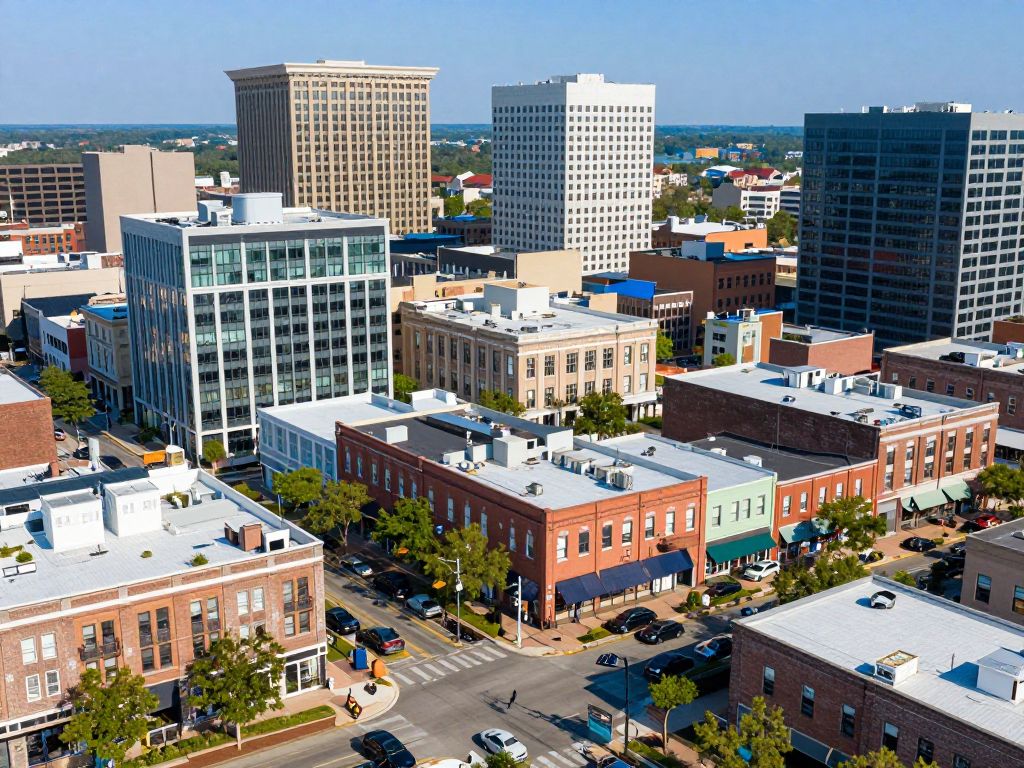
Charleston, January 7, 2026
Charleston is pivotal to the economic growth of South Carolina, with a dynamic business environment that fosters innovation and resilience. Economic forecasts for 2025 highlight continued expansion across various industries, despite inflationary challenges. Substantial capital investments in sectors like IT and automotive signal a promising future for local entrepreneurs. The city’s commitment to supporting small businesses and attracting foreign investment further strengthens its economic fabric, ensuring sustained growth and investment opportunities for South Carolinians.
Charleston Anchors South Carolina’s Growth in 2025
As the Lowcountry continues to thrive, Charleston’s dynamic business environment plays a crucial role in South Carolina’s broader economic narrative. The spirit of entrepreneurial innovation and small-business resilience that defines our city echoes across the state, contributing to a landscape of steady growth and promising investments. Understanding the statewide trends, as highlighted in economic forecasts, offers valuable insights into the opportunities unfolding for Charleston SC business and the enduring commitment to fostering an environment where enterprise can flourish.
The latest economic indicators for 2025 suggest a trajectory of expansion for South Carolina, a testament to the collective efforts of its businesses and workforce. This positive outlook, while acknowledging persistent challenges such as inflationary pressures, underscores the robust foundation being built through strategic investments and the determination of local entrepreneurs. It is through this lens of progress and pragmatic optimism that we examine the announced investments shaping the state’s economic future.
The Palmetto State’s Economic Momentum in 2025
South Carolina’s economy is expected to expand in 2025, with steady growth projected across most industries. Economists from the University of South Carolina’s Darla Moore School of Business, in partnership with the South Carolina Chamber of Commerce, graded the state’s economic performance at a B+ level. Despite concerns about consumer sentiment due to high prices, consumer spending continues, major sectors are experiencing positive employment gains, and wage growth is outpacing inflation, indicating a recovery in consumer purchasing power.
The first quarter of 2025 saw South Carolina achieve strong Gross Domestic Product (GDP) and personal income growth, surpassing the national average for both metrics and outperforming many other states in the Southeast. This significant growth points to the underlying strength of the Charleston County economy and the statewide economic fabric. Key contributors to this GDP growth in Q1 2025 included the real estate and rental and leasing sector, the information sector, and the construction sector. Similarly, the construction, administrative and support services, and finance and insurance sectors were significant drivers of personal income growth during the same period.
Strategic Investments Fueling Growth
South Carolina has continued to attract substantial capital investments, reinforcing its position as a competitive destination for businesses. In 2024, the state announced $8.19 billion in total capital investment, which translated into over 5,500 new jobs. Leading industry sectors by capital investment in 2024 included Information Technology and Computer Equipment with $4.1 billion, Automotive with $1.3 billion, and Aerospace with $1 billion. These figures follow a strong 2023, which saw $9.22 billion in capital investment, marking the second-highest amount in the state’s history.
The state’s focus on industries like automotive, electric vehicles (EV), EV batteries, and alternative energy and fuels continues to draw considerable investment. For example, in December 2025, Aran USA announced a State-level $4 million investment to expand its operations in Greer, with the expansion expected to be completed by July 2026. Additionally, the Upstate region witnessed several significant developments, including a $24.8 million warehouse project in Spartanburg expected to be completed in late 2025, and a $90 million mixed-use development in Greenville projected to begin construction in early 2025. These projects exemplify the diverse nature of investment across the state, creating opportunities that directly and indirectly benefit Lowcountry economic growth.
The Power of Private Capital and Foreign Direct Investment
Private capital continues to be a driving force behind South Carolina’s economic expansion. The commitment of existing industries to reinvest in the state through expansion projects is notable, accounting for $5.38 billion of all announced capital investment in 2024. This demonstrates a strong confidence in South Carolina’s business climate and its ability to support sustained growth.
Foreign Direct Investment (FDI) also plays a critical role in the state’s prosperity. In 2023, FDI accounted for over 32% of all capital investment in South Carolina, with Japan, Germany, and Canada identified as top sources of international investment. International companies in South Carolina employ 184,900 U.S. workers, with approximately 96,000 of these jobs in the manufacturing sector. This global engagement brings diverse expertise and capital, supporting high-quality jobs and enhancing the state’s competitive edge, which is vital for all regions, including Charleston.
Fostering Entrepreneurship and Small Business Resilience
A key to sustained economic vitality is the nurturing of new ventures and the support of existing small businesses. South Carolina, including the Charleston area, benefits from a culture that values entrepreneurial spirit and resilience. Initiatives designed to empower new businesses are crucial for grassroots economic development. For instance, in December 2025, the Village Launch initiative granted $125,000 to Upstate entrepreneurs to foster accelerated growth, showcasing the community’s commitment to supporting local innovators.
Such programs are instrumental in cultivating a dynamic ecosystem where South Carolina entrepreneurs can transform ideas into successful businesses, creating jobs and contributing to community wealth. The presence of a favorable business climate, characterized by a low corporate tax rate of 5% and no state-levied property or local income taxes, further encourages investment and the establishment of new enterprises statewide.
Navigating Economic Headwinds: A Pro-Growth Approach
While the overall outlook for 2025 is positive, South Carolina’s economy faces challenges such as ongoing inflationary pressures. Economists have also noted pervasive uncertainty in 2025, partly due to federal trade policy and tariffs, which have led some manufacturing, retail, and logistics-based businesses to pause major investment decisions. High interest rates and rising housing prices also continue to impact consumers.
Addressing these headwinds with proactive, pro-growth policies is essential. Governor Henry McMaster has highlighted the need to revisit and resolve the backlog in the permitting process to enhance the state’s attractiveness for businesses. A focus on streamlining regulations and ensuring transparent governance can further accelerate business growth and investment, mitigating some of the uncertainties and reinforcing South Carolina’s position as a premier destination for commerce.
Conclusion
Charleston and the wider South Carolina economy are on a path of significant growth in 2025, fueled by substantial capital investments, a vibrant entrepreneurial spirit, and a commitment to attracting both domestic and foreign businesses. From major industrial expansions to community-led initiatives supporting local innovators, the state is demonstrating a balanced approach to economic development. As we look ahead, the continued focus on policies that champion Charleston small business, encourage private investment, and ensure an efficient regulatory environment will be paramount for sustaining this positive momentum and securing a prosperous future for all South Carolinians. We encourage our readers to support local businesses and stay engaged in Charleston’s evolving economic landscape.
Frequently Asked Questions
What is the economic outlook for South Carolina in 2025?
South Carolina’s economy is expected to expand in 2025 with steady growth projected across most industries. Economists have graded the state’s economic performance at a B+ level, noting continued consumer spending, positive employment gains in major sectors, and wage growth outpacing inflation.
Which sectors are leading capital investment in South Carolina?
Leading industry sectors by total capital investment in South Carolina in 2024 included Information Technology and Computer Equipment ($4.1 billion), Automotive ($1.3 billion), and Aerospace ($1 billion). Automotive, electric vehicles (EV), EV batteries, and alternative energy and fuels were leading industries by capital investment in 2023.
How much capital investment did South Carolina attract in 2024?
South Carolina announced $8.19 billion in total capital investment in 2024, which accounted for over 5,500 new jobs.
What role does foreign direct investment play in South Carolina’s economy?
Foreign Direct Investment (FDI) accounted for over 32% of all capital investment in South Carolina in 2023, with Japan, Germany, and Canada being top sources. International companies in South Carolina employ 184,900 U.S. workers, with 96,000 of these jobs in the manufacturing sector.
What economic challenges did South Carolina face in 2025?
In 2025, South Carolina faced persistent inflationary pressures and pervasive uncertainty due to federal trade policy and tariffs. These factors led some manufacturing, retail, and logistics-based businesses to pause major investment decisions. High interest rates and rising housing prices also continued to impact consumers.
Key Features of South Carolina’s 2025 Economic Landscape
| Feature | Description | Scope |
|---|---|---|
| Overall Economic Outlook | Expected expansion with steady growth across most industries, graded B+ by economists. | State-level |
| Q1 2025 GDP Growth | Increased at an annualized rate of 1.7%, outpacing national average. | State-level |
| Q1 2025 Personal Income Growth | Increased at an annualized rate of 9.1%, ranking fourth in the country. | State-level |
| Leading GDP Contributors (Q1 2025) | Real estate & rental & leasing, information, construction sectors. | State-level |
| Leading Personal Income Contributors (Q1 2025) | Construction, administrative & support services, finance & insurance sectors. | State-level |
| 2024 Capital Investment | $8.19 billion, resulting in over 5,500 new jobs. | State-level |
| Top Investment Sectors (2024) | Information Technology and Computer Equipment ($4.1 billion), Automotive ($1.3 billion), Aerospace ($1 billion). | State-level |
| 2023 Capital Investment | $9.22 billion, the second-highest amount in state history. | State-level |
| Foreign Direct Investment (FDI) (2023) | Over 32% of total capital investment, with Japan, Germany, and Canada as top sources. | State-level |
| FDI-Related Employment | 184,900 U.S. workers employed by international companies, 96,000 in manufacturing. | State-level |
| Aran USA Investment (Dec 2025) | $4 million expansion in Greer operations. | State-level |
| Village Launch Grants (Dec 2025) | $125,000 granted to Upstate entrepreneurs. | State-level |
| Economic Challenges (2025) | Inflationary pressures, uncertainty from trade policy/tariffs, high interest rates, rising housing prices. | State-level |
Deeper Dive: News & Info About This Topic
HERE Resources
Charleston Retail Adapts as GameStop Stores Close
Aiken’s Economic Pulse: Innovation Propels Growth
Mermaids Make a Comeback at South Carolina Aquarium
Charleston’s Community Spirit Shines in Cocktails for a Cause Events
South Carolina Restaurant Week Boosts Local Economy
Domestic Dispute in North Charleston Leads to Arrests After Gunshot
North Charleston Police Arrest Mother Following Child’s Shooting
Charleston Police Investigate Fatal Downtown Collision
Juvenile Arrested After Firearm Discovery at North Charleston Community Center
Fatal Collision Prompts Investigation in Downtown Charleston