
Charleston SC, January 30, 2026
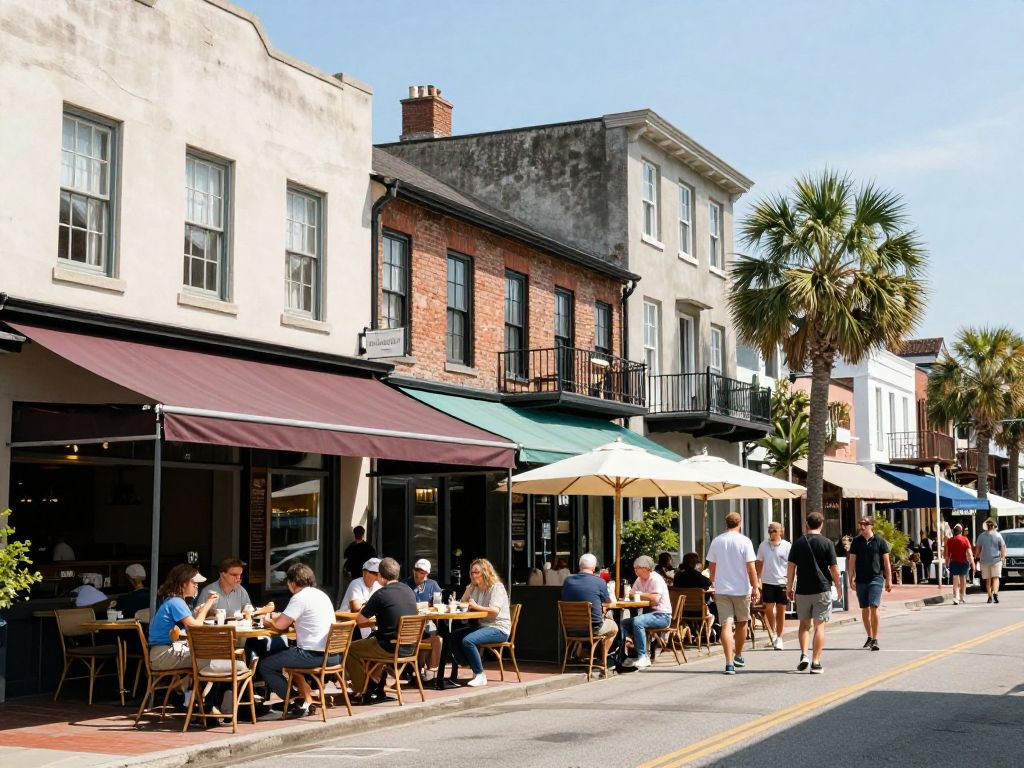
Despite widespread bankruptcy filings and closures in the national restaurant industry, Charleston showcases economic resilience through its thriving small business community. This dynamic environment highlights the opportunity for local entrepreneurs to adapt and innovate amidst changing consumer preferences and corporate restructurings, ultimately fueling growth in the Lowcountry economy.
Charleston’s Economic Resilience Amidst National Restaurant Industry Shifts
Charleston, SC – The national restaurant industry is navigating a period of significant change, marked by major corporate bankruptcies and strategic realignments that are seeing popular chains close underperforming locations nationwide. While these developments reflect broader economic pressures and evolving consumer preferences, they also underscore the enduring spirit of entrepreneurial innovation and the resilience inherent in local economies like Charleston’s vibrant market.
This dynamic environment, characterized by both challenges and opportunities, prompts a closer look at how larger trends impact the landscape for both established national brands and the nimble Charleston small business community. As larger entities restructure to foster long-term growth and stability, it creates a unique opportunity for South Carolina entrepreneurs to demonstrate agility and strategic adaptation, further fueling Lowcountry economic growth and the strength of the Charleston SC business scene.
National Chains Face Unprecedented Headwinds and Restructuring
Recent months have seen a surge in bankruptcy filings among casual and fast-casual restaurant chains nationwide, driven by financial distress and the need to shed underperforming assets. A prominent example is FAT Brands Inc., a major operator with over 18 restaurant concepts, which filed for Chapter 11 bankruptcy protection on January 26, 2026, in the U.S. Bankruptcy Court for the Southern District of Texas. This filing followed the accumulation of over $1 billion in debt, with total debt estimated around $1.5 billion to $1.58 billion, primarily due to leveraged acquisitions and financing strategies.
As part of its restructuring efforts, FAT Brands has permanently closed 32 company-owned locations nationwide, including 23 Smokey Bones, 7 Yalla Mediterranean, and 2 Johnny Rockets establishments. The company has also filed a motion to reject the leases for these sites. Concurrently, Twin Hospitality Group Inc., an affiliate of FAT Brands and the parent company of Twin Peaks and Smokey Bones, also commenced a voluntary Chapter 11 bankruptcy filing around January 26, 2026. Despite these significant moves, the CEOs of both FAT Brands and Twin Hospitality have indicated that the Chapter 11 process is intended to strengthen their capital structures, deleverage balance sheets, maximize value for stakeholders, and support continued brand growth, with restaurants largely expected to remain operational during the reorganization.
Strategic Closures and Brand Reimagining for Profitability
The decision to close underperforming locations is a critical component of these corporate restructurings, aiming to enhance overall profitability and efficiency. Smokey Bones, a casual dining barbecue chain, has notably shrunk its footprint with 39 total closures occurring between 2025 and 2026. This includes 15 underperforming locations shuttered in 2025, and another 15 in early 2026. Many of these sites are undergoing conversion into Twin Peaks restaurants. The strategic rationale behind this transformation is clear: Twin Peaks locations generate significantly higher average unit volumes (AUVs) of approximately $7.8 million, compared to approximately $3.5 million for Smokey Bones, illustrating a concerted effort to optimize asset performance and respond to market demand.
This trend extends beyond these specific brands. Throughout 2024 and 2025, several other national restaurant chains, including TGI Fridays, Red Lobster, Bravo Brio Restaurants, On The Border Mexican Grill & Cantina, Starbucks, Wendy’s, and Denny’s, have also announced or implemented location closures as part of their efforts to streamline operations and adapt to a challenging economic climate. These actions underscore a nationwide industry-wide reassessment, focusing on efficiency and market relevance.
Economic Pressures and Evolving Consumer Behavior
The widespread closures and bankruptcies reflect a confluence of economic factors impacting the national restaurant industry. Operators nationwide have grappled with weak sales, rising operational costs including labor, food, and rent, and subsequently, shrinking profit margins. The National Restaurant Association has reported a decline in median pretax income for both full-service and limited-service restaurants since 2019. Consumer sentiment also saw a significant downturn in 2025, leading to reduced dining frequency and a broader pullback in spending across quick-service, sit-down, and delivery categories, particularly among low- and middle-income households, Gen X, and baby boomers. This shift is further exacerbated by the divergence in food costs, with food away from home rising faster than grocery prices between January 2024 and September 2025, making dining out seem less valuable to some consumers.
Despite these challenges, the industry is not without its opportunities. The closure of underperforming units, while difficult, can ultimately lead to a healthier market with higher-performing restaurants, creating openings for innovative new concepts and more efficient operations.
Charting a Course for Future Growth and Local Opportunity
Looking ahead to 2026, the national restaurant industry anticipates a period of slight improvement and stabilization, with real growth projected to fall between 1.2% and 2.1%. This positive outlook is supported by several indicators, including a projected slowing of the Producer Price Index, which should alleviate some cost pressures, and an expected improvement in overall consumer expectations. Furthermore, technology investments made in previous years are expected to yield greater returns in terms of efficiency and waste reduction.
Consumer demand in 2026 is driven by a desire for comfort, value, and “flavor escapism,” alongside continued emphasis on wellness and affordability. This creates a fertile ground for Charleston small business owners and South Carolina entrepreneurs who are adept at meeting these evolving preferences with unique, high-quality offerings and efficient business models. The market is increasingly bifurcated, with “winners and losers” determined by their ability to offer holistic value and adapt to consumer shifts. This environment particularly favors agile local businesses that can innovate and engage deeply with their community. The vibrant culinary scene in Charleston County economy remains a testament to local determination and an entrepreneurial spirit that thrives on adapting to market dynamics. Thoughtful management and strategic innovation will be key to continued Lowcountry economic growth.
Conclusion
The ongoing restructuring among national restaurant chains highlights a dynamic period for the broader dining industry, driven by economic realities and changing consumer behaviors. While major bankruptcies and widespread closures represent significant challenges, they also clear the path for renewed growth and innovative approaches. For the Charleston SC business community, this national trend serves as a reminder of the importance of agility, strategic planning, and a steadfast focus on delivering value and quality. Supporting local establishments not only strengthens the Charleston County economy but also champions the entrepreneurial spirit that defines our community’s enduring success.
We encourage our readers to continue supporting the diverse and innovative local businesses that contribute to the rich tapestry of Charleston’s culinary and economic landscape.
Frequently Asked Questions
- What is the current situation with bankrupt restaurant chains nationwide?
- Nationwide, bankruptcy filings have recently surged among casual and fast-casual restaurant chains due to financial distress and the need to close underperforming locations. FAT Brands Inc. filed for Chapter 11 bankruptcy on January 26, 2026, and its affiliate, Twin Hospitality Group Inc., also filed for Chapter 11 bankruptcy around the same time.
- Which specific restaurant chains have closed locations recently due to bankruptcy?
- FAT Brands Inc. has permanently closed 32 company-owned locations nationwide, including 23 Smokey Bones, 7 Yalla Mediterranean, and 2 Johnny Rockets establishments. Additionally, Smokey Bones has seen 39 total closures between 2025-2026, with many being converted to Twin Peaks restaurants. Other chains that have closed locations or filed for bankruptcy in recent years (2024-2025) include TGI Fridays, Buca di Beppo, Red Lobster, Bravo Brio Restaurants, On The Border Mexican Grill & Cantina, Starbucks, Wendy’s, and Denny’s.
- What are the main reasons for these restaurant closures and bankruptcies nationwide?
- Nationwide, the primary reasons include weak sales, increased costs (labor, food, rent), shrinking profit margins, heavy debt, and declining foot traffic. The National Restaurant Association has reported a decline in median pretax income for both full-service and limited-service restaurants since 2019.
- What is the outlook for the national restaurant industry in 2026?
- For 2026, the national restaurant industry expects a slight improvement and stabilization, with real growth projected between 1.2% and 2.1%. This positive outlook is attributed to factors such as a slowing Producer Price Index and improved consumer expectations.
- How are some restaurant chains adapting to these challenges?
- Some chains are strategically closing underperforming locations and converting them into more profitable concepts, such as Smokey Bones converting to Twin Peaks, which generates significantly higher average unit volumes. Other strategies include focusing on value, comfort, and “flavor escapism” in menus, as well as leveraging technology for efficiency.
Key Features of National Restaurant Industry Shifts
| Feature | Details (Nationwide) | Source |
|---|---|---|
| Major Bankruptcy Filings | FAT Brands Inc. filed Chapter 11 on Jan 26, 2026, with over $1 billion in debt. Twin Hospitality Group Inc. also filed for Chapter 11 around the same date. | |
| Significant Closures | FAT Brands permanently closed 32 company-owned locations (23 Smokey Bones, 7 Yalla Mediterranean, 2 Johnny Rockets). Smokey Bones saw 39 closures between 2025-2026. | |
| Strategic Conversions | Many underperforming Smokey Bones locations are being converted to Twin Peaks, due to Twin Peaks’ higher average unit volumes (approx. $7.8M vs. $3.5M for Smokey Bones). | |
| Underlying Economic Factors | Weak sales, increased costs (labor, food, rent), shrinking profit margins, heavy debt, declining foot traffic. Median pretax income declined for restaurants since 2019. | |
| 2026 Outlook | Expected slight improvement and stabilization, with real growth projected between 1.2% and 2.1%. Optimism due to slowing Producer Price Index and improved consumer expectations. | |
| Consumer Trends | Demand for value, comfort, and “flavor escapism.” Wellness and affordability remain top priorities. |
Deeper Dive: News & Info About This Topic
HERE Resources
Charleston’s Culinary Festival Ignites Historic Streets
Myrtle Beach Enhances Coastal Economy with $9.7M Initiative
Charleston Connects to Drive Local Business Innovation
Breeze Airways Launches New Nonstop Flights to Charleston
Parking Relief On The Horizon for Charleston’s Tourism Workforce
Breeze Touches Down: New Flights Boost Regional Connectivity
Breeze Airways Expands Travel Options from Charleston to the Jersey Shore
Lexington County Welcomes New Entertainment Venue
Charleston’s Wine & Food Festival: A Recipe for Growth
Charleston’s 2026 Festivals: Unmissable Events Driving Community and Culture