

Charleston, SC, January 22, 2026
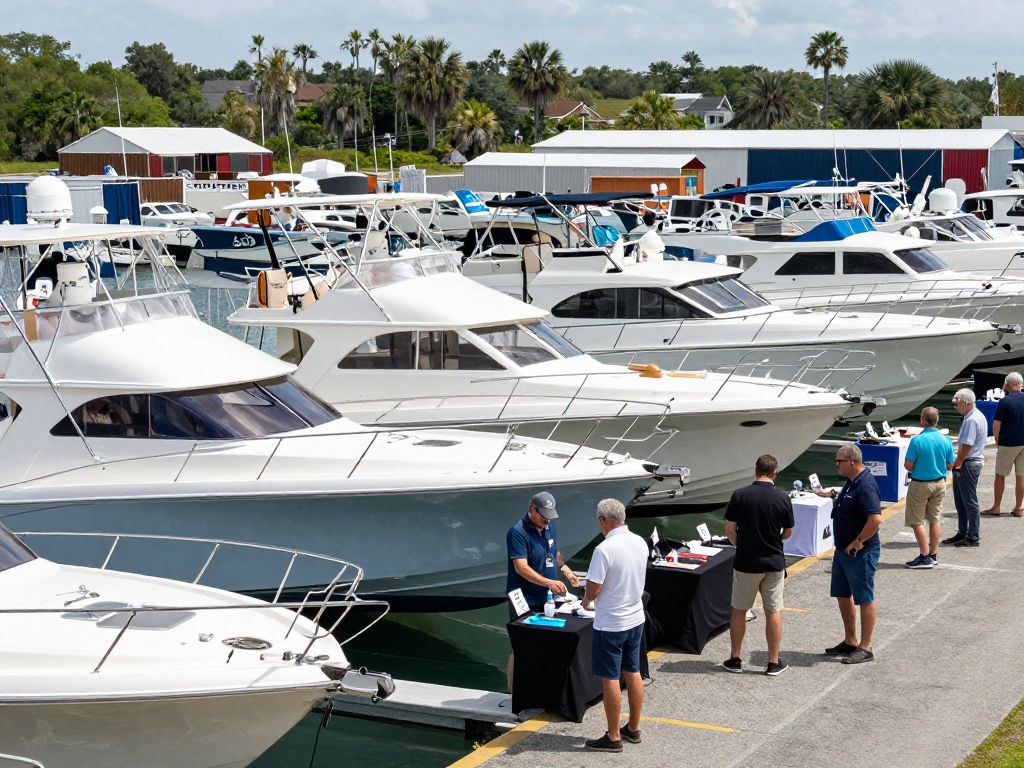
Charleston’s marine industry showcases resilience as it adapts to recent market shifts during the Charleston Boat Show. Facing a decline in sales and economic challenges, local businesses are innovating and responding to buyer concerns, promoting sustained growth in the Lowcountry economy. The evolving landscape highlights both challenges and opportunities across the marine sector, underscoring the entrepreneurial spirit of Charleston’s business community.
Charleston, SC –
Lowcountry Marine Business Adapts to Market Shifts
Charleston’s vibrant marine industry, a cornerstone of the Lowcountry economy, continues to demonstrate remarkable resilience and adaptability. As the annual Charleston Boat Show commences, dealers and prospective buyers are navigating a complex economic landscape marked by recent dips in sales, fluctuating prices, and elevated interest rates. This dynamic environment highlights the entrepreneurial spirit and determination of local businesses to innovate and serve their customers, even amidst broader economic shifts.
The boating market, having experienced a period of significant activity during the pandemic, reached a phase of “full normalization” in 2023, with similar trends continuing into the first half of 2024. This adjustment period presents both challenges and opportunities, underscoring the importance of a flexible and responsive business climate to foster sustained economic growth and personal achievement for South Carolina entrepreneurs.
Market Tides Turning: A Look at National Trends
The broader national boating market has seen significant shifts. Nationwide, new powerboat retail unit sales experienced an estimated decline of 9% to 12% in 2024, totaling approximately 230,000 to 240,000 units. Globally, boat sales dropped by 9.1% in the first half of 2024 compared to the same period in the previous year. This trend is partly attributed to consumer demand waning, influenced by persistent high interest rates and inflation, which led to a 7.6% drop in global searches related to boat purchasing in the first half of 2024.
Within this market, new boats are taking longer to sell, remaining on the market an average of 53 days longer than the prior year. Concurrently, used boat sales declined by 12.4% in the first half of 2024, with the total value of used boat sales decreasing by 9% during this period. Regarding pricing, the average sold price for new boats fell by 3.4% to $174,000 in the first half of 2024, while used boat prices saw an increase of 4.2% to $211,500. Despite these varied movements, the overall average sold boat prices globally rose by 2.4% to $203,000 in the first half of 2024.
High interest rates significantly impact the cost of financing for buyers, particularly affecting the mid-range and pre-owned yacht markets. For example, a $5 million yacht loan with an interest rate increase from 4% to 7% would see its annual interest cost rise by 75%, from $200,000 to $350,000. This financial pressure has led many prospective buyers to delay purchases, consider downsizing their options, or choose the pre-owned market over new builds.
Charleston’s Marine Sector: A Local Anchor
The marine industry plays a crucial role in the Charleston County economy. Charleston County is home to 40% of South Carolina’s marine jobs and generates 43% of the state’s marine economy’s gross domestic product (GDP). In 2021, the entire South Carolina marine economy encompassed 3,748 businesses, employed 78,522 individuals, generated $2.5 billion in wages, and contributed $5.6 billion to the GDP.
Over the decade spanning 2011 to 2021, South Carolina witnessed a 25% increase in marine businesses, with 761 new establishments, and a 21% rise in marine jobs, adding 13,495 positions. The average wage for employees in the South Carolina marine economy also grew by 55% during this period, from $20,348 in 2011 to $31,462 in 2021.
A significant contributor to the local economy is the Charleston Marine Manufacturing Corporation (CMMC) Navy Yard Industrial Campus, which annually contributes approximately $960.1 million to the Charleston County economy. This activity supports 3,694 jobs and generates about $275.3 million in labor income. Projections indicate that the economic impact of CMMC could increase to $1.1 billion in Charleston County by 2030, supporting 4,467 jobs.
Navigating Economic Headwinds: Dealer and Buyer Perspectives
For dealers and small businesses in the marine sector, managing inventory and adapting to shifting consumer sentiment are paramount. Buyers, now more price-sensitive due to ongoing inflation and elevated interest rates, are exercising greater caution in their purchasing decisions. This has led to some consumers choosing personal watercraft, which often come with a lower price point and greater ease of use, indicating a sustained demand for boating among those seeking value.
Nationwide, there’s a discernible trend towards the pre-owned market, with statistics showing that 67% of all boat purchases on major platforms were for pre-owned vessels. This shift highlights how consumers are finding creative ways to engage with the boating lifestyle despite economic constraints, supporting the resilience of Charleston small business owners who can cater to diverse market needs.
Resilience and Innovation in the Lowcountry
The spirit of South Carolina entrepreneurs is evident in the marine industry’s ongoing commitment to innovation. Despite economic challenges, small businesses across the nation continue to demonstrate resilience, with some owners expressing growing confidence in the economy. The marine industry is consistently pushing boundaries through advancements in electric propulsion systems, hybrid engines, fuel-efficient designs, and the integration of cutting-edge technologies like artificial intelligence, machine learning, and automation. These innovations not only enhance performance and efficiency but also improve the safety and convenience of boating.
Events like the Charleston Boat Show are vital platforms for showcasing these technological advancements and fostering accessibility to the boating lifestyle. The concept of organizational resilience is increasingly recognized in the maritime business, emphasizing the need for companies to adapt to fluctuating periods and strategically leverage new opportunities that arise from disruptions. This adaptive mindset is a key strength of the Charleston SC business community.
Fostering Growth: The Role of Economic Policy
A supportive economic environment is crucial for nurturing the growth and innovation seen in Charleston County economy. The Charleston County Economic Development (CCED) department has been instrumental over the past three decades, facilitating over $6.9 billion in capital investment and creating approximately 39,000 direct jobs. Their focus includes business recruitment, fostering existing industry growth, and improving the overall business climate.
Evidence of successful economic development policies can be seen in Charleston County’s impressive business growth. Between 2001 and 2021, the number of business establishments in Charleston County grew by 68.1%, significantly outpacing the state of South Carolina’s growth rate of 42.6% during the same period. Furthermore, employment growth in Charleston County more than doubled the state’s rate, at 45.2% compared to 20.1%, between 2001 and 2021. These figures demonstrate effective strategies for promoting Lowcountry economic growth.
Local initiatives also play a critical role. Charleston County actively supports small business procurement and mentoring programs. Furthermore, organizations like the CLIMB Fund provide essential access to capital for small businesses throughout South Carolina, particularly for those unable to secure traditional financing. The Charleston Metro Chamber of Commerce also offers valuable resources to support local businesses in their growth trajectories. These concerted efforts create a fertile ground for entrepreneurs to overcome challenges and thrive.
Conclusion
The Charleston Boat Show serves as a vital indicator of the marine industry’s current health and future trajectory. While dealers and buyers navigate a landscape shaped by economic pressures, the unwavering spirit of Charleston’s small businesses and their commitment to innovation shine through. The ability of local entrepreneurs to adapt, coupled with a supportive economic framework that encourages growth and provides resources, positions the Lowcountry marine sector for continued success. By embracing innovation and fostering a business-friendly environment, Charleston’s marine industry demonstrates its enduring strength. We encourage everyone to support our local businesses, explore the latest advancements, and contribute to the vibrant future of Charleston’s economic landscape.
FAQ Section
What are the current trends in nationwide boat sales?
Nationwide, new powerboat retail unit sales declined an estimated 9% to 12% in 2024, totaling 230,000-240,000 units. Globally, boat sales dropped by 9.1% in the first half of 2024 compared to the same period last year.
How do interest rates affect boat purchases?
High interest rates significantly increase the cost of financing for buyers, particularly in the mid-range and pre-owned yacht markets. An example shows a $5 million yacht loan’s annual interest cost increasing by 75% when rates rise from 4% to 7%, leading prospective buyers to delay purchases, downsize, or opt for pre-owned vessels.
What is the economic impact of the marine industry in Charleston County, SC?
Charleston County is home to 40% of marine jobs in South Carolina and produces 43% of the marine economy’s gross domestic product (GDP) in South Carolina. The Charleston Marine Manufacturing Corporation (CMMC) Navy Yard Industrial Campus alone contributes approximately $960.1 million annually to the Charleston County economy.
Are boat prices increasing or decreasing?
In the first half of 2024, the average sold price for new boats fell by 3.4% to $174,000, while the average sold price for used boats increased by 4.2% to $211,500. Overall, average sold boat prices globally rose by 2.4% to $203,000 during this period.
Key Features of the Marine Market in Charleston, SC
| Feature | Detail | Scope |
|---|---|---|
| Nationwide New Powerboat Sales Decline (2024) | Estimated 9% to 12% decrease in retail unit sales (230,000-240,000 units). | Nationwide |
| Global Boat Sales Dip (H1 2024) | 9.1% drop compared to previous year. | Global |
| Interest Rate Impact on Financing | Increased cost of financing; example: $5 million yacht loan annual interest cost up 75% from 4% to 7% rate. | Nationwide |
| Average New Boat Price (H1 2024) | Fell by 3.4% to $174,000. | Global |
| Average Used Boat Price (H1 2024) | Increased by 4.2% to $211,500. | Global |
| Charleston County Marine Jobs | 40% of South Carolina’s marine jobs. | State-level |
| Charleston County Marine GDP Contribution | 43% of South Carolina’s marine economy GDP. | State-level |
| CMMC Navy Yard Industrial Campus Annual Contribution | Approximately $960.1 million to Charleston County economy. | Local |
| Growth in Charleston County Business Establishments (2001-2021) | 68.1% growth, significantly higher than South Carolina’s 42.6%. | Local/State-level |
| Marine Industry Innovations | Includes electric propulsion, hybrid engines, fuel-efficient designs, AI, machine learning, and automation. | Nationwide/Industry |
Deeper Dive: News & Info About This Topic
HERE Resources
Charleston’s Day of Reflection and Cultural Engagement
Charleston’s Vibrant Weekend: Oysters and Innovation on Display
Charleston’s Premier Boat Show Sets Sail This Month
Coastal States Bank Fuels Charleston’s Growth with Decades of Expertise
Charleston Boat Show Returns with Over 200 Watercrafts
Lowcountry Fishermen Cast a Wider Net with New Apprentice Program
Charleston’s Business Summit: Fostering Local Growth
Charleston Boat Show Promotes Community Spirit and Growth
Mermaids Make a Comeback at South Carolina Aquarium
Charleston Proposes Establishment of Maritime Academy