

Charleston, South Carolina, September 3, 2025
Charleston’s Legal Landscape: Examining Bar Exam Pass Rates at Charleston School of Law
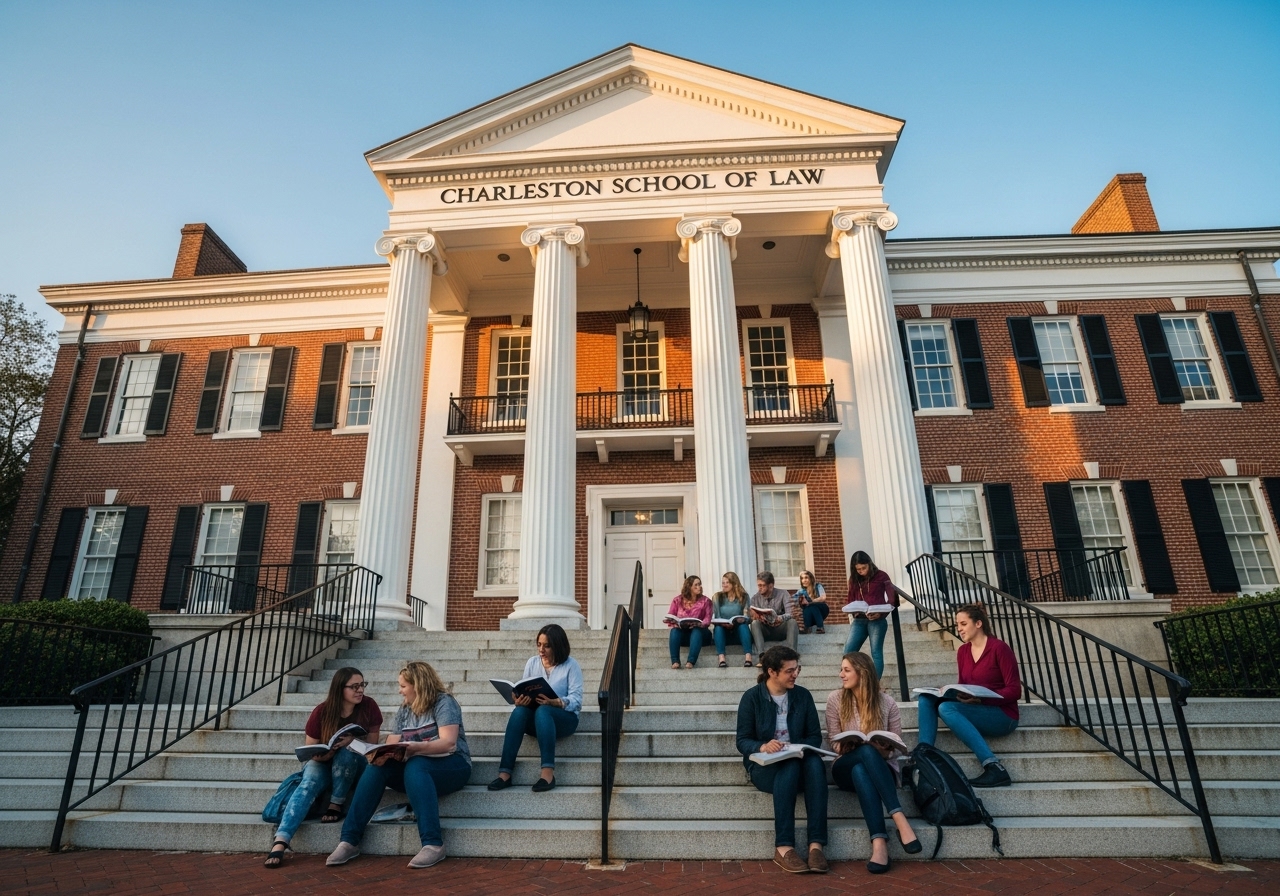
Charleston sits at the center of a regional legal ecosystem where law schools, courts, and local firms intersect. At the heart of that ecosystem is the Charleston School of Law (CSOL), an ABA-accredited institution founded in 2003 that has shaped the careers of many practitioners in South Carolina. The school underscores community engagement by requiring students to complete at least 50 hours of pro bono service before graduation, tying classroom instruction to civic responsibility.
Bar Exam Performance: Trends and Fluctuations
Bar exam results are a blunt, widely referenced indicator of how effectively a law school prepares graduates to enter practice. CSOL’s pass rates have varied considerably across recent administrations of the South Carolina bar exam. Some administrations show solid outcomes, while others fall below state norms. For example, the July 2022 administration produced a notably high pass rate of 77%, which exceeded the state average. By contrast, the February 2022 sitting registered a much lower result of 49.2%, highlighting significant month-to-month and year-to-year variability.
Variability can stem from cohort composition, timing of graduation (graduates sitting the first available exam vs. later sittings), the school’s instructional alignment with the tested material, and post-graduate supports. CSOL’s results show that targeted interventions and the academic quality of incoming classes can materially influence outcomes in certain exam cycles.
| Year | February Pass Rate | July Pass Rate |
|---|---|---|
| 2020 | 48.4% | 51.2% |
| 2021 | 53.8% | 46.3% |
| 2022 | 49.2% | 77% |
| 2023 | 47.5% | 65.1% |
| 2024 | 48.2% | 65.1% |
Looking at the sequence above, the most striking feature is the jump to 77% in July 2022 followed by a more modest stabilization around the mid-60s in subsequent July administrations. February sittings have tended to be lower on average, a pattern observed at some law schools where December graduates face a compressed study window or differing cohort characteristics.
How CSOL Compares to State Averages
Comparative metrics help place CSOL’s figures in context. For 2024, the school’s reported first-time pass rate was approximately 65.63%, while the aggregated average among South Carolina law schools was roughly 77.21%. That gap of more than ten percentage points signals room for improvement on the metric that many prospective students and employers watch most closely.
When raw percentages are contrasted, they tell part of the story. Equally relevant are the underlying factors: the profile of entering students, the proportion of repeat test-takers, curricular timing relative to examination schedules, and the availability of specialized bar-preparation resources. Together, these elements influence whether a cohort outperforms or underperforms the state mean.
Institutional Measures: Programs, Admissions, and Supports
CSOL has taken deliberate steps to raise the academic bar and to provide structured post-graduate assistance. Admissions metrics have shifted upward over several recruitment cycles; median LSAT scores for incoming classes moved from the mid-140s toward 150, and median undergraduate GPAs rose from about 3.00 to 3.20 across a three-year interval. Those changes reflect an ongoing recalibration of selectivity, with the intention of admitting students who are better prepared for the rigors of law study and bar preparation.
On the support side, the school runs a structured bar-preparation initiative often described under the umbrella of a “Pass the Bar” program. This suite of services typically includes tailored study plans, diagnostic assessments, time-managed study schedules, and skills workshops focused on essay writing and multiple-choice strategies. When these supports are effectively deployed, they can produce measurable lifts in pass rates; one reported cohort of December 2020 graduates subsequently achieved a strong outcome on the next February exam.
Academic counseling, small-group tutoring, and mentorship from faculty and alumni also figure into CSOL’s approach. These interventions are not one-size-fits-all; rather, they are meant to adapt to students who are first-time test-takers versus those who require remedial preparation. Programs that combine diagnostic feedback, disciplined study structure, and accountability mechanisms tend to be the most effective at reducing the variance in outcomes across administrations.
Student Profile and Campus Dynamics
Enrollment at CSOL has been expanding. For the 2024–2025 academic year, the law school reported a total enrollment near 694 students, including roughly 272 first-time students. Among the incoming first-year cohort, the gender distribution was weighted toward female students, with 79 males and 189 females. These demographic details matter because cohort makeup—gender balance, prior academic preparation, and life circumstances such as part-time work—can influence both study time available for the bar and academic outcomes.
Beyond numbers, CSOL’s campus culture emphasizes public service, practical skills training, and experiential learning. Clinics, externships, and pro bono projects give students exposure to real clients and courtrooms, which can reinforce doctrinal learning and legal reasoning. Practical skills training complements bar study by sharpening issue-spotting and written advocacy—abilities that translate into better performance on essay components of the exam.
What the Data Suggests About Future Prospects
Trends point toward steady, incremental improvement when admissions standards and targeted supports are coupled. Raising median LSAT and GPA levels brings cohorts with stronger academic signals, while well-structured bar-prep offerings narrow the gap between potential and performance. Still, the school faces the ongoing challenge of aligning curricular sequencing—assessments, doctrinal coursework, and bar-focused skills training—with the pace and content of the state exam.
Another element is timing: cohorts that graduate mid-year and sit for the first available exam sometimes perform differently than those who take the bar later. Offering strategic coaching for December graduates who aim for the immediate February sitting, versus a longer preparation path for July, is one tactical lever administrators can use to even out pass-rate volatility.
Key Takeaways
- CSOL’s bar pass rates fluctuate
- Institutional efforts—raising admissions metrics and deploying dedicated bar-preparation programs—have correlated with better outcomes for specific cohorts.
- Demographics and cohort timing matter: first-time pass rates, cohort composition, and exam scheduling affect aggregate results and should be considered by applicants and policymakers.
Final perspective
Charleston School of Law’s record on the bar exam reflects a mixture of challenge and progress. The data shows variability but also highlights the impact of concrete interventions: stronger incoming classes and robust preparatory programs can and do move the needle. For prospective students, attorneys, and employers watching these statistics, the salient takeaways are a school that is responsive to outcomes and a local legal community that benefits when graduates are both well-trained and civically engaged.
Frequently Asked Questions
What have been Charleston School of Law’s recent bar exam pass rates?
Pass rates have varied by administration. Selected figures show February pass rates in the high-40s and low-50s across recent years, with July pass rates ranging from the mid-40s to a peak of 77% in July 2022. First-time pass rate for 2024 was approximately 65.63%.
How does CSOL compare to other law schools in South Carolina?
In 2024, CSOL’s first-time pass rate trailed the statewide average; the school recorded about 65.63% compared with a state average near 77.21%. That gap highlights opportunities for the school to continue strengthening preparation and admissions strategy.
What initiatives has the school launched to improve bar outcomes?
CSOL has implemented targeted bar-preparation programs, enhanced academic counseling, small-group tutoring, and moved to raise admissions standards (measured by median LSAT and GPA). The school also promotes experiential learning and structured study plans for recent graduates.
Are there practical supports for students who need extra help?
Yes. Students can access academic counseling, targeted tutoring, mentorship from faculty and alumni, and coordinated bar-prep programs that include diagnostics, workshops, and study schedules tailored to individual needs.
What should prospective students consider when evaluating CSOL’s bar performance?
Prospective students should look beyond headline pass rates to cohort characteristics, the availability and structure of bar-preparation supports, timing of graduation relative to exam dates, and post-graduate employment outcomes. Visiting campus resources and reviewing recent class profiles can clarify fit and likely outcomes.

Author: STAFF HERE CHARLESTON
The CHARLESTON STAFF WRITER represents the experienced team at HEREcharleston.com, your go-to source for actionable local news and information in Charleston, Charleston County, and beyond. Specializing in "news you can use," we cover essential topics like product reviews for personal and business needs, local business directories, politics, real estate trends, neighborhood insights, and state news affecting the area—with deep expertise drawn from years of dedicated reporting and strong community input, including local press releases and business updates. We deliver top reporting on high-value events such as the Spoleto Festival USA, Charleston Wine + Food Festival, and the MOJA Festival. Our coverage extends to key organizations like the Charleston Metro Chamber of Commerce and the Charleston Museum, plus leading businesses in tourism and maritime industries that power the local economy such as South Carolina Ports Authority and the Charleston Visitor Center. As part of the broader HERE network, including HEREaiken.com, HEREbeaufort.com, HEREchapin.com, HEREcharleston.com, HEREclinton.com, HEREcolumbia.com, HEREgeorgetown.com, HEREgreenwood.com, HEREgreenville.com, HEREhiltonhead.com, HEREirmo.com, HEREmyrtlebeach.com, HEREnewberry.com, HERErockhill.com, HEREspartanburg.com, HEREaustin.com, HEREcollegestation.com, HEREdallas.com, HEREhouston.com, and HEREsanantonio.com, we provide comprehensive, credible insights into South Carolina's dynamic landscape.