
Charleston, SC, January 15, 2026
Charleston, SC, is undergoing a remarkable transformation with the development of its new design district, located at the former Charleston Naval Base. This vibrant hub, inspired by historical industrial spaces, promises to attract a blend of national and local design brands while fostering economic growth and innovation. By revitalizing the area, the project aims to create a community-focused environment that supports small businesses and provides unique dining experiences, further solidifying Charleston’s position as a central player in the Southeast’s design landscape.
Charleston, SC
Charleston’s New Design District: A Hub of Innovation and Economic Growth
Lowcountry’s Former Naval Base Transforms into a Premier Creative Destination
Charleston, SC, is witnessing an exciting transformation as its new design district rapidly takes shape. Located along the scenic Cooper River in North Charleston, the former Charleston Naval Base, once a center for shipbuilding, is being reimagined as a dynamic hub for home furnishings and design. This expanding retail complex is poised to become a significant design destination for the entire Southeast, attracting both national brands and local talent.
This ambitious project highlights the power of private investment and entrepreneurial foresight in revitalizing historical areas. The collaborative vision of developers to convert dormant industrial spaces into a vibrant commercial and creative center exemplifies how strategic planning and limited regulatory hurdles can foster significant economic growth and community benefits. It also underscores Charleston’s growing appeal as a magnet for innovation and design-focused businesses.
Unveiling the Charleston Design District
A Visionary Redevelopment at Storehouse Row
The Charleston Design District is a central component of the multi-phase redevelopment of Navy Yard Charleston, led by Jamestown, an Atlanta-based real estate investment manager, in partnership with Weaver Capital Partners and WECCO Development. This comprehensive project aims to transform the 85-acre former naval base into a vibrant, mixed-use neighborhood where historical preservation meets modern innovation.
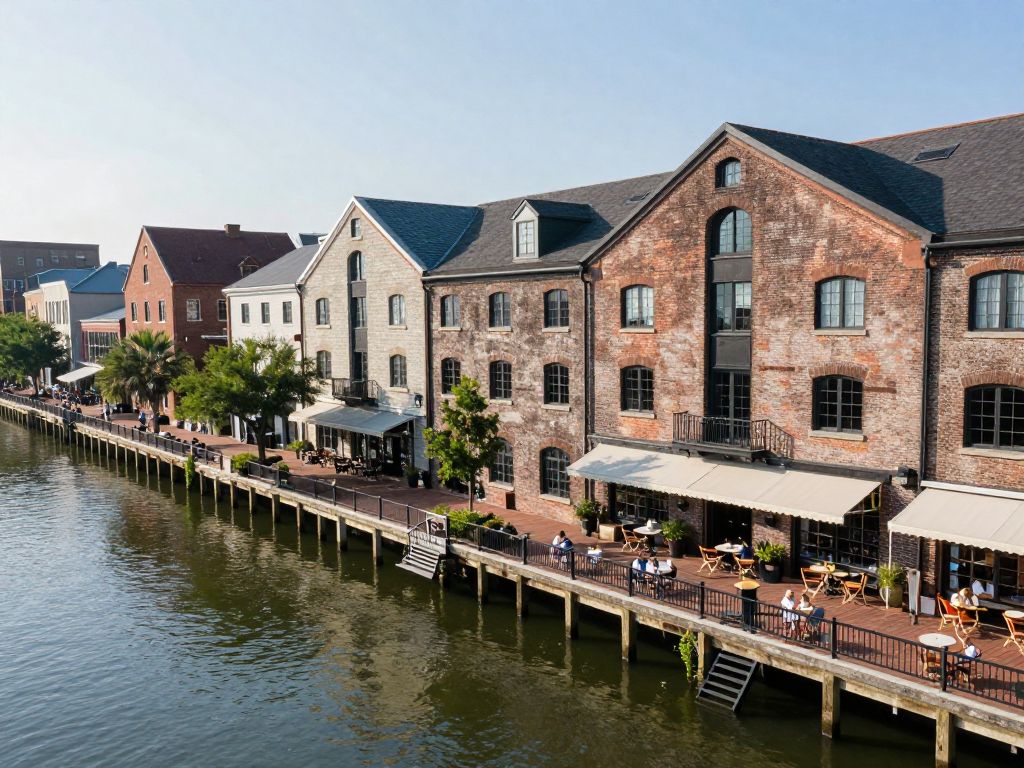
At the heart of the district is Storehouse Row, an enclave of beautifully restored, turn-of-the-century warehouses along the Cooper River. These historic structures are being brought back to life, housing creative office spaces, ground-floor retail, eateries, and luxury apartments. The redevelopment has been recognized for its architectural preservation, earning Carolopolis Awards. The district is slated to feature up to 150,000 square feet of curated showroom space, custom fabrication studios, and dining experiences. The official launch of showrooms and a rooftop restaurant is expected in fall 2025.
A Magnet for National and Local Design Brands
The Charleston Design District is set to bring together a compelling mix of national and homegrown businesses, creating a resource-rich hub for interior design. Major industry names like Kravet, Schumacher, Textures, and Holland & Sherry have signed leases for first-to-market showroom locations. These national brands join established Charleston staples such as The Urban Electric Co., Fritz Porter, and Smithey Ironware Company, which have contributed to the area’s design momentum for years. Other local design-forward businesses, including Middleton Made Knives and Kate McDonald Bridal, have also opened in the area over the past year.
The concentration of these diverse businesses is expected to foster a collaborative environment among designers, makers, and artisans. For companies like Holland & Sherry, establishing a local presence means designers in the region no longer need to travel to larger metropolitan areas like Atlanta or New York for resources, reinforcing Charleston’s self-sufficiency and burgeoning design ecosystem.
Economic Impact and Regional Significance
Fostering Entrepreneurship and Job Creation
The development of the Charleston Design District represents a significant private investment in the local economy, promising to stimulate job creation and support a diverse range of small businesses and entrepreneurs. The project is aligned with Charleston County’s broader economic development goals, which prioritize attracting new investment, supporting existing industries, and improving the quality of life for residents. The region has consistently shown strong economic performance, with employment in Charleston County growing at more than twice the rate of South Carolina between 2001 and 2021.
The design industry, including architectural, graphic, and web design, is a component of the broader Professional & Business Services sector, which has been a major contributor to Charleston County’s economic growth. Initiatives like the Charleston Design District provide new avenues for this sector to flourish, offering opportunities for designers, craftspeople, and ancillary services. The focus on creating a walkable, dynamic destination also benefits local amenities, fostering a vibrant community where craftsmen can thrive.
Charleston: A Growing Regional Hub
The vision for the Charleston Design District extends beyond local impact, aiming to serve as a regional magnet for markets stretching from North Carolina’s Outer Banks to Savannah, Georgia. Charleston’s strategic location, coupled with its rich cultural heritage and a growing influx of residents, makes it an ideal home for such a destination. The region’s robust market for renovation, building, and home decor, including areas like Kiawah River and the Charleston Peninsula, provides a strong customer base for the design district.
Charleston’s economy has diversified significantly over the past two decades, moving from a reliance on military spending to strength derived from various business sectors, including hospitality, software technology, and professional services. This growth is further supported by a proactive pro-business environment and efforts to expand the innovation ecosystem, making the region a destination for innovation and entrepreneurship.
Community Engagement and Future Prospects
Bridging Trade and Public Access
While the showrooms within the Charleston Design District primarily cater to design professionals, the district is designed to be accessible to discerning homeowners as well. Programming and pop-up events, such as product previews and curated marketplaces, are planned to invite homeowners to engage directly with the design process. This approach of combining a high-street retail experience with a design-focused district is expected to broaden the clientele and foster greater community involvement.
The district will also feature a range of dining experiences, including an 8,200-square-foot rooftop restaurant atop Storehouse Nine, offering indoor and outdoor seating with views of the Cooper River. Such amenities enhance the overall appeal, making it a destination for more than just trade. The ongoing multi-phase redevelopment of Navy Yard Charleston is projected to include additional office and residential spaces, green neighborhoods, and improved transit connectivity, further integrating the design district into a thriving urban environment.
Supporting Small Business Resilience and Innovation
Charleston’s small businesses are crucial to its economic landscape. Efforts are continuously underway to support entrepreneurs through initiatives like the City Innovation Ecosystem Resource Mapping program by the National League of Cities, which aims to drive regional entrepreneurship and innovation. Organizations like the Small Business Development Center offer no-cost, one-on-one consultations to business owners, helping them with business plans, strategies, and securing capital.
The Charleston Design District is another testament to the region’s commitment to fostering a business climate that encourages growth and innovation. By providing a centralized, high-profile location for design-related businesses, it creates a unique platform for both established brands and emerging entrepreneurs to thrive, contributing to Charleston County’s dynamic labor market and diverse industrial base.
In conclusion, Charleston’s new design district is not merely a collection of showrooms; it is a testament to entrepreneurial spirit, strategic private investment, and a forward-thinking approach to urban redevelopment. It promises to enhance Charleston’s reputation as a creative hub, driving economic growth, creating jobs, and offering an enriching experience for both design professionals and the wider community. We encourage our readers to explore this emerging district and support the local businesses and innovative minds shaping Charleston’s vibrant future.
Charleston’s New Design District: A Hub of Innovation and Economic Growth
Lowcountry’s Former Naval Base Transforms into a Premier Creative Destination
Charleston, SC, is witnessing an exciting transformation as its new design district rapidly takes shape. Located along the scenic Cooper River in North Charleston, the former Charleston Naval Base, once a center for shipbuilding, is being reimagined as a dynamic hub for home furnishings and design. This expanding retail complex is poised to become a significant design destination for the entire Southeast, attracting both national brands and local talent.
This ambitious project highlights the power of private investment and entrepreneurial foresight in revitalizing historical areas. The collaborative vision of developers to convert dormant industrial spaces into a vibrant commercial and creative center exemplifies how strategic planning and limited regulatory hurdles can foster significant economic growth and community benefits. It also underscores Charleston’s growing appeal as a magnet for innovation and design-focused businesses.
Unveiling the Charleston Design District
A Visionary Redevelopment at Storehouse Row
The Charleston Design District is a central component of the multi-phase redevelopment of Navy Yard Charleston, led by Jamestown, an Atlanta-based real estate investment manager, in partnership with Weaver Capital Partners and WECCO Development. This comprehensive project aims to transform the 85-acre former naval base into a vibrant, mixed-use neighborhood where history and innovation come together to create a defining destination.
At the heart of the district is Storehouse Row, an enclave of beautifully restored, turn-of-the-century warehouses along the Cooper River. These historic structures are being brought back to life, housing creative office spaces, ground-floor retail, eateries, and luxury apartments. The redevelopment has been recognized for its architectural preservation, earning Carolopolis Awards. The district is slated to feature up to 150,000 square feet of curated showroom space, custom fabrication studios, and dining experiences. The official launch of showrooms and a rooftop restaurant is expected in fall 2025.
A Magnet for National and Local Design Brands
The Charleston Design District is set to bring together a compelling mix of national and homegrown businesses, creating a resource-rich hub for interior design. Major industry names like Kravet, Schumacher, Textures, and Holland & Sherry have signed leases for first-to-market showroom locations. These national brands join established Charleston staples such as The Urban Electric Co., Fritz Porter, and Smithey Ironware Company, which have contributed to the area’s design momentum for years. Other local design-forward businesses, including Middleton Made Knives and Kate McDonald Bridal, have also opened in the area over the past year.
The concentration of these diverse businesses is expected to foster a collaborative environment among designers, makers, and artisans. For companies like Holland & Sherry, establishing a local presence means designers in the region no longer need to travel to larger metropolitan areas like Atlanta or New York for resources, reinforcing Charleston’s self-sufficiency and burgeoning design ecosystem.
Economic Impact and Regional Significance
Fostering Entrepreneurship and Job Creation
The development of the Charleston Design District represents a significant private investment in the local economy, promising to stimulate job creation and support a diverse range of small businesses and entrepreneurs. The project is aligned with Charleston County’s broader economic development goals, which prioritize attracting new investment, supporting existing industries, and improving the quality of life for residents. The region has consistently shown strong economic performance, with employment in Charleston County growing at more than twice the rate of South Carolina between 2001 and 2021.
The design industry, including architectural, graphic, and web design, is a component of the broader Professional & Business Services sector, which has been a major contributor to Charleston County’s economic growth. Initiatives like the Charleston Design District provide new avenues for this sector to flourish, offering opportunities for designers, craftspeople, and ancillary services. The focus on creating a walkable, dynamic destination also benefits local amenities, fostering a vibrant community where craftsmen can thrive.
Charleston: A Growing Regional Hub
The vision for the Charleston Design District extends beyond local impact, aiming to serve as a regional magnet for markets stretching from North Carolina’s Outer Banks to Savannah, Georgia. Charleston’s strategic location, coupled with its rich cultural heritage and a growing influx of residents, makes it an ideal home for such a destination. The region’s robust market for renovation, building, and home decor, including areas like Kiawah River and the Charleston Peninsula, provides a strong customer base for the design district.
Charleston’s economy has diversified significantly over the past two decades, moving from a reliance on military spending to strength derived from various business sectors, including hospitality, software technology, and professional services. This growth is further supported by a proactive pro-business environment and efforts to expand the innovation ecosystem, making the region a destination for innovation and entrepreneurship.
Community Engagement and Future Prospects
Bridging Trade and Public Access
While the showrooms within the Charleston Design District primarily cater to design professionals, the district is designed to be accessible to discerning homeowners as well. Programming and pop-up events, such as product previews and curated marketplaces, are planned to invite homeowners to engage directly with the design process. This approach of combining a high-street retail experience with a design-focused district is expected to broaden the clientele and foster greater community involvement.
The district will also feature a range of dining experiences, including an 8,200-square-foot rooftop restaurant atop Storehouse Nine, offering indoor and outdoor seating with views of the Cooper River. Such amenities enhance the overall appeal, making it a destination for more than just trade. The ongoing multi-phase redevelopment of Navy Yard Charleston is projected to include additional office and residential spaces, green neighborhoods, and improved transit connectivity, further integrating the design district into a thriving urban environment.
Supporting Small Business Resilience and Innovation
Charleston’s small businesses are crucial to its economic landscape. Efforts are continuously underway to support entrepreneurs through initiatives like the City Innovation Ecosystem Resource Mapping program by the National League of Cities, which aims to drive regional entrepreneurship and innovation. Organizations like the Small Business Development Center offer no-cost, one-on-one consultations to business owners, helping them with business plans, strategies, and securing capital.
The Charleston Design District is another testament to the region’s commitment to fostering a business climate that encourages growth and innovation. By providing a centralized, high-profile location for design-related businesses, it creates a unique platform for both established brands and emerging entrepreneurs to thrive, contributing to Charleston County’s dynamic labor market and diverse industrial base.
In conclusion, Charleston’s new design district is not merely a collection of showrooms; it is a testament to entrepreneurial spirit, strategic private investment, and a forward-thinking approach to urban redevelopment. It promises to enhance Charleston’s reputation as a creative hub, driving economic growth, creating jobs, and offering an enriching experience for both design professionals and the wider community. We encourage our readers to explore this emerging district and support the local businesses and innovative minds shaping Charleston’s vibrant future.
Frequently Asked Questions about the Charleston Design District
- Where is the Charleston Design District located?
- The Charleston Design District is located along the Cooper River in North Charleston, within the former Charleston Naval Base, specifically at Storehouse Row.
- When is the Charleston Design District expected to launch?
- The official launch of showrooms and a rooftop restaurant within the Charleston Design District is expected in fall 2025.
- What types of businesses are featured in the Charleston Design District?
- The district features a mix of national and homegrown businesses, including major industry names like Kravet, Schumacher, Textures, and Holland & Sherry, alongside established Charleston brands such as The Urban Electric Co., Fritz Porter, and Smithey Ironware Company.
- What is the vision for the Charleston Design District?
- The vision for the Charleston Design District is to create a dynamic, walkable destination that serves both design professionals and discerning homeowners, becoming a significant design hub for the Southeast.
- How large is the Charleston Design District?
- The Charleston Design District is slated to feature up to 150,000 square feet of curated showroom space, custom fabrication studios, and dining experiences.
Key Features of the Charleston Design District
| Feature | Description |
|---|---|
| Location | Former Charleston Naval Base, Storehouse Row, North Charleston, along the Cooper River. |
| Developers | Jamestown, Weaver Capital Partners, and WECCO Development. |
| Size | Up to 150,000 square feet of showroom space, custom fabrication studios, and dining experiences. |
| Launch Expectation | Showrooms and rooftop restaurant expected to launch in fall 2025. |
| Key Tenants (Examples) | Kravet, Schumacher, Textures, Holland & Sherry (national brands); The Urban Electric Co., Fritz Porter, Smithey Ironware Company, Middleton Made Knives, Kate McDonald Bridal (local brands). |
| Regional Impact | Aims to be a design hub for the Southeast, serving markets from North Carolina’s Outer Banks to Savannah, Georgia. |
| Accessibility | Designed for both design professionals and discerning homeowners, with public programming and events. |
| Amenities | Showrooms, fabrication studios, dining experiences including an 8,200-square-foot rooftop restaurant. |
Deeper Dive: News & Info About This Topic
HERE Resources
Lowcountry Fishermen Cast a Wider Net with New Apprentice Program
Toll Brothers Introduces Quick Move-in Homes in Charleston
Colliers South Carolina Expands Team in Charleston
Cultivating Courtesy: College of Charleston’s Spring Civility Drive
North Charleston Experiences Latest Shooting Incident
Master-Planned Communities: Economic Catalysts in Charleston
Bojangles’ Thrives Post-Acquisition: Economic Impact in South Carolina
Charleston’s Aerospace Sector Expands with Boeing’s Delivery Surge
Impact of Liquor Liability Law on Charleston’s Hospitality Sector
Charleston Hosts GolfCarting Expo: Local Growth Highlights