

Charleston, SC, August 26, 2025
Aircraft Mechanics Training at Technical Schools in Charleston, SC
Charleston, South Carolina, has become a focal point for aviation training and maintenance work as the region’s aerospace footprint expands. Prospective aircraft mechanics find a mix of public technical colleges, private training centers, and university pathways that together supply practical instruction, regulatory preparation, and connections to local employers. This guide outlines the main training options in Charleston, explains certification pathways, highlights employment prospects, and offers practical guidance for choosing a program that aligns with career goals.
Trident Technical College: A Leading Institution for Aviation Maintenance
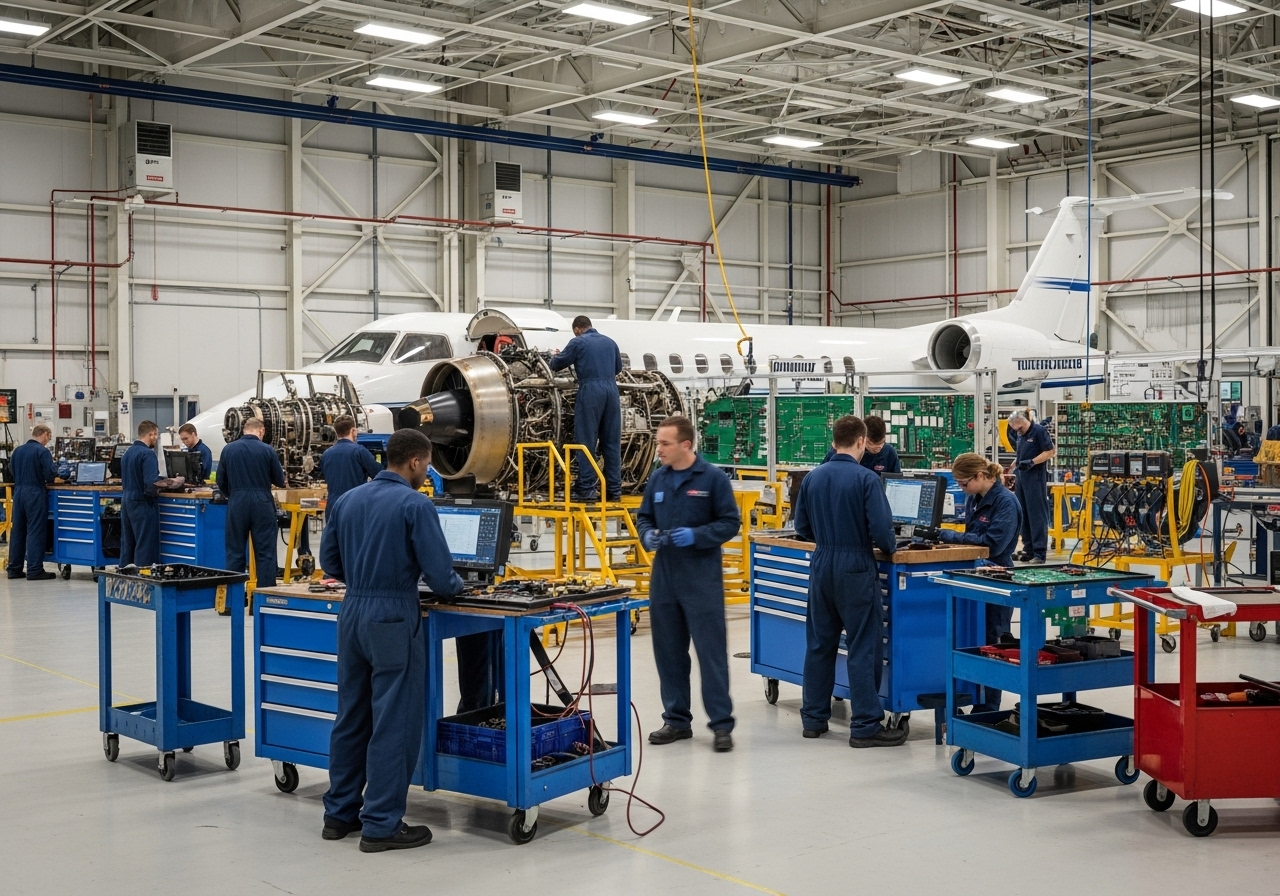
Trident Technical College in North Charleston offers FAA-approved programs in both Aviation Maintenance Technology and Avionics Maintenance Technology. These programs are structured to deliver the classroom work and hands-on experience required for FAA testing and for real-world shop performance. Students work in modern hangar-style labs and benefit from curriculum built around aircraft systems, routine maintenance practices, troubleshooting, and electronics fundamentals for avionics work.
The college’s large aeronautical training facility supports simulated maintenance environments and provides access to current tools and diagnostic equipment. Program length for the associate-level certificate typically spans about two years when pursued full time, with modular options and evening courses sometimes available for working students.
Charleston Southern University: Integrating Maintenance with Management
Charleston Southern University provides a pathway for technicians who already hold an associate degree to earn a Bachelor of Technology in Aviation Maintenance Management. The program emphasizes supervisory skills, safety management systems, regulatory compliance, and operational leadership in an aviation context. Coursework pairs technical topics—such as advanced systems and human factors—with business subjects like project management and aviation law.
This degree suits technicians aiming for lead roles, maintenance supervision, or positions that bridge technical knowledge with operational decision-making. Internships and partnerships with area employers are built into the curriculum to help students gain management experience while completing academic requirements.
Lowcountry Aviation: Specialized Airframe and Powerplant Preparation
Private schools and independent training providers in Charleston focus on accelerated Airframe and Powerplant (A&P) certification preparation. Lowcountry Aviation and similar programs commonly structure coursework and shop time to be completed in approximately 12–18 months, depending on full- or part-time enrollment. Training emphasizes hands-on repair, inspection techniques, and the FAA-required subject areas that appear on the written, oral, and practical examinations.
These programs are attractive to career changers and students seeking a shorter, vocational route into aviation maintenance. They typically place an emphasis on bench skills, practical troubleshooting, and building a portfolio of documented repairs and inspections that supports FAA testing.
Employment Opportunities in Charleston’s Aviation Sector
Charleston’s aviation ecosystem supports a range of employers who hire certified mechanics. Large-scale aircraft assembly, commercial airport operations, regional airlines, corporate flight departments, and independent MRO (maintenance, repair, and overhaul) shops all contribute to local demand. Major manufacturing and defense contractors in the region recruit technicians for line maintenance, component repair, and production-related roles, while the airport and fixed-base operators (FBOs) hire staff for routine aircraft servicing and ground support.
Employment volume fluctuates with airline schedules, defense contracts, and manufacturing output, but technicians with FAA credentials and hands-on experience consistently find avenues for entry and advancement. Specializations such as avionics, composites repair, and turbine engine work typically command higher pay and more selective hiring.
Prerequisites and Certification Requirements
Most entry paths into FAA AMT programs require a combination of age, education, and aptitude:
– Be at least 18 years old to qualify for FAA certificate testing.
– Possess a high school diploma or equivalent; technical math and basic physics are frequently required or strongly recommended.
– Demonstrate mechanical aptitude and, for avionics tracks, a foundation in electronics.
– Pass any program-specific entrance assessments or background checks.
For federal certification, students must complete an FAA-approved training program or accumulate equivalent work experience, and then pass the FAA written, oral, and practical exams to earn A&P (Airframe and Powerplant) ratings. Many students complete an FAA-approved school because it provides organized instruction hours and documentation that streamline eligibility for the exams.
Licensure and Reciprocity
Aircraft maintenance certification in the United States is regulated by the FAA, and an FAA-issued A&P certificate is recognized nationwide. South Carolina does not impose an additional state-level license for aircraft mechanics beyond FAA credentials. Technicians who plan to work internationally should verify foreign operators’ requirements; some jurisdictions and airlines may require additional validation, training, or agreements for reciprocity.
Comparing Aircraft Maintenance Programs in Charleston
| Institution | Program | Typical Duration | Approximate Tuition | Key Features |
|---|---|---|---|---|
| Trident Technical College | Associate in Aviation Maintenance / Avionics | About 24 months (full time) | $10,000–$15,000 (in-state, program-dependent) | FAA-approved, large training facility, industry-standard labs |
| Charleston Southern University | Bachelor of Technology in Aviation Maintenance Management | ~24 months (post-associate) / 48 months (from scratch) | $25,000–$35,000 per year (private university rates) | Management focus, internships, leadership and regulatory coursework |
| Lowcountry Aviation (private providers) | A&P Certification Preparation | 12–18 months | $15,000–$30,000 (program-dependent) | Fast-track, hands-on bench training, FAA test prep |
These figures are approximate and can vary based on residency status, additional fees, and chosen equipment or toolkits. Prospective students should request current tuition schedules and inquire about payment plans.
Cost, Financial Aid, and Work-Study Options
Tuition for aviation maintenance programs varies considerably. Public technical colleges generally offer the most cost-effective routes for in-state students, while private schools and four-year institutions carry higher tuition. Financial aid options include federal student aid, state grants, scholarships, and employer-sponsored tuition assistance. Veterans should evaluate educational benefits such as the GI Bill for eligible training programs.
Apprenticeships, employer partnerships, and part-time work at FBOs can help offset living costs while building on-the-job experience. Many programs also maintain relationships with regional employers for internship placements that may lead to paid employment after graduation.
Career Pathways and Earnings
Entry-level aircraft mechanics in the Charleston area commonly start in line maintenance, component repair, or as shop technicians. Wage ranges depend on employer type and specialization: new technicians often begin with hourly pay in the range of approximately $18–$28, while experienced technicians and specialists in avionics, turbine engines, or structural composites can see higher earnings—sometimes moving into the $30–$45 per hour range or beyond for demanding roles. Supervisory and quality-control positions, along with roles in aerospace manufacturing, typically command higher compensation and may require additional certifications or management training.
Longer-term career options include inspector roles, maintenance control, technical training instructor positions, and progression into aviation operations or program management if combined with further education.
How to Choose the Right Program
When comparing schools, focus on several practical factors:
– FAA Approval and Curriculum Coverage: Ensure the program covers the subject areas required for A&P testing or provides the documented hours for eligibility.
– Hands-On Hours and Equipment: Look for realistic laboratory environments with current aircraft systems, avionics benches, and diagnostic tools.
– Job Placement and Employer Connections: Programs that maintain hiring relationships with local MROs, airlines, and manufacturers can accelerate entry into the workforce.
– Class Size and Instructor Experience: Smaller classes often mean more personalized shop time; instructors with industry experience can offer mentoring and real-world context.
– Flexible Scheduling: For working students, evening, weekend, and part-time options may be decisive.
Arrange campus visits, tour labs, and speak with current students or alumni whenever possible; direct observation and conversations provide insight beyond program descriptions.
Key Takeaways
- Charleston offers multiple pathways into aircraft maintenance, from two-year FAA-approved programs to bachelor’s degrees that emphasize management.
- Hands-on training, FAA eligibility, and local employer partnerships are the most important criteria when evaluating programs.
- Technicians with A&P ratings and specialized skills—such as avionics or turbine work—have the strongest prospects for higher pay and rapid advancement.
Deciding to train as an aircraft mechanic in Charleston means weighing time, cost, and career goals against program offerings and employer demand. Researching schools, confirming FAA approval, and pursuing hands-on training will put candidates in a strong position to enter a resilient and technically engaging field. With a mix of practical instruction and industry connections available locally, Charleston remains a practical location for starting and advancing a career in aircraft maintenance.
Frequently Asked Questions
Time to certification varies by path. An FAA-approved associate program typically takes about 24 months full time. Accelerated private programs can run 12–18 months. Alternately, candidates can qualify by gaining required work experience—generally several years—but most students use school-based routes for a faster path to testing.
Costs range from approximately $10,000–$15,000 for in-state community college programs to higher annual tuition at private universities. Financial aid options include federal student aid, state grants, scholarships, veteran benefits, and employer tuition assistance. Apprenticeships or part-time maintenance jobs can also offset living expenses while training.
An FAA A&P certificate is required to sign off on many types of maintenance and to hold certain positions. Entry-level roles such as support technician or apprentice may not require A&P initially, but obtaining the certificate significantly expands career options and earning potential.
Avionics, turbine engine maintenance, composite repair, and quality assurance/inspection skills are commonly sought by employers engaged in manufacturing, MRO services, and airline maintenance operations. Technicians with combined electrical and mechanical skills—particularly in avionics—are often more competitive.
Many students work part time while enrolled, especially if programs offer evening or weekend classes. Practical shop work and internships may also provide paid opportunities. Time management is essential because hands-on lab sessions and FAA preparation require consistent attendance.
Several schools maintain career services, employer connections, and internship pipelines with local aviation employers. Prospective students should ask about job placement rates, alumni employment, and employer partnerships when choosing a program.

Author: STAFF HERE CHARLESTON
The CHARLESTON STAFF WRITER represents the experienced team at HEREcharleston.com, your go-to source for actionable local news and information in Charleston, Charleston County, and beyond. Specializing in "news you can use," we cover essential topics like product reviews for personal and business needs, local business directories, politics, real estate trends, neighborhood insights, and state news affecting the area—with deep expertise drawn from years of dedicated reporting and strong community input, including local press releases and business updates. We deliver top reporting on high-value events such as the Spoleto Festival USA, Charleston Wine + Food Festival, and the MOJA Festival. Our coverage extends to key organizations like the Charleston Metro Chamber of Commerce and the Charleston Museum, plus leading businesses in tourism and maritime industries that power the local economy such as South Carolina Ports Authority and the Charleston Visitor Center. As part of the broader HERE network, including HEREaiken.com, HEREbeaufort.com, HEREchapin.com, HEREcharleston.com, HEREclinton.com, HEREcolumbia.com, HEREgeorgetown.com, HEREgreenwood.com, HEREgreenville.com, HEREhiltonhead.com, HEREirmo.com, HEREmyrtlebeach.com, HEREnewberry.com, HERErockhill.com, HEREspartanburg.com, HEREaustin.com, HEREcollegestation.com, HEREdallas.com, HEREhouston.com, and HEREsanantonio.com, we provide comprehensive, credible insights into South Carolina's dynamic landscape.