
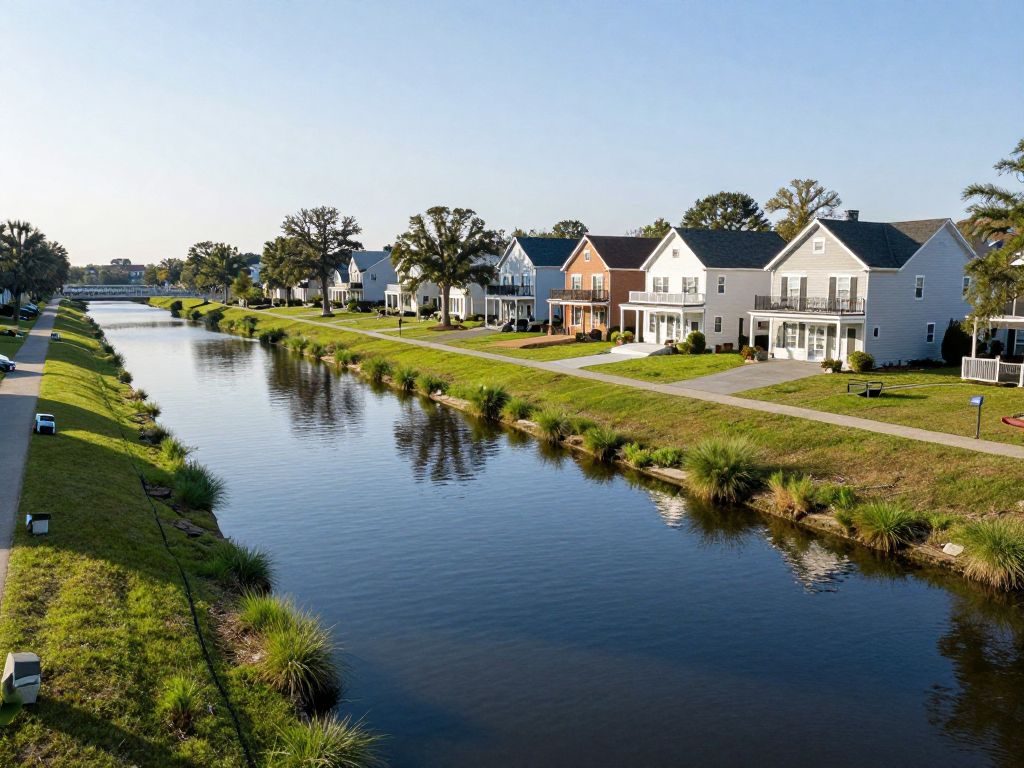
West Ashley, Charleston, SC, February 4, 2026
A new agreement between the Charleston Water System and Charleston Waterkeeper aims to tackle long-standing sanitary sewer overflow issues in West Ashley. This partnership illustrates a commitment to improving infrastructure and environmental health. Key actions include expedited inspections, a public notification system for overflow events, and a grant program for homeowners. With a $250 million investment strategy, the Charleston Water System is focused on building long-term resilience against population growth and severe weather challenges, aiming to enhance public health and water quality for the community.
Charleston, SC –
Proactive Steps Secure Cleaner Water for West Ashley
A significant agreement between the Charleston Water System and Charleston Waterkeeper marks a pivotal moment for environmental health and infrastructure reliability in West Ashley. This collaborative effort demonstrates the power of focused local action and underscores a commitment to sustained community well-being and responsible resource management for Charleston, SC.
After a period of persistent sanitary sewage overflow challenges impacting local waterways and neighborhoods, this new accord sets a clear path forward for comprehensive system improvements. It represents a shared dedication to enhancing public health and preserving the natural beauty of Charleston County community, reflecting how proactive engagement can lead to tangible civic innovation.
Addressing Long-Standing Infrastructure Challenges
For decades, parts of West Ashley, particularly areas within the former St. Andrews Public Service District wastewater collection system, have contended with sanitary sewer overflow (SSO) events. These overflows, which involve untreated or partially treated sewage discharging into streets, local marshes, and rivers, pose a considerable threat to both environmental integrity and public health.
The historical context of these issues is important; the Charleston Water System inherited this infrastructure in 1995 through a South Carolina Department of Health and Environmental Control (now SCDES) consent decree. The original St. Andrews Public Service District system had been improperly designed, installed, and mismanaged for many years. Over half of the sewer overflows recorded since 2015 have been attributed to storm events, with approximately half of those occurring during routine rainfall. Reports from as early as 2020 highlighted frequent sewer spills on Donahue Drive and neighboring streets in West Ashley, with residents indicating these problems had been ongoing for 10 to 20 years.
A Framework for Improvement: Key Commitments
The recently announced agreement, following Charleston Waterkeeper’s notice of intent to sue in 2024 under the federal Clean Water Act, outlines a comprehensive five-year strategy to resolve the ongoing overflow issues. This structured approach exemplifies a commitment to both accountability and proactive problem-solving, fostering improved Charleston infrastructure.
The Charleston Water System has committed to several key actions:
- Continuing and expediting planned inspections, repairs, and replacements to its sewer system in West Ashley, adhering to agreed-upon deadlines.
- Conducting more rigorous pipe inspections where necessary across West Ashley.
- Providing quarterly reports on the progress of its pipe inspection and repair program to Charleston Waterkeeper, making these reports publicly available. This transparency fosters greater community trust and oversight.
- Implementing a customer notification system to alert residents about sewage overflow events in their vicinities. This enhances personal initiative by empowering individuals to stay informed and take necessary precautions.
- Recommending to its board the funding of a new sewer lateral line replacement grant program. This program aims to assist homeowners in replacing vitrified clay pipe sewer line connections to their homes, offering a defined reimbursement.
Investing in a Resilient Future
Beyond the immediate scope of this agreement, the Charleston Water System is engaged in a broader wastewater master plan, representing a substantial $250 million investment. This forward-thinking initiative is designed to upgrade tunnels, key pump stations, and other vital infrastructure components, ensuring the system can effectively manage projected population growth, adapt to sea level rise, and withstand extreme weather events. Such significant investment underscores a dedication to building long-term resilience for the entire Charleston County community.
An example of this long-term vision is the ongoing West Ashley Tunnel project, which forms the fifth and final phase of a six-phase tunnel replacement program that commenced in 1999. This specific phase, with an estimated cost of $50.8 million, will replace an existing, deteriorated tunnel built in the late 1960s. The original tunnel’s inadequate capacity has been a contributing factor to occasional sewer system overflows in West Ashley’s low-lying areas. The total cost for all phases of this comprehensive tunnel project is approximately $186 million.
Community Engagement and Stewardship
The collaboration between the Charleston Water System and Charleston Waterkeeper highlights the value of engaged citizenry and the role of local advocacy groups in championing environmental stewardship. While the agreement emerged from a legal challenge, its resolution demonstrates that focused dialogue and a commitment to shared goals can lead to constructive outcomes, benefiting water quality Charleston SC.
Both organizations actively encourage customers throughout the system, particularly in West Ashley, to enroll in the new customer alert notifications. This direct line of communication represents an important step in empowering residents with timely information, reinforcing the principle that informed citizens are critical partners in maintaining community health and environmental standards. The ability of local entities to adapt and implement innovative solutions, such as the homeowner grant program and real-time alerts, showcases the effectiveness of local leadership when coupled with personal initiative.
A Commitment to Progress
This agreement serves as a testament to Charleston’s ongoing commitment to improving its infrastructure and protecting its invaluable natural resources. It illustrates how focused efforts, driven by both public utilities and community advocates, can lead to significant advancements in environmental quality and civic well-being. The sustained dedication to inspecting, repairing, and upgrading essential services, coupled with enhanced transparency and community involvement, paves the way for a healthier and more resilient Charleston. Residents are encouraged to remain engaged and utilize the new resources available to them, further solidifying our collective progress.
Frequently Asked Questions
What is the agreement between Charleston Water System and Charleston Waterkeeper about?
The agreement between the Charleston Water System (CWS) and Charleston Waterkeeper aims to address ongoing sanitary sewer overflow (SSO) events in West Ashley.
What caused the sewer overflow problems in West Ashley?
Most overflows occur within the former St. Andrews Public Service District wastewater collection system, which the Charleston Water System was forced to take over in 1995 via a South Carolina Department of Health and Environmental Control (now SCDES) consent decree because its infrastructure was improperly designed, installed, and mismanaged for decades. Over half of the overflows since 2015 were caused by storm events, with about half of those being routine rain.
What specific actions will the Charleston Water System take under this agreement?
The Charleston Water System commits to continuing and expediting planned inspections, repairs, and replacements to its sewer system in West Ashley, carrying out more rigorous pipe inspections, sending Charleston Waterkeeper and making publicly available quarterly reports, and deploying a customer notification system for sewage overflow events. CWS will also recommend funding a new sewer lateral line replacement grant program for homeowners.
How long is this agreement in effect?
This is a five-year agreement.
What is the broader investment in Charleston’s wastewater infrastructure?
The Charleston Water System has a wastewater master plan that includes a $250 million investment in new tunnels, key pump stations, and other renewal/replacement projects to handle population growth, sea level rise, and extreme weather events.
Key Features of the West Ashley Sewer Overflow Agreement
| Feature | Description |
|---|---|
| Parties Involved | Charleston Water System (CWS) and Charleston Waterkeeper |
| Location | West Ashley, Charleston, SC |
| Problem Addressed | Sanitary Sewer Overflow (SSO) events |
| Agreement Duration | Five years |
| Root Cause (Historical) | Improperly designed, installed, and mismanaged infrastructure from the former St. Andrews Public Service District, taken over by CWS in 1995. |
| Contributing Factors | Storm events, including routine rain, causing over half of overflows since 2015. Deteriorated and undersized tunnels from the late 1960s. |
| CWS Commitments | Expedited inspections, repairs, replacements; rigorous pipe inspections; quarterly public reports; customer notification system; recommendation for homeowner grant program. |
| Broader CWS Investment | $250 million wastewater master plan for tunnels, pump stations, renewal/replacement projects. West Ashley Tunnel project ($50.8 million, part of $186 million total tunnel project) to replace existing deteriorated tunnels. |
| Community Benefit | Improved water quality in Charleston SC, enhanced public health, greater transparency, and homeowner assistance. |
Deeper Dive: News & Info About This Topic
HERE Resources
Berkeley County’s New Growth Wave
Charleston Volunteers Elevate Wetlands Day with Marsh Cleanup
Charleston Connects to Drive Local Business Innovation
McMaster’s Final State of the State: Charting South Carolina’s Future
Charleston’s Water Heater Doctors: Rapid Service & Growth
Single Sprinkler Stops Charleston Apartment Fire
Charleston Adventure Forest Unveils 2026 Expansion Plans
Find Inner Peace: Redux Workshop Explores Transformative Journey
Lowcountry Marine Business Adapts to Market Shifts
A Harmonious Blend of Art and Civic Spirit in Charleston