

South Carolina, January 23, 2026
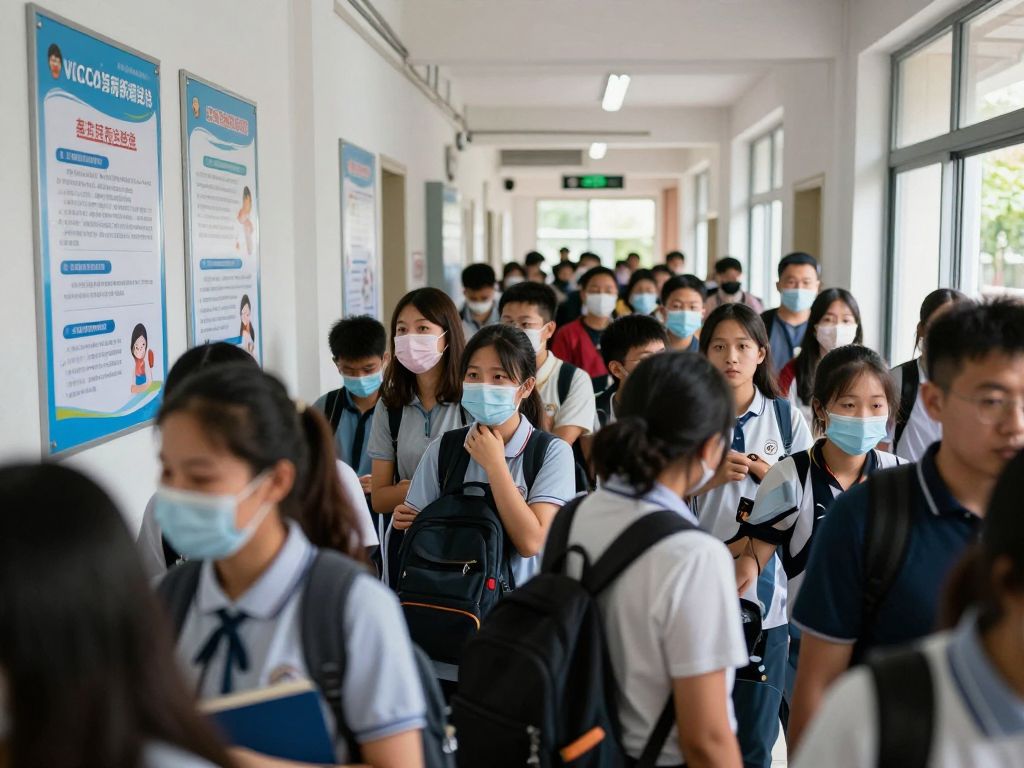
South Carolina is battling the nation’s largest measles outbreak, with 646 confirmed cases reported as of mid-January 2026. The surge primarily affects unvaccinated individuals, with many schools and public spaces identified as exposure sites. Health officials stress the importance of vaccinations to control this highly contagious virus, which threatens the state’s and the country’s elimination status for measles. Urgent measures are underway as quarantine numbers rise, impacting both K-12 and university students.
Charleston, S.C.
South Carolina is currently experiencing the nation’s most severe measles outbreak, with the total number of confirmed cases climbing to 646 as of January 20-22, 2026. This significant surge has prompted Lowcountry school districts to remain vigilant, as several educational institutions have been identified as potential exposure sites for the highly contagious virus. The spread has also expanded beyond K-12 schools, reaching college campuses, with Clemson University and Anderson University reporting confirmed cases and numerous students in quarantine.
In a concerning development over the past week, South Carolina officials confirmed an additional 212 measles cases, bringing the state’s total to its current level. Specifically, 88 new infections were reported since last Friday. This rapid increase has led to 538 individuals currently in quarantine and 33 in isolation across the state, underscoring the aggressive nature of the outbreak and the proactive measures being taken by public health authorities to contain its further spread.
The epicenter of this expanding outbreak is primarily situated in Spartanburg County, located in the Upstate region. Health officials indicate that the majority of infections are concentrated in elementary and secondary schools within this area, particularly those with lower vaccination rates. Analysis of the 646 confirmed cases reveals that a significant proportion, 563 patients, are unvaccinated. Additionally, 12 individuals were partially vaccinated, 13 were fully vaccinated, and the vaccination status for 58 cases remains unknown. The outbreak disproportionately affects younger populations, with 155 cases involving children under five years old and 419 cases among those aged five to 17. Health officials have emphasized that 97-98% of all infections are occurring in unvaccinated individuals.
The pervasive nature of the virus is further highlighted by the identification of multiple public exposure sites beyond schools. These locations, where individuals may have unknowingly been exposed to measles, include several local grocery stores such as Aldi and Publix, a Goodwill store, a US Post Office, Anytime Fitness, Food Lion, and Bintime Spartanburg. The South Carolina State Museum has also been listed as a potential exposure site. The presence of numerous public exposure points suggests that measles is actively circulating within the community, elevating the risk of infection for individuals who lack immunity through vaccination or previous exposure.
This ongoing outbreak in South Carolina is poised to become the largest in decades within the United States, threatening to surpass the 762-case outbreak that occurred in West Texas last year. Public health experts are increasingly concerned that the United States is at risk of losing its measles elimination status, a benchmark achieved in 2000 that signifies no sustained local transmission for over 12 months. This concern is amplified by recent events, as Canada lost its own measles elimination status in November. The Pan American Health Organization (PAHO) is scheduled to review the measles elimination status for both the U.S. and Mexico in April, adding urgency to the situation.
Measles is recognized as one of the most contagious viruses known. Its highly transmissible nature means that an infected person can spread the virus for four days before and after a rash appears, often before they even realize they are ill. The virus itself can remain airborne and infectious for up to two hours after an infected individual has left a space. The disease can lead to severe complications, including hospitalization and, in rare instances, death. The most effective defense against measles is vaccination. The Measles, Mumps, and Rubella (MMR) vaccine provides robust protection; one dose is approximately 93% effective, while the full two-dose series offers roughly 97% protection against the virus.
To curb the spread of such diseases, South Carolina mandates two doses of the MMR vaccine for students entering kindergarten through 12th grade. For the 2023-2024 school year, the vaccination rate for school entry was 92.1% in the state. However, declining vaccination rates in certain areas have led to immunity levels falling below what is needed for herd immunity, leaving communities more vulnerable to outbreaks.
On a nationwide scale, the Centers for Disease Control and Prevention (CDC) reported 416 confirmed measles cases in the United States in 2026 as of January 22. Of these, 413 cases were reported by 14 jurisdictions, including South Carolina, with three cases attributed to international visitors. The vast majority, 393 of these cases, are associated with outbreaks that began in 2025. For the entirety of 2025, a total of 2,255 confirmed measles cases were reported across 45 jurisdictions in the United States, indicating a concerning trend in measles activity across the nation.
Frequently Asked Questions (FAQ)
Here are some common questions and answers about the South Carolina measles outbreak:
-
What is the current number of measles cases in South Carolina?
As of January 20-22, 2026, the total number of confirmed measles cases in South Carolina related to the Upstate outbreak has reached 646.
-
Why are Lowcountry schools on alert?
Lowcountry schools are on alert because the South Carolina measles outbreak continues to be the worst in the nation, and several schools have been identified as potential points of exposure.
-
Where is the outbreak primarily centered?
The outbreak is primarily centered in Spartanburg County, particularly in elementary and secondary schools that have lower vaccination rates.
-
Has the outbreak spread to universities?
Yes, the virus has spread to college campuses. Clemson University has 34 students in quarantine and Anderson University has 50 students in quarantine, with each school reporting one confirmed measles case.
-
What is the vaccination status of most individuals affected in South Carolina?
Of the 646 cases in South Carolina, 563 patients are unvaccinated. Health officials report that 97-98% of all infections are occurring in unvaccinated individuals.
-
What are the implications for the United States’ measles elimination status?
The United States may be at risk of losing its measles elimination status, a benchmark achieved in 2000. This South Carolina outbreak is threatening to become the largest in decades in the United States.
-
How effective is the measles vaccine?
The MMR vaccine is the best protection. One dose is about 93% effective against measles, while the full two-dose series offers roughly 97% protection.
Key Features of the South Carolina Measles Outbreak
| Feature | Details | Scope |
|---|---|---|
| Current Case Count (State-level) | 646 confirmed cases (as of Jan 20-22, 2026) | State-level |
| New Cases (last week) | 212 new cases confirmed in the past week (as of Jan 20, 2026) | State-level |
| New Cases (since last Friday) | 88 new cases reported since last Friday (Jan 17, 2026) | State-level |
| Quarantined Individuals | 538 people currently in quarantine | State-level |
| Isolated Individuals | 33 people currently in isolation | State-level |
| Outbreak Center | Spartanburg County, Upstate region | State-level |
| Impacted Age Groups | 155 cases under 5 years; 419 cases aged 5-17 years | State-level |
| Unvaccinated Cases | 563 patients are unvaccinated (out of 646) | State-level |
| Vaccination Rates (school entry, 2023-2024) | 92.1% of K-12 students with required two doses of MMR vaccine | State-level |
| National Comparison | Worst in the nation; threatening to be largest in decades | Nationwide |
| U.S. Elimination Status Risk | United States at risk of losing measles elimination status | Nationwide |
| Nationwide Cases (2026) | 416 confirmed cases in U.S. (as of Jan 22, 2026) | Nationwide |
| Nationwide Cases (2025) | 2,255 confirmed cases in U.S. (full year 2025) | Nationwide |
Deeper Dive: News & Info About This Topic
HERE Resources
Senator Bernie Sanders Calls for Health Secretary’s Resignation
First Measles Case Reported in South Carolina
Lawyers Unite Against Mass Firings at HHS
Columbia Senate Committee Votes Against Dr. Simmer’s Nomination
New Autism Research Initiative Sparks Mixed Reactions
Texas Faces Largest Measles Outbreak in Nearly 30 Years
Robert F. Kennedy Jr. Nominated as Health Secretary by Trump