

Charleston, SC, January 21, 2026
Financial markets experienced heightened volatility following President Trump’s tariff threats, causing sharp sell-offs across major asset classes. The economic implications are significant, particularly for small businesses and the Charleston community, which must navigate new uncertainties to foster resilience and growth. Understanding the ripple effects of tariffs is crucial for local entrepreneurs aiming to adapt to these market conditions.
Charleston, SC
Market Volatility Jumps: Tariff Threats Spook Investors
Recent developments on the national stage saw financial markets experience a notable surge in volatility on Tuesday, January 20, 2026, as renewed tariff threats introduced a fresh wave of uncertainty for investors across the nation. This nationwide market turbulence underscores the critical importance of resilience and adaptability for businesses, including the vibrant Charleston SC business community.
The financial world reacted sharply to discussions surrounding international trade policy, demonstrating how swiftly investor sentiment can shift when faced with unexpected regulatory changes. For local entrepreneurs and small business owners in the Lowcountry, understanding these broader economic currents is key to navigating the future and reinforcing Lowcountry economic growth.
Understanding Market Turbulence
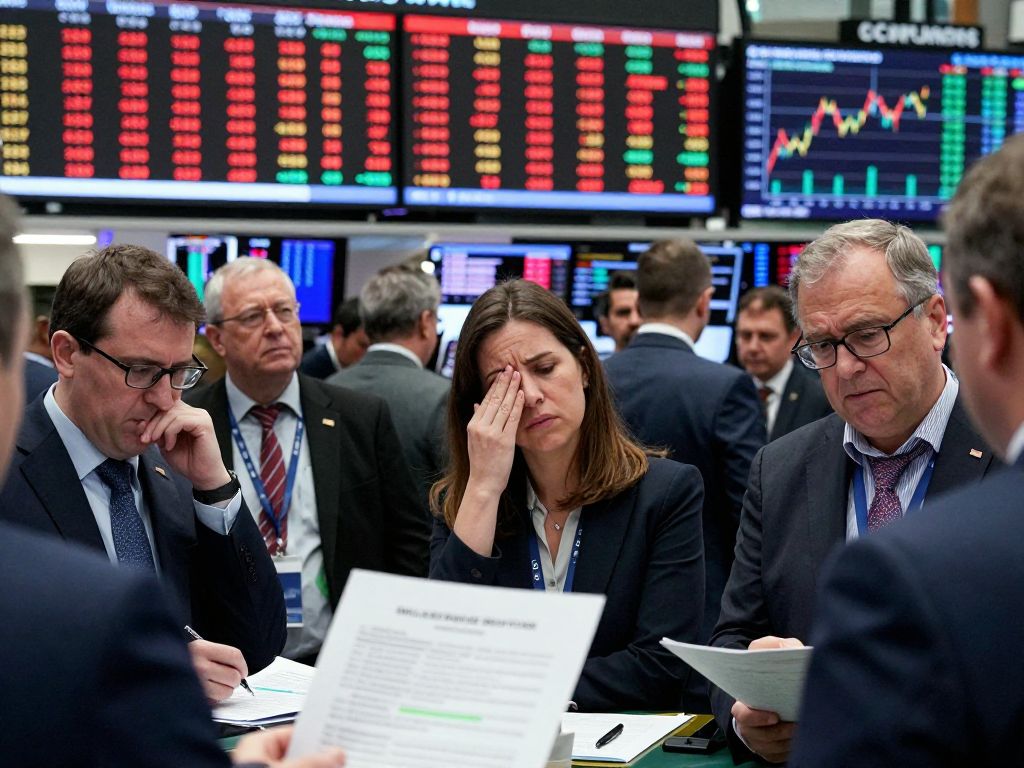
On Tuesday, January 20, 2026, volatility measures across various asset classes experienced a significant increase. Stocks, U.S. long-dated Treasuries, and the U.S. dollar all saw a sharp sell-off. Major stock indexes, including the tech-heavy Nasdaq, the benchmark S&P 500, and the blue-chip Dow Jones Industrial Average, finished sharply lower, with the Dow shedding 870 points. The CBOE Volatility Index (VIX), often referred to as Wall Street’s “fear gauge,” surged by 29% to 20.46, marking its second consecutive daily rise and exceeding the 20 level for the first time since November.
This market reaction was primarily driven by President Donald Trump’s threats to rekindle a trade dispute with Europe. Specifically, President Trump threatened to impose 10% U.S. import tariffs on eight NATO allies starting February 1, and 25% tariffs beginning June 1, “until such time as a Deal is reached for the Complete and Total purchase of Greenland”. This move was described by analysts as a fresh outbreak in a trade war that many had believed had largely ended after a series of trade deals last year. The stock market typically reacts negatively to uncertainty, and these renewed tariff threats certainly introduced a new layer of it.
The Economic Ripple Effect of Tariffs
Tariffs, which are essentially taxes imposed by governments on imported goods and paid by the U.S. business or individual receiving those goods at their port of entry, can have widespread economic consequences. Nationwide, broad-based tariffs tend to raise prices for consumers and businesses, potentially hindering economic growth and causing significant uncertainty. They can disrupt established supply chains, which many businesses rely upon for efficient operations.
The immediate impact often includes increased costs for businesses, which can lead to higher consumer prices, reduced profit margins, or necessary adjustments to supply chains. To maintain profitability, businesses may be compelled to raise their prices. Tariffs can also contribute to inflationary pressures within the economy. Beyond these direct costs, the uncertainty stemming from trade tensions can cause companies to delay investment decisions, lead consumers to lose confidence, and result in volatile currency fluctuations. Prolonged market turmoil can erode economic fundamentals, affecting household and pension fund wealth, which in turn may curb consumer spending. If businesses nationwide face unpredictable trade conditions, they might even reduce their workforce or scale back production. Historical data over 40 years suggests that following an increase in tariff rates, the unemployment rate initially rises while inflation declines, though over time, unemployment returns to normal levels as inflation increases.
Small Businesses on the Front Lines
Across the nation, small businesses often find themselves particularly vulnerable to the impact of tariffs. They typically possess fewer resources compared to larger corporations to adapt their supply chains, negotiate with suppliers, or navigate constantly changing trade regulations. The increased expenses for imported materials and goods can significantly eat into their already thin profit margins.
Data indicates that 70% of small businesses nationwide have reported incurring higher costs due to tariffs, and 60% have found it necessary to raise their prices. Furthermore, small firms often have less ability to pass on these tariff-related costs to consumers compared to their larger counterparts. As a result, small firms have historically anticipated sales to be nearly 9% lower than normal levels, a more significant dip than the 3.5% expected by large firms. These burdens highlight the disproportionate challenges faced by Charleston small business owners and South Carolina entrepreneurs in a volatile global trade environment.
Charleston’s Economic Landscape: Cultivating Resilience
While the recent tariff threats and market volatility are nationwide phenomena, their implications resonate deeply with discussions about economic resilience at the local level. Charleston, with its dynamic economy and thriving entrepreneurial spirit, consistently demonstrates the capacity to adapt and grow. The focus for Charleston County economy must be on strengthening its inherent ability to absorb shocks and reconfigure itself to continue providing economic opportunities.
Cultivating resilience involves a multi-faceted approach. Diversification of industries is key, as places that rely on a narrow range of industries face significant risks during downturns. Encouraging innovation and fostering an environment of entrepreneurial achievement allows businesses to pivot and find new solutions in the face of challenges. Furthermore, a stable and predictable regulatory environment, characterized by limited red tape, can empower South Carolina entrepreneurs to focus on growth and job creation, rather than compliance with burdensome rules.
The Path Forward: Fostering Growth and Stability
In times of nationwide market uncertainty, a balanced perspective is crucial. For long-term investors, short-term market volatility typically does not necessitate changes to existing investment plans. While tariffs introduce immediate jitters, historical analysis suggests that the VIX often reverts to pre-tariff levels relatively quickly after the initial shock, indicating that the effects on expected volatility may be short-lived. This underscores the market’s capacity to adjust once the implications of new policies become clearer.
For businesses in Charleston, the emphasis remains on strategic foresight and operational agility. Exploring diversified supply sources, optimizing cost structures, and continually evaluating market positioning can help mitigate the impact of external trade disruptions. Promoting local innovation and supporting private investment are vital for reinforcing the foundations of the Charleston County economy. By fostering an environment where entrepreneurial spirit can flourish, and by advocating for policies that reduce unnecessary burdens on businesses, Charleston can continue its trajectory of economic growth and stability.
The recent market fluctuations serve as a reminder that global events can have far-reaching effects. However, by embracing principles of self-reliance, adaptability, and an unwavering commitment to free enterprise, Charleston’s businesses and residents can continue to thrive, proving that strong local economies are the bedrock of national prosperity.
Supporting our local businesses, encouraging innovative solutions, and staying engaged in the dialogue surrounding economic policy are all ways to contribute to a resilient and prosperous future for Charleston SC business and the entire Lowcountry.
Key Features of Market Volatility and Tariffs
| Feature | Description | Scope |
|---|---|---|
| Event Date | Tuesday, January 20, 2026 | Nationwide |
| Market Reaction | Stocks, U.S. long-dated Treasuries, and the U.S. dollar sold off sharply. The VIX surged 29% to 20.46. | Nationwide |
| Cause of Volatility | President Trump’s threats of 10-25% tariffs on NATO allies over Greenland. | Nationwide |
| General Tariff Impact | Raises prices, harms economic growth, causes uncertainty, disrupts supply chains, can lead to inflation. | Nationwide |
| Small Business Impact | Higher costs, lower profit margins, difficulty passing costs, sales reductions (70% reported higher costs, 60% raised prices). | Nationwide |
| Economic Resilience | Capacity to anticipate, withstand, and bounce back from economic shocks; involves diversification, innovation, and adaptive governance. | Local/Regional |
Deeper Dive: News & Info About This Topic
HERE Resources
The CODfather Closes Its Doors in North Charleston
Ingevity Divests Crude Tall Oil Refinery Assets in Charleston
Ingevity Completes Strategic Sale in North Charleston
Swag Coin Launches SWAG GOLD Cryptocurrency Backed by Gold Reserves
U.S. Labor Market Faces Decline Amid Immigration Policy Struggles
Trump Signs GENIUS Act to Regulate U.S. Stablecoins
Frasers Property Makes Second Bid to Privatize REIT
European Stock Markets End Mixed Amid Economic Developments
Trump’s Cabinet Meeting Triggers Legal and Market Concerns
President Trump’s Tariff Policies Under Review