

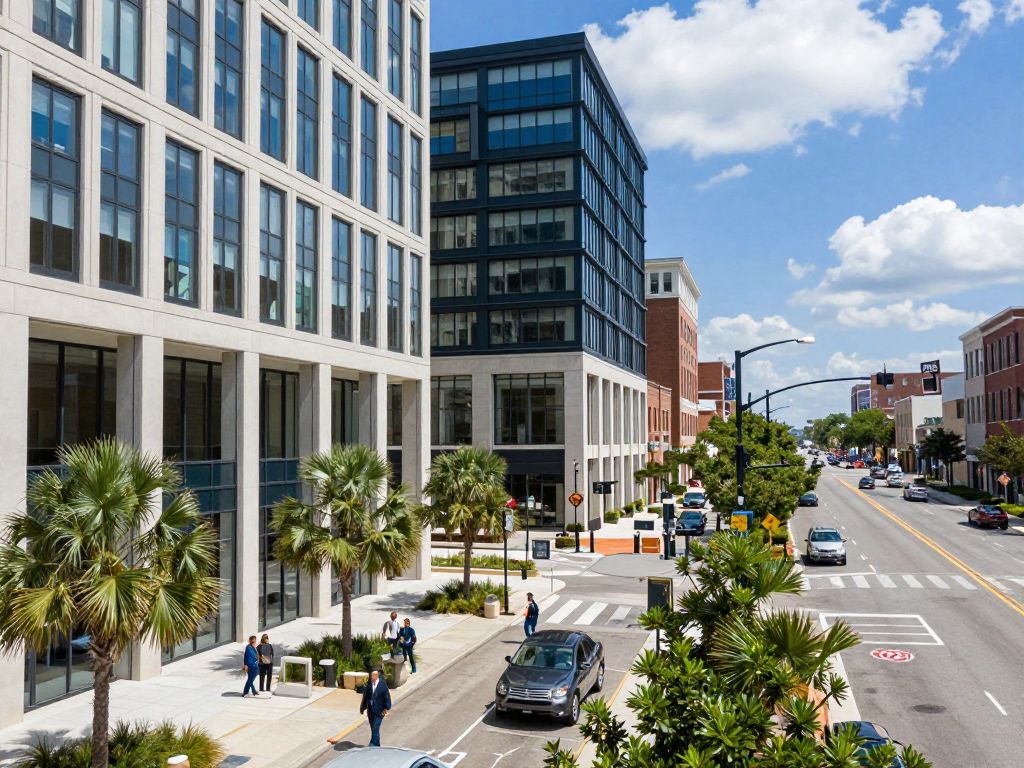
Charleston, SC, January 15, 2026
Colliers South Carolina has strengthened its presence in Charleston by integrating a team of approximately 50 commercial real estate professionals from a competitor. This strategic move signifies confidence in the region’s economic growth and highlights the competitive landscape of the Lowcountry market. The expansion underscores Charleston’s appeal as a hub for commercial activity and reflects ongoing investment and entrepreneurial spirit within the community. As businesses adapt to the evolving market, the commercial real estate sector is positioned for enhanced service offerings and innovation.
Charleston, SC’s dynamic commercial real estate sector is witnessing significant activity, underscored by strategic expansions among key players. In a notable development for the Charleston SC business landscape, Colliers South Carolina has expanded its local team by integrating a substantial group of professionals from a competitor, reflecting confidence in the region’s sustained economic vitality and robust growth trajectory. This move highlights the competitive and evolving nature of the Lowcountry economic growth, as firms strategically position themselves to serve a burgeoning market driven by entrepreneurial spirit and increasing private investment.
This expansion by a prominent firm like Colliers South Carolina signals a deepened commitment to the Charleston County economy, reinforcing the area’s appeal as a hub for commercial activity. Such consolidations and strategic hiring are often seen in thriving markets where businesses are eager to enhance their capabilities and service offerings, ultimately benefiting clients and contributing to a more efficient marketplace. It demonstrates a proactive approach to growth, aligning with the determination and innovation characteristic of many South Carolina entrepreneurs and businesses.
The city of Charleston and its surrounding areas continue to attract attention for their economic resilience and potential. The commercial real estate market’s strength is a testament to broader economic health, fueled by a growing population and diverse industries. This environment, where businesses are willing to invest and expand, fosters competition and drives service excellence, crucial elements for a vibrant free-market economy.
Market Consolidation and Enhanced Expertise
Colliers South Carolina, an affiliate of a global real estate firm, has notably strengthened its presence in Charleston by recruiting a team of approximately 50 commercial real estate professionals who were formerly associated with Lee & Associates Charleston. This strategic move not only signifies a substantial increase in personnel but also a consolidation of expertise within the Charleston commercial real estate market. The integration of such a large team can enhance a firm’s capacity to deliver a wide array of services, from brokerage to property management, across various commercial sectors. Colliers South Carolina maintains a significant statewide presence, with over 165 staff members, including more than 70 licensed real estate professionals. The firm is recognized as the largest manager of commercial property in South Carolina, overseeing a portfolio of approximately 23 million square feet encompassing office, industrial, retail, and healthcare properties. This expansion is poised to bolster the firm’s ability to serve the increasingly complex needs of investors and businesses in the Lowcountry.
Charleston’s Economic Momentum
Charleston’s commercial real estate market continues to exhibit a thriving environment, supported by the city’s robust economy, a steadily growing population, and a strategic coastal location. The Charleston-North Charleston metropolitan area experienced a population increase of 10.3% between 2010 and 2020, positioning it as one of the nation’s fastest-growing regions. This demographic trend contributes significantly to sustained demand across all commercial property sectors, from residential-supporting retail to expansive industrial operations. The local economy has evolved from one largely dependent on tourism to a more diversified powerhouse, with significant contributions from thriving technology and manufacturing sectors, alongside the enduring importance of the Port of Charleston. The Port of Charleston is a primary driver for the industrial real estate market, with its ongoing expansion contributing to high demand for industrial and logistics facilities, further supported by excellent highway and rail connectivity. These fundamental economic strengths create a fertile ground for business growth and attract private investment.
The Vibrant Commercial Real Estate Landscape
The overall commercial real estate market in Charleston is characterized by positive trends, including declining vacancy rates and increasing rental rates across various sectors. The region boasts one of the lowest commercial real estate vacancy rates Nationwide, ranking 10th, and holds the 2nd lowest in the Southeastern United States. This scarcity of available space, coupled with robust demand, naturally leads to appreciating property values. The constant influx of new residents, with an average of 43 people moving to the Tri-County area daily, further fuels this demand. Major economic development initiatives and investments by large companies such as Boeing, Volvo, Daimler, Blackbaud, and Benefit Focus continue to stimulate growth in the Charleston market. These large-scale corporate presences often spur the growth of ancillary businesses and suppliers, creating a ripple effect throughout the local economy and bolstering the Charleston small business sector.
Innovation in Property Development
The Charleston commercial real estate market is also adapting to evolving business needs and consumer preferences through innovative development trends. Mixed-use developments, which integrate residential, commercial, and retail spaces within single projects, are gaining prominence. These developments offer convenience and appeal to both residents and businesses, making them attractive investment opportunities. Additionally, there is a growing demand for flexible office spaces, influenced by the increasing popularity of remote work and co-working environments. This adaptability in office space offerings allows businesses, particularly small businesses and startups, to scale operations efficiently without being constrained by rigid traditional lease structures. These trends highlight the market’s responsiveness to the needs of modern businesses, emphasizing innovation in how spaces are designed and utilized to foster productivity and community engagement.
Impact on the Local Economy and Community
The expansion of commercial real estate firms and the sustained growth in the market have a profound impact on the local economy and community. Commercial real estate development serves as a crucial engine for job creation, not only in direct construction and property management roles but also in supporting various retail and service industries. These developments also generate significant tax revenue for local governments, providing a vital source of funding for public services, infrastructure, and schools. When planned thoughtfully, commercial projects can revitalize neighborhoods by introducing essential amenities, stimulating increased consumer spending, and attracting new residents and businesses. The competitive environment fostered by strong firms vying for market share often translates into higher quality services and more innovative solutions for businesses and residents alike, underscoring the benefits of a dynamic, market-driven approach to urban and economic development.
The expansion of Colliers South Carolina in Charleston is a clear indicator of the region’s enduring economic appeal and potential for continued growth. It showcases the vitality of the Charleston SC business community and the strategic foresight of firms operating within it. As Charleston’s economy continues to diversify and attract new investment, fostering an environment that encourages entrepreneurial innovation and minimizes unnecessary regulatory burdens will be paramount to sustaining this positive momentum. We encourage our readers to support local businesses and remain engaged in the ongoing development of Charleston’s vibrant economic future.
Frequently Asked Questions
What recent expansion has Colliers South Carolina made in Charleston?
Colliers South Carolina has expanded its Charleston team by recruiting approximately 50 commercial real estate professionals who previously worked for Lee & Associates Charleston.
What is the current state of Charleston’s commercial real estate market?
Charleston’s commercial real estate market is thriving, driven by a robust economy, a growing population, and its strategic coastal location. It features declining vacancy rates and increasing rental rates across various sectors.
How much has Charleston’s population grown recently?
The Charleston-North Charleston metro area saw a population increase of 10.3% between 2010 and 2020, making it one of the fastest-growing regions Nationwide.
What drives the industrial real estate market in Charleston?
The Port of Charleston and its ongoing expansion are significant drivers for the industrial real estate market, leading to high demand for industrial and logistics facilities, supported by strong highway and rail connectivity.
What are some emerging trends in Charleston’s commercial real estate development?
Emerging trends include the rise of mixed-use developments, which combine residential, commercial, and retail spaces, and a growing demand for flexible office spaces, influenced by remote work and co-working trends.
Key Features of Charleston’s Commercial Real Estate Market
| Feature | Description | Scope |
|---|---|---|
| Market Condition | Thriving, with declining vacancy rates and increasing rental rates. | Local |
| Population Growth | Charleston-North Charleston metro area grew by 10.3% (2010-2020). | Nationwide |
| Economic Drivers | Diversified economy, strong tech, manufacturing, and Port of Charleston. | Local |
| Vacancy Rates | 10th lowest Nationwide; 2nd lowest in the Southeast. | Nationwide, State-level |
| Key Sector Demand | High demand for industrial, logistics, office, and retail spaces. | Local |
| Emerging Trends | Mixed-use developments and flexible office spaces. | Local |
| Daily Influx | Approximately 43 new people move to the Tri-County area each day. | Local |
Deeper Dive: News & Info About This Topic
HERE Resources
Charleston’s Real Estate Landscape Transforms as Colliers Expands Dominance
Charleston’s Oyster Festival: A Thriving Local Tradition
Charleston’s Business Summit: Fostering Local Growth
Charleston Boat Show Promotes Community Spirit and Growth
Charleston Police Classify Wando Crash as Homicide
Fatal Crash on Clements Ferry Road Linked to Homicide Investigation
Charleston Police Launch Homicide Investigation After Crash
Master-Planned Communities: Economic Catalysts in Charleston
Bojangles’ Thrives Post-Acquisition: Economic Impact in South Carolina
Charleston’s Aerospace Sector Expands with Boeing’s Delivery Surge