

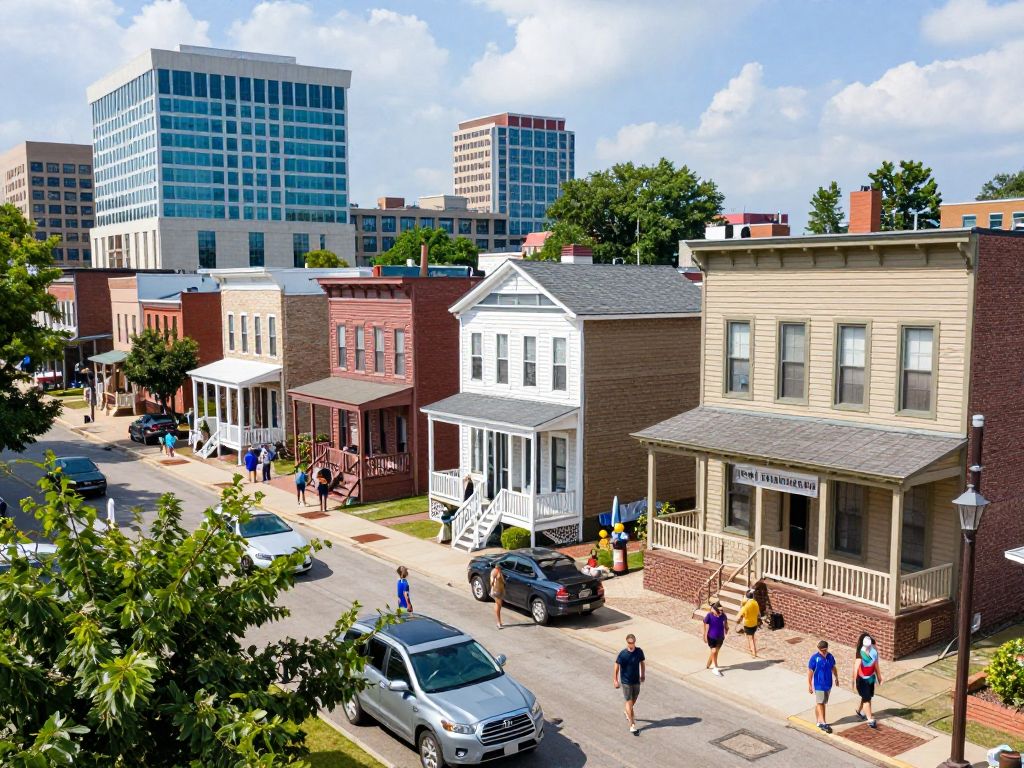
North Charleston, January 13, 2026
In a notable display of community engagement, developers have altered their plans for a townhome project in Liberty Hill, North Charleston. This decision came in response to strong local objections emphasizing the importance of preserving the area’s historical character. The situation exemplifies the balance between economic development and community heritage, highlighting how resident feedback can guide responsible urban planning and ensure development respects Charleston’s unique cultural fabric.
Liberty Hill Townhome Plan Pivots After Community Stands Up
In a compelling demonstration of community engagement shaping urban development, developers have significantly altered plans for a proposed townhome project on Liberty Hill property in North Charleston. This shift follows strong objections voiced by local residents, highlighting the critical balance between economic expansion and preserving the unique historical and cultural fabric of Charleston’s cherished neighborhoods.
The evolving landscape of Charleston County often presents developers and communities with opportunities and challenges. While innovative projects are crucial for economic vitality and providing housing options for a growing populace, the resilience of established communities and the determination of residents to protect their heritage play an equally important role in guiding sensible growth. This recent development in Liberty Hill underscores how local input can lead to adaptive solutions, benefiting both entrepreneurial ventures and the enduring character of the Lowcountry.
For entrepreneurs and investors navigating Charleston’s dynamic market, understanding community values is paramount. The Liberty Hill situation exemplifies a responsive approach to development, where feedback from the neighborhood has prompted a reevaluation of initial proposals. This adaptive strategy can foster sustainable economic growth that respects historical integrity and strengthens community ties, contributing positively to the broader Charleston SC business environment.
Liberty Hill: A Pillar of North Charleston’s Heritage
The community of Liberty Hill stands as one of the oldest Black communities in Charleston, rooted deeply in the post-Civil War era. Its origins trace back to 1864 when freed individuals Paul and Harriet Trescot acquired 112 acres of farmland north of Charleston. By 1871, they had sold portions of this land to four freedmen—Ishmael Grant, Aaron Middleton, and the brothers Plenty and William Lecque—with the express goal of establishing a settlement for free people.
For over a century, Liberty Hill flourished as a self-sufficient and self-sustaining community, boasting a vibrant collection of over 60 Black businesses by the mid-20th century. This entrepreneurial spirit provided residents with essential medical care, goods, services, and employment opportunities within their own neighborhood. Located between Gaynor Avenue and Mixon Avenue along the East Montague Corridor in North Charleston, Liberty Hill is not just a geographical area but a living testament to personal achievement and collective resilience.
A Proposal Meets Local Concerns
Recently, a proposed townhome development on property within Liberty Hill sparked considerable discussion. The plan involved a significant zoning change, aiming to reclassify a specific property from an R1 (single-family residential) area to an R2 (multifamily residential) area to accommodate the new townhomes. This proposal for increased density on East Montague Avenue raised immediate concerns within the long-standing community.
The City of North Charleston’s Zoning and Planning Department, like those in Charleston County, administers regulations that address a variety of issues, including property use and the number of dwelling units allowed. Such departments play a crucial role in managing growth and ensuring new developments align with existing community plans and character. The process often involves public input, allowing residents to voice their perspectives before final decisions are made.
Community Mobilizes for Preservation
Upon learning of the proposed zoning change, Liberty Hill residents swiftly mobilized. Many gathered at North Charleston City Hall to voice their strong opposition, articulating concerns that the proposed townhome development and zoning change would fundamentally “reshape the historic community” and “destroy the character” of their predominantly R1 neighborhood.
Residents emphasized the importance of preserving Liberty Hill’s historical character, limiting new construction that might be incompatible with the existing architectural and community identity, and protecting affordable housing to ensure long-term local ownership. The Liberty Hill Historical and Genealogical Society, dedicated to documenting local family histories and preserving older buildings, actively supports these efforts. The community also has an open application for Historical Designation on the National Register, further underscoring its historical significance and the residents’ commitment to its preservation.
This organized community involvement is a testament to the power of local engagement in economic development. It highlights how active citizenship can guide development towards outcomes that honor a community’s past while cautiously addressing future needs. Such initiatives contribute significantly to the broader Lowcountry economic growth by ensuring development is thoughtful and integrated, rather than purely transactional.
Adaptive Development: A New Path Forward
In response to the community’s unified voice, the North Charleston Planning Commission played a pivotal role. After hearing extensive public input, the commission recommended denying the proposal for the zoning change from R1 to R2. This recommendation effectively signaled a need for the developers to reconsider their initial approach, demonstrating that entrepreneurial innovation in Charleston’s real estate sector often requires flexibility and an understanding of local sensitivities.
The developers’ subsequent pivot from their original plan for townhomes in the face of community concerns reflects an understanding that successful development in historically rich areas like Charleston requires more than just meeting building codes; it necessitates a harmonious integration with the existing social and cultural landscape. This responsiveness can minimize potential regulatory friction and foster stronger community-developer relationships, creating a more stable and predictable environment for South Carolina entrepreneurs.
Fostering Lowcountry Economic Growth with Community Insight
The situation in Liberty Hill offers valuable insights into the delicate balance between fostering economic growth and safeguarding community heritage in Charleston. It underscores the idea that while private investment is a crucial engine for the Charleston County economy, the most sustainable growth often emerges from a collaborative process that genuinely incorporates local perspectives. When developers adapt to community feedback, it can lead to more broadly supported projects and greater long-term success.
Charleston’s ongoing growth, while bringing new opportunities, also places pressure on historic environments. The city has a long history of pioneering historic preservation, with the nation’s first zoning ordinance to protect historic buildings passed in 1931. This foundation supports efforts to ensure growth does not compromise the city’s unique architectural character and community identity. The example of Liberty Hill illustrates how local innovation can thrive when it’s mindful of its surroundings, contributing to a vibrant Charleston small business ecosystem and overall Lowcountry economic growth.
Conclusion
The decision by developers to pivot from their initial townhome plans on Liberty Hill property is a clear indicator of the power of community advocacy in Charleston. It highlights a critical aspect of responsible development: listening to and integrating feedback from those who call these historic neighborhoods home. This outcome, driven by the determination of Liberty Hill residents and the judicious recommendation of the Planning Commission, sets a positive precedent for how new projects can evolve to better serve existing communities.
As Charleston continues its trajectory of economic expansion, the Liberty Hill experience reminds us that vibrant growth is best achieved when it honors the past, respects local character, and involves active community participation. We encourage all residents to stay engaged in Charleston’s economic future and support local businesses that contribute thoughtfully to our city’s unique charm and prosperity.
Frequently Asked Questions
- What is the significance of Liberty Hill?
- Liberty Hill is one of the oldest Black communities in Charleston, established in 1871 by freed people. It was a thriving neighborhood with many Black businesses by the mid-20th century.
- Who established Liberty Hill?
- Freed people Paul and Harriet Trescot bought 112 acres of farmland north of Charleston in 1864. They sold the land to four freedmen (Ishmael Grant, Aaron Middleton, Plenty & William Lecque) in 1871, who then established the settlement.
- What was the initial development proposal for the Liberty Hill property?
- Developers proposed a townhome development on East Montague Avenue, which required changing the property’s zoning from an R1 (single-family residential) area to an R2 (multifamily residential) area.
- Why did residents voice concerns about the development?
- Residents were concerned that the proposed development and zoning change would “reshape the historic community,” “destroy the character” of their traditionally R1 neighborhood, and impact affordable housing and long-term local ownership.
- What was the outcome of the Planning Commission’s review?
- The North Charleston Planning Commission recommended denying the proposal to change the zoning from R1 to R2.
Key Features of the Liberty Hill Development Situation
| Feature | Description | Scope |
|---|---|---|
| Community Name | Liberty Hill | Local |
| Location | North Charleston, between Gaynor Avenue and Mixon Avenue along the E. Montague Corridor | Local |
| Historical Significance | One of Charleston’s oldest Black communities, established in 1871 by freed people; thrived with over 60 Black businesses by mid-20th century. | Local |
| Initial Proposal | Townhome development on East Montague Avenue requiring R1 to R2 zoning change. | Local |
| Resident Concerns | Potential reshaping and destruction of historic character, impact on affordable housing, and long-term local ownership. | Local |
| Planning Commission Action | Recommended denying the R1 to R2 zoning change proposal. | Local |
| Developer Response | Pivoted from original townhome plan after residents voiced concerns. | Local |
| Community Advocacy | Residents mobilized, urged historic district designation, and voiced opposition at City Hall. | Local |
Deeper Dive: News & Info About This Topic
HERE Resources