

Charleston, SC, January 7, 2026
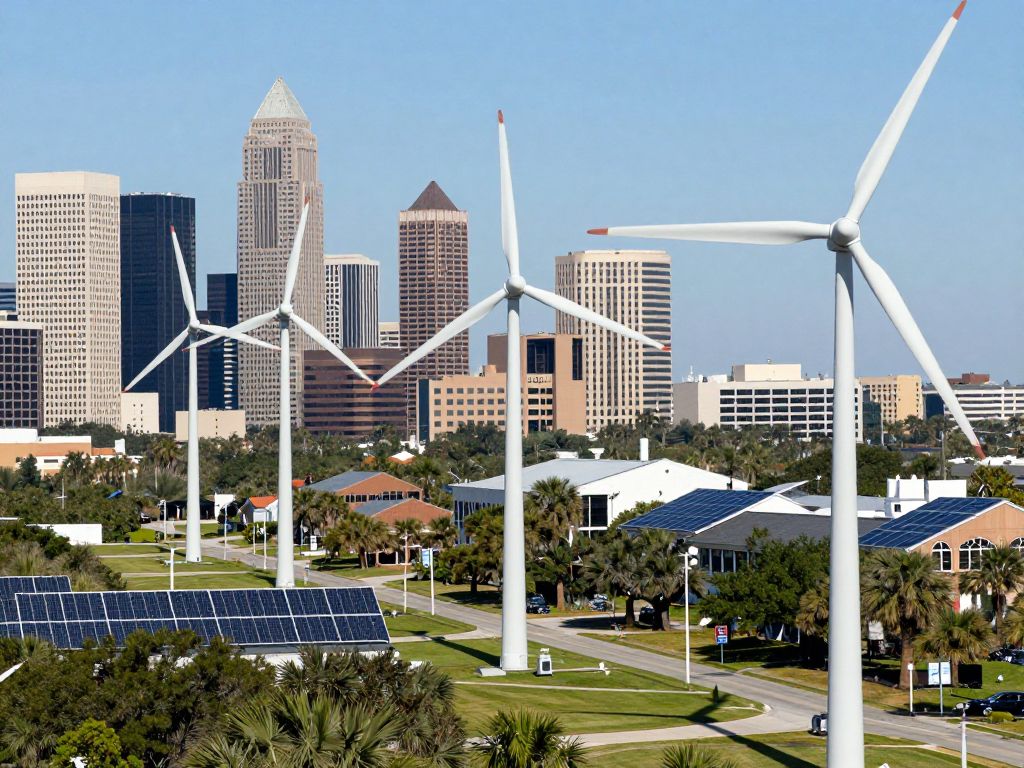
Charleston and the state of South Carolina are embracing an energy-centric economic strategy aimed at fostering innovation, job creation, and overall prosperity. The emphasis on the energy sector as a key growth driver, supported by strategic investments, positions the Lowcountry for robust expansion. With a rich entrepreneurial spirit, Charleston showcases resilience and adaptability, ensuring that economic benefits are shared widely across communities while attracting significant private investments and enhancing its tech industry.
Charleston & SC: Powering Growth in 2026
As the state focuses on energy as a key economic driver, Charleston’s entrepreneurial spirit and strategic investments position the Lowcountry for robust expansion and community prosperity.
Charleston, SC
As 2026 unfolds, a powerful current of economic activity is sweeping across South Carolina, with experts identifying “power” – specifically in the realm of energy – as the defining word for the state’s economic focus. This emphasis on energy is poised to shape investment, innovation, and job creation, setting a dynamic backdrop for entrepreneurs and established businesses alike across the Palmetto State, including the vibrant Lowcountry. Amidst this statewide trend, Charleston continues to solidify its reputation as a hub of entrepreneurial innovation and strategic growth, demonstrating the resilience and adaptability characteristic of successful local economies. With a keen eye on fostering an environment where businesses can thrive with limited regulatory hurdles, the region is actively cultivating a landscape ripe for personal achievement and community enrichment.
The forward-looking approach of South Carolina’s economic architects and Charleston’s local leaders underscores a commitment to sustainable progress. By prioritizing sectors that promise long-term stability and growth, the state and its leading cities are ensuring that the benefits of economic expansion are broadly shared, reinforcing the fabric of communities and creating ample opportunities for skilled workers and aspiring business owners. This collaborative effort between public and private sectors highlights a balanced strategy designed to navigate economic shifts while upholding the values of individual enterprise and regional distinctiveness.
Energy as the Economic Catalyst for South Carolina in 2026
For South Carolina in 2026, the concept of “power,” particularly relating to energy, has been identified as a significant economic focus. This perspective emerged from discussions among business experts, suggesting that developments and innovations within the energy sector will play a central role in the state’s economic narrative. This focus on power and energy creates new avenues for investment and technological advancement, potentially drawing in businesses that specialize in sustainable solutions, infrastructure development, and efficient resource management. As the state moves forward, the emphasis on this critical sector is expected to generate opportunities and stimulate growth across various industries that rely on robust and reliable energy resources.
Charleston’s Accelerating Innovation and Strategic Development
Charleston’s economy is experiencing substantial growth, driven by a booming technology sector. The city now hosts over 1,100 tech companies, with average salaries surpassing $123,000. This sector is projected to expand by 20% by 2026, creating thousands of new jobs by 2030, particularly in areas like artificial intelligence, cybersecurity, and fintech. The city is also investing in smart city infrastructure, implementing AI-powered traffic signals, environmental sensors, and digital platforms to enhance efficiency and quality of life.
Complementing this technological surge is Charleston’s recently unveiled five-year economic strategy, “Charleston Inspired: Discover the Possibilities.” This comprehensive plan, developed by Ernst & Young LLP and commissioned by the Charleston Regional Development Alliance (CRDA), aims to strengthen the regional economy, attract top talent, and establish Charleston as a prominent hub for innovation and growth. The strategy focuses on high-impact industries, entrepreneurship, and talent development, anticipating that an increased focus on innovation could boost Charleston’s projected economic growth from 3.5% to 4.2% by 2040. Major companies such as Boeing, Mercedes-Benz Vans, Volvo Cars, and SHL Medical have already been attracted to Charleston, and this strategy is designed to ensure their continued competitiveness while fostering new economic opportunities.
Statewide Economic Momentum and Job Creation
South Carolina’s economy maintains a healthy and positive outlook for 2026, despite a mild slowdown in 2025. The state is expected to benefit from national tailwinds, including lower interest rates, increased trade certainty, and tax changes stemming from the One Big Beautiful Bill Act (OBBBA). Economic activity nationwide is projected to grow at an above-average pace of 2.6%, with South Carolina expecting a 2.0% growth rate in 2026. A key factor for the state’s economic momentum in 2026 will be inflation; stable or declining inflation could lead to further rate cuts by the Federal Reserve, boosting market activity.
South Carolina continues to experience robust population growth, which is among the highest nationwide, largely due to net in-migration, particularly of retirees. This demographic expansion provides a strong foundation for continued demand across all sectors of the state’s economy. The state’s employment growth has ranked first in the nation, with its unemployment rate remaining between 4% and 4.5%. Projections indicate that employment and personal income will continue to grow, leading to increased General Fund revenues from FY 2026-27 to FY 2028-29. The state’s fiscal outlook also remains positive, with reserves expected to reach approximately 10% of expenditures by FY 2026-27, providing a safeguard against economic downturns. Governor Henry McMaster has proposed an additional $1.1 billion for road improvements, addressing rising inflation and labor costs in infrastructure development.
Significant private investments are further fueling the state’s economic engine. In the Charleston area alone, Redwood Materials is making a $3.5 billion investment, expected to create 1,500 jobs, while Boeing’s expansion adds 500 jobs with a $1 billion investment, and Bosch contributes 350 jobs through a $260 million project. Furthermore, Google is investing $9 billion in data centers in Berkeley County, which is projected to generate 1,200 long-term construction jobs and 200 full-time operational roles in the Lowcountry. These major commitments from leading companies highlight the state’s appeal for large-scale industrial and technological enterprises.
The Flourishing Entrepreneurial Spirit
The entrepreneurial landscape across South Carolina is vibrant, with small businesses forming the backbone of the state’s economy. These enterprises constitute 99.4% of all firms and are primarily responsible for new job creation. The state is actively highlighting 20 innovative startups across various industries, including technology, lifestyle, and life sciences, to celebrate their spirit and showcase resilience and creativity in a competitive market. Efforts like the “Launch to Legacy” campaign by the South Carolina Department of Commerce aim to gather and promote these success stories, demonstrating how local innovation and leadership contribute to job creation and business success.
Charleston itself has seen inspiring examples of personal achievement and small-business resilience, such as Tracey Richardson’s Lillie’s of Charleston, rooted in Gullah traditions, and Darren Spicer, who built a coffee empire based on community values. Beyond Charleston, entrepreneurs like Dr. Laura Boccanfuso, CEO of Vän Robotics in Columbia, have thrived by leveraging university technology incubators and supportive communities. Lexington County stands out as another promising area for entrepreneurs in 2026, offering competitive incentives and lower operating costs, making it an ideal location for new ventures in various sectors. This supportive ecosystem, coupled with strong population growth, creates a robust demand for local goods and services, from small retail shops to specialized tech solutions.
Lowcountry’s Evolving Landscape: Population and Real Estate
Charleston’s population is experiencing rapid growth, nearly three times the national average, with approximately 34 new residents arriving daily. Projections suggest the metro area could reach 1 million residents by 2032. This influx is driving demand for housing, keeping prices high and inventory tight, though moderate price growth and a gradual increase in available homes are anticipated. Charleston is recognized as one of the hottest real estate markets heading into 2026. To accommodate this growth, several large-scale riverfront redevelopment projects are underway, transforming former industrial sites into dynamic mixed-use districts with new homes, parks, shops, and offices. Notable projects include Magnolia, Laurel Island, and the reimagined Union Pier.
The region’s hospitality industry remains strong, shifting towards luxury and upscale tourism, which in turn increases spending per guest and supports local businesses. This evolving tourism profile, combined with the city’s rich history, vibrant arts scene, and coastal amenities, reinforces Charleston’s status as a premier destination and further boosts its local economy. The diversification of Charleston’s job market, with significant growth projected in production, IT, engineering, management, and installation/maintenance roles, indicates a broad-based economic strength that protects the region from over-reliance on any single sector.
Looking Ahead: Sustaining South Carolina’s Momentum
As South Carolina strategically focuses on energy as a critical economic driver for 2026, the ongoing dedication to fostering entrepreneurial innovation, supporting small businesses, and making wise public investments positions the state for continued success. Charleston, in particular, exemplifies this forward momentum, demonstrating how local leadership and a proactive approach to economic development can cultivate a thriving environment. The blend of robust tech growth, strategic urban redevelopment, and a resilient small-business community ensures the Lowcountry remains an attractive place for both residents and investors. We encourage our readers to support the local businesses that are the heart of Charleston’s economy and to stay engaged in the exciting developments shaping our community’s future.
Frequently Asked Questions (FAQ)
- What is the key economic focus for South Carolina in 2026?
- The key economic focus for South Carolina in 2026 is “power,” specifically relating to energy.
- How is Charleston’s tech industry projected to grow by 2026?
- Charleston’s tech industry is projected to grow by 20% by 2026, adding thousands of new jobs by 2030, particularly in areas like artificial intelligence, cybersecurity, and fintech.
- What is the projected economic growth rate for South Carolina in 2026?
- South Carolina is expecting a 2.0% growth rate in 2026, with economic activity nationwide projected to grow at an above-average pace of 2.6%.
- What percentage of firms in South Carolina are small businesses?
- Small businesses constitute 99.4% of all firms in South Carolina and are primarily responsible for new job creation.
- What is Google’s major investment in Berkeley County, South Carolina?
- Google is investing $9 billion in data centers in Berkeley County, which is projected to generate 1,200 long-term construction jobs and 200 full-time operational roles in the Lowcountry.
Key Economic Features for South Carolina and Charleston in 2026
| Feature | Details | Scope |
|---|---|---|
| Primary Economic Focus for 2026 | “Power” (energy sector) | State-level |
| South Carolina Economic Growth (2026) | Projected 2.0% growth | State-level |
| National Economic Growth (2026) | Projected 2.6% growth | Nationwide |
| Charleston Tech Sector Growth (by 2026) | Projected 20% growth | Charleston |
| Small Business Contribution in SC | 99.4% of all firms; primary new job creation | State-level |
| Google Investment in Berkeley County | $9 billion for data centers; 1,200 construction, 200 operational jobs | State-level (Lowcountry) |
| State Fiscal Reserves (by FY 2026-27) | Approximately 10% of expenditures | State-level |
| SC Employment Growth Ranking | Ranked #1 nationally | State-level |
Deeper Dive: News & Info About This Topic
HERE Resources
South Carolina Innovation Shines: Local Stock Leads the Pack
Charleston Anchors South Carolina’s Economic Growth
Charleston Retail Adapts as GameStop Stores Close
Mermaids Make a Comeback at South Carolina Aquarium
South Carolina Restaurant Week Boosts Local Economy
Spinx Company Acquires Buck Mickel Center from Greenville Tech
Federal Shutdown Disrupts Small Businesses in South Carolina
Historic Property in Charleston Sold for $13.65 Million
South Carolina’s Push for Sustainable Economic Development
Legal Challenge to Trump’s Tariffs at Supreme Court