
Charleston, South Carolina, August 31, 2025
Student Life and Community at Charleston School of Law
The Charleston School of Law situates students within a dense tapestry of academic rigor, practical training, and community involvement. More than a place to learn statutes and case law, the school functions as an ecosystem where mentorship, advocacy, and civic responsibility interlock. Its location in a historic port city opens doors to courtroom observation, local nonprofit work, and networking with lawyers who practice across state and federal courts.
Academic Environment and Faculty Engagement
Faculty at the school bring varied backgrounds — former judges, practicing attorneys, and scholars — and that diversity shapes classroom dialogue. Instructors aim to be approachable and available, which encourages personalized guidance for research projects, career planning, and bar preparation. Small class sizes make it easier for students to engage meaningfully with professors during office hours and seminars, turning theoretical courses into applied conversations about case strategy, ethics, and courtroom procedure.
Students often describe the classroom experience as interactive: professors integrate practical hypotheticals, recent appellate developments, and writing-intensive exercises so students sharpen legal reasoning and communication. That blend of doctrine and application prepares graduates to move from campus to practice with a clearer sense of professional expectations.
Student Organizations and Extracurricular Activities
Outside the classroom, the campus supports a wide variety of student-led groups that reflect both traditional legal specialties and niche interests. Organizations provide more than social outlets; they serve as incubators for leadership, mentorship, and networking with practitioners.
Examples of active groups include societies for criminal law, elder law, entertainment and sports law, and faith-based legal fellowship. These groups host panels, organize site visits, and create mentoring opportunities with alumni and local attorneys. Participation can take many forms: volunteering at an outreach event, running a workshop on trial advocacy, or spearheading a pro bono clinic.
Students frequently leverage involvement in organizations to refine interests. For instance, someone curious about elder law might begin by attending a society meeting, then take a related clinic or externship, and ultimately build a practice field through targeted internships and coursework.
Experiential Learning and Pro Bono Service
Practical training is a core component of the law school’s curriculum. Students must complete 50 hours of pro bono work before graduation, an institutional requirement designed to ensure exposure to public service and to the realities of client representation. To support that requirement, the school maintains a network of more than 130 approved pro bono sites, spanning legal aid organizations, public defenders’ offices, and community service agencies.
Clinics and externships further translate classroom learning into client-focused tasks. Through the Center for Trial Advocacy and other clinical programs, students handle intake, draft pleadings, and hone examination techniques under faculty supervision. Moot court and mock trial competitions simulate adversarial settings and teach persuasive oral argument—skills critical for litigation-focused careers and valuable for any lawyer who must advocate effectively.
The combination of clinic placements, moot court practice, and required pro bono hours produces graduates who are not only familiar with doctrine but also practiced in client interaction, ethical decision-making, and procedural mechanics.
Advocacy Programs and Moot Court
Advocacy training is emphasized across the curriculum. The Center for Trial Advocacy offers structured exercises that mirror trial preparation: evidence handling, witness examinations, and trial strategy. Students who participate in moot court engage in appellate advocacy, learning to craft persuasive briefs and present oral arguments evaluated by faculty and practitioners.
These programs also create networking pathways. Visiting judges and practicing attorneys often serve as judges in competitions or guest instructors, giving students opportunities to receive feedback from the bar and establish professional contacts that can lead to clerkships or employment.
Wellness and Support Services
Legal study can be demanding, and the school addresses that reality with a range of wellness resources. Counseling services, stress management workshops, and time-management seminars are available to help students maintain balance. Academic support centers offer tutoring and bar-prep guidance, while career services assist with resume reviews, interview preparation, and employer outreach.
The wellness initiative aims to be proactive rather than reactive: structured programs teach coping techniques and promote community-building events that connect students outside the classroom, reducing isolation during intense academic periods.
Campus Facilities and Resources
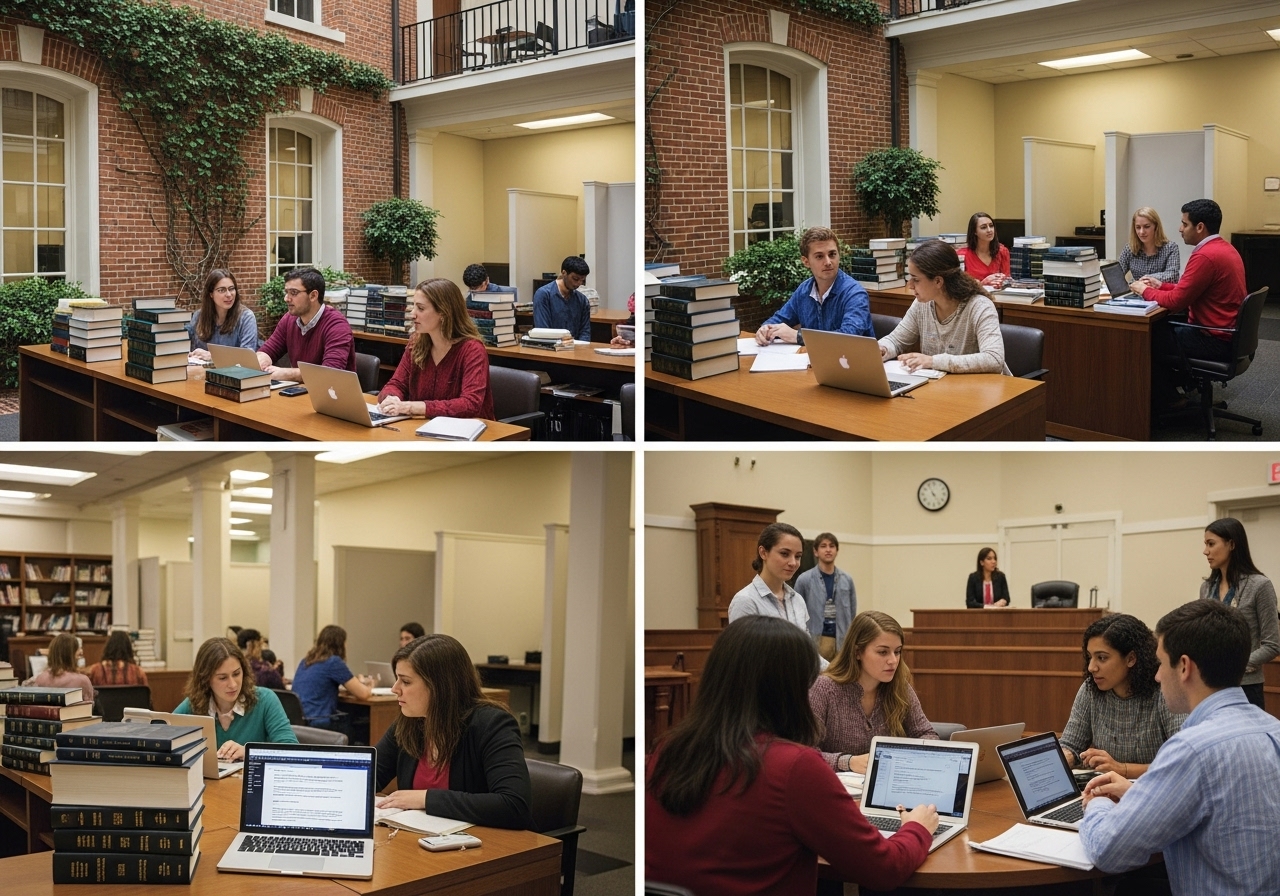
Classrooms are equipped with modern technology, and the library provides a mix of private study rooms and collaborative spaces. Research databases and hard-copy legal resources are accessible, and library staff provide targeted assistance for complex research queries. Campus technology supports remote access to databases and learning tools, accommodating students who balance work, internships, or family commitments.
Below is a concise comparison of campus features to illustrate how resources align with student needs:
| Area | What Students Find | Why It Matters |
|---|---|---|
| Faculty Accessibility | Open office hours, mentoring | Enables individualized feedback and career guidance |
| Experiential Opportunities | Clinics, moot court, externships | Bridges theory to practice; builds courtroom skills |
| Community Engagement | 130+ approved pro bono sites | Ensures practical public service experience |
| Wellness & Support | Counseling, academic support, career services | Helps sustain student performance and well-being |
| Library & Tech | Research databases, study rooms, staff assistance | Supports rigorous legal research and collaborative work |
Community Engagement and Networking
Being based in Charleston provides proximity to courts, law firms, and nonprofit organizations. Students regularly attend hearings, assist with local public interest projects, and accept internships that place them inside functioning legal environments. The school’s career services office maintains relationships with local employers and arranges on-campus interviews, job fairs, and networking events that help students translate extracurricular experience into employment opportunities.
Local alumni often return to campus to mentor or hire graduates, creating a feedback loop that benefits current students seeking practical entry points into the profession.
Key Takeaways
- Practical experience is central: the school requires 50 pro bono hours and supports clinical placements to build real-world skills.
- Supportive learning environment: accessible faculty, dedicated wellness services, and robust library resources back student success.
- Active student life: a variety of organizations and advocacy programs foster leadership, networking, and career development.
Following these institutional features, many students leave with a portfolio of practical experiences—briefs filed, clients interviewed, and oral arguments presented—that complement classroom learning and help them enter the legal marketplace prepared to serve clients and pursue specialized careers.
FAQ
What pro bono requirements does the Charleston School of Law have?
Students are required to complete 50 hours of pro bono service prior to graduation. The school facilitates placements through a network of more than 130 approved pro bono sites, which include legal aid organizations, public interest groups, and court-related service programs.
How can students gain courtroom experience while enrolled?
Courtroom skills are developed through the Center for Trial Advocacy, mock trial competitions, and externships that place students in working courtrooms. These programs emphasize evidence, witness examination, and trial strategy under supervised conditions.
Are wellness and academic support services available for students?
Yes. The campus offers counseling, stress management workshops, academic tutoring, and bar-preparation assistance. Career services also support job searches, resume development, and interview coaching.
What types of student organizations are active on campus?
The school hosts a range of organizations, including groups focused on criminal law, elder law, entertainment and sports law, and faith-based legal practice. These organizations deliver panels, networking events, and volunteer opportunities.
How does the law school help with networking and job placement?
Career services coordinate employer outreach, host recruiting events, and maintain alumni connections. Faculty and visiting practitioners also provide mentorship and professional introductions that can lead to internships, clerkships, or employment.

Author: STAFF HERE CHARLESTON
The CHARLESTON STAFF WRITER represents the experienced team at HEREcharleston.com, your go-to source for actionable local news and information in Charleston, Charleston County, and beyond. Specializing in "news you can use," we cover essential topics like product reviews for personal and business needs, local business directories, politics, real estate trends, neighborhood insights, and state news affecting the area—with deep expertise drawn from years of dedicated reporting and strong community input, including local press releases and business updates. We deliver top reporting on high-value events such as the Spoleto Festival USA, Charleston Wine + Food Festival, and the MOJA Festival. Our coverage extends to key organizations like the Charleston Metro Chamber of Commerce and the Charleston Museum, plus leading businesses in tourism and maritime industries that power the local economy such as South Carolina Ports Authority and the Charleston Visitor Center. As part of the broader HERE network, including HEREaiken.com, HEREbeaufort.com, HEREchapin.com, HEREcharleston.com, HEREclinton.com, HEREcolumbia.com, HEREgeorgetown.com, HEREgreenwood.com, HEREgreenville.com, HEREhiltonhead.com, HEREirmo.com, HEREmyrtlebeach.com, HEREnewberry.com, HERErockhill.com, HEREspartanburg.com, HEREaustin.com, HEREcollegestation.com, HEREdallas.com, HEREhouston.com, and HEREsanantonio.com, we provide comprehensive, credible insights into South Carolina's dynamic landscape.