
Charleston, South Carolina, August 19, 2025
Charleston’s Evolving Technical Education Landscape
Charleston has become a focal point for technical education innovation as local schools, colleges, and employers coordinate to produce a workforce ready for emerging and traditional industries alike. Economic growth across the Lowcountry has created demand for trained technicians, healthcare workers, and advanced manufacturing specialists, prompting institutions to expand offerings and develop new pathways that connect classrooms with real-world careers.
Surge in Career and Technical Education Enrollment
The Charleston County School District has documented meaningful growth in career and technical education (CTE) participation, reflecting a shift in how students and families view postsecondary options. Programs now span healthcare, horticulture, construction trades, engineering, and other vocational areas. One illustrative example is the Center for Advanced Studies at West Ashley High School, where roughly 700 students are enrolled across approximately 1,100 CTE course seats, demonstrating how secondary schools are scaling hands-on training to meet local labor needs.
This trend responds to both student interest and employer signals: a number of regional industries are recruiting technicians and entry-level professionals who possess specific, certifiable skills rather than only traditional academic credentials. As a result, high schools are expanding course sequences, certifications, and articulated credit agreements with nearby technical colleges to shorten the time from training to employment.
Trident Technical College’s Future Ready Certificate Program
Trident Technical College has broadened its Future Ready Certificate program to serve students across Charleston and Dorchester counties. The program runs about 18 weeks and consists of four courses targeting high school juniors and seniors who are considering pathways other than immediate college enrollment. Curriculum components include mechanical assembly fundamentals, workplace safety, applied mathematics, and communications for the workplace.
Early outcomes from the program suggest strong alignment with regional labor demand: in one county cohort, nine of the first ten graduates moved directly into trade and technical roles. The model—short, focused, and employer-informed—reduces barriers to entry for students and helps businesses secure entry-level talent with practical experience.
Collaborative Health Science Program
A multi-institutional partnership led by the Medical University of South Carolina, the Charleston County School District, and Trident Technical College launched a four-year Health Science Program at Early College High School. The curriculum mixes rigorous academics with clinical exposure and mentorship, aiming to accelerate student readiness for both postsecondary healthcare programs and entry-level clinical roles.
Demand for the program exceeded supply in its first year: about 25 students were admitted from a competitive applicant pool nearing 200. That level of interest signals both student appetite for healthcare careers and the perceived value of coordinated pipelines that offer college credit, hands-on practice, and professional guidance before graduation.
Addressing the Skills Gap Through Apprenticeships
The region has pursued apprenticeships as a bridge between classroom learning and workplace competency. Trident Technical College’s youth apprenticeship initiative partners with major employers to provide paid, on-the-job training alongside classroom instruction. Local manufacturers and service-sector firms—ranging from firms producing advanced components to companies in hospitality—are involved in structuring youth apprenticeships that include mentorship, progressive skill benchmarks, and wage progression.
This blend of applied instruction and employment income helps high school students gain practical experience without delaying earnings, and employers gain a pipeline of workers trained to their specifications. The apprenticeship model is also slated for expansion into information technology and hospitality sectors, reflecting broader workforce needs beyond traditional trades.
Statewide Investments in Technical Education
State policymakers have backed technical colleges with substantial capital funding to expand capacity and modernize facilities. The most recent budget allocated more than $150 million in one-time aid for construction, maintenance, and renovations at technical colleges statewide. That funding targets high-demand programs such as automotive technology, industrial electricity, HVAC, welding, and construction.
Schools outside Charleston have likewise benefited; for example, Midlands Technical College received $28.5 million for expansion to accommodate surging enrollment in career programs. These infrastructure investments enable colleges to buy equipment, upgrade labs, and expand evening and weekend offerings for adult learners and working students.
Integration of Artificial Intelligence and Robotics in Education
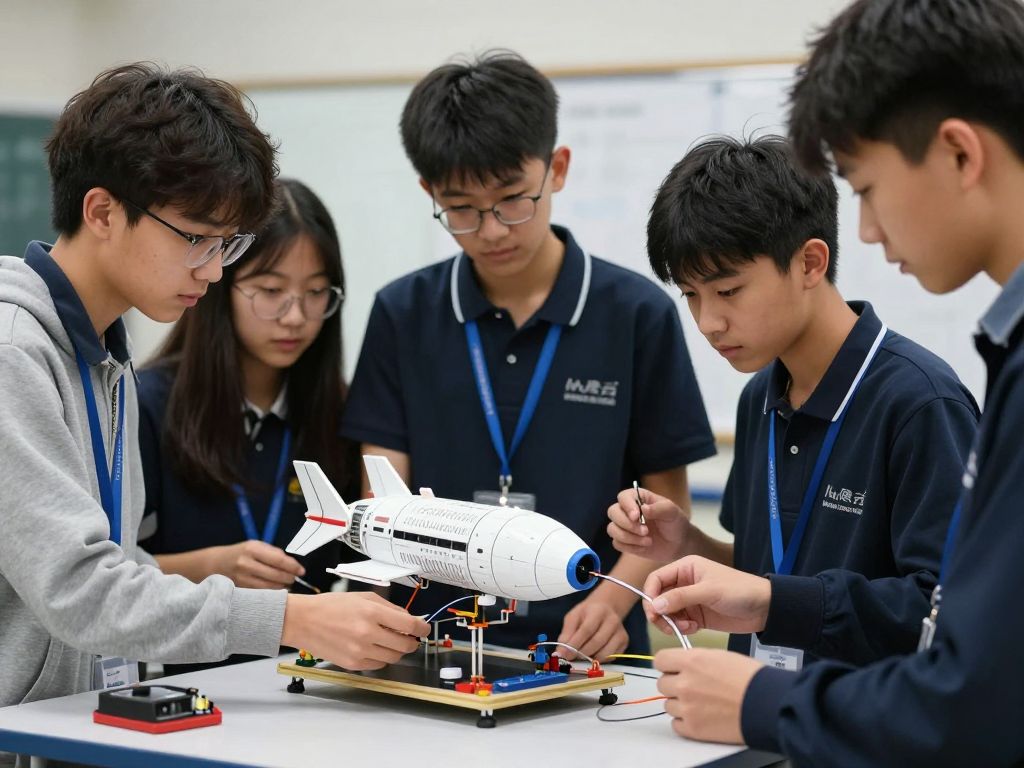
South Carolina is embedding artificial intelligence (AI) and robotics into K–12 and postsecondary pathways to prepare students for technology-driven roles. The Palmetto AI Pathways pilot will bring hands-on AI and robotics experiences to selected Title I middle schools, including Morningside Middle in Charleston and Oakbrook Middle in Dorchester, delivering exposure to automation, coding, and systems thinking at an earlier stage.
Complementing the pilot, a collaborative initiative involving the University of Florida and the Southern Regional Education Board supports a four-course high school AI curriculum tailored to state workforce priorities. Collectively, these efforts aim to ensure students encounter computational thinking, machine learning concepts, and ethical considerations as part of a coherent pathway toward tech careers or further study.
Advanced Manufacturing Education Initiatives
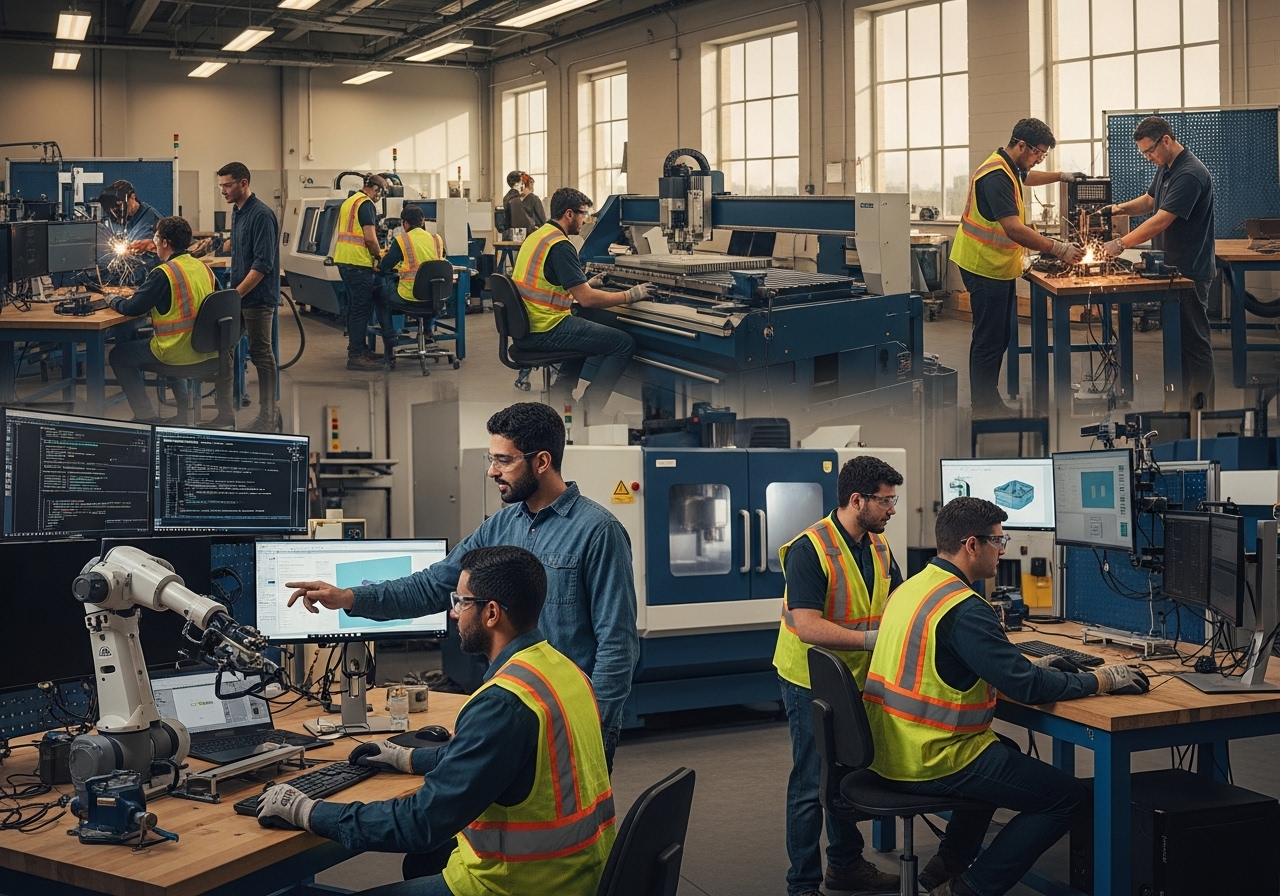
The College of Charleston is introducing an undergraduate certificate and a Bachelor of Professional Studies concentration focused on advanced manufacturing. These programs were developed with input from regional manufacturers to emphasize applied competencies: robotics integration, machine learning applications, AI for process control, and quality systems.
Designed to be flexible for working adults, the offerings combine evening classes, lab-based experiences, and industry-aligned projects. The emphasis on quality control and automation reflects employer needs for staff who can operate sophisticated equipment, interpret data, and participate in continuous improvement processes.
Program Comparison: Key Features at a Glance
| Program | Duration | Primary Audience | Industry Partners | Core Outcomes |
|---|---|---|---|---|
| CTE at West Ashley Center | Multi-year high school sequences | High school students | Local employers, technical colleges | Certifications, college credit, career readiness |
| Future Ready Certificate (TTC) | ~18 weeks (4 courses) | High school juniors/seniors | Regional trades employers | Mechanical assembly, safety, math, communication |
| MUSC Health Science Program | 4 years (high school) | Selected high school students | Medical University of South Carolina | Clinical exposure, mentorship, college preparation |
| Youth Apprenticeships (TTC) | Varies by trade | High school students | Bosch, Boeing, local firms | Paid training, workplace skills, credentialing |
| AI/Robotics Pathways | Pilot modules; HS 4-course sequence | Middle and high school students | Universities, regional agencies | AI fundamentals, robotics, coding, ethics |
How Employers and Educators Are Aligning
Coordination among employers, K–12 districts, and colleges is increasingly structured rather than ad hoc. Industry advisory boards inform curriculum design, internships and apprenticeships offer metrics for competency, and dual-enrollment arrangements permit students to earn college credit while in high school. The result is a set of pathways that reduce duplication, accelerate time to employment, and offer multiple entry and exit points for learners.
Employers contribute not only job openings but also equipment donations, lab access, and real-world projects that make classroom learning more authentic. This reciprocity helps institutions stay current with technological changes and allows businesses to help shape the skills pipeline.
Equity and Access Considerations
Expanding technical education raises questions about access and equity. Efforts such as including Title I schools in AI pilots and targeting apprenticeship outreach to historically underrepresented students aim to broaden participation. Financial supports, transportation solutions, and flexible scheduling are also critical to ensure that working families and adult learners can benefit from these pathways.
Measuring success requires attention to completion rates, credential attainment, and employment outcomes. Early program data—such as the high conversion of Future Ready graduates into trade employment—suggest positive effects, but ongoing evaluation will be necessary to identify and mitigate any barriers to equitable access.
What This Means for Students and the Local Economy
For students, the expanding array of options provides choices tailored to different goals: immediate employment, stackable credentials, or transfer to four-year programs. For employers, better-aligned training reduces recruitment costs and shortens skills ramp-up time. At the community level, a more skilled local workforce supports economic resilience by making the region attractive to advanced manufacturers, healthcare systems, and technology firms.
Key Takeaways
- Charleston’s technical education landscape is expanding through partnerships that pair classroom instruction with employer-driven training.
- State capital investments and program pilots in AI and apprenticeships are creating multiple, flexible pathways into high-demand careers.
- Ongoing evaluation and targeted access efforts are needed to ensure these pathways benefit a diverse range of students and support sustained local economic growth.
As Charleston adapts educational offerings to meet employer expectations, the community is building layered pathways that let learners enter at different stages, earn recognized credentials, and move quickly into productive roles. The momentum reflects both pragmatic workforce development and an educational shift toward skills-based opportunity.
FAQ
What kinds of technical programs are available in Charleston?
Programs range from high school career and technical education sequences in trades and healthcare to short-term certificates in mechanical assembly and safety, apprenticeships with paid work experience, and college-level concentrations in advanced manufacturing and AI-related fields.
Who can participate in the Future Ready Certificate program?
The Future Ready Certificate is aimed primarily at high school juniors and seniors who are exploring trade and technical career options; it is an 18-week sequence designed to provide foundational skills for entry-level roles.
Are apprenticeships paid and do they count toward credentials?
Yes. Youth apprenticeships connected to local employers include paid work components and are structured to lead to recognized credentials or competency benchmarks often accepted by regional industries.
How is AI being incorporated into K–12 education locally?
AI exposure is part of pilot programs for selected middle schools and a developing four-course high school sequence. These initiatives focus on hands-on robotics, computational thinking, and ethical considerations tailored to workforce needs.
Will investments in technical colleges benefit Charleston specifically?
Statewide funding for facility upgrades and equipment supports capacity statewide, including programs that serve Charleston-area students through expanded lab space, updated machinery, and greater enrollment capacity in high-demand fields.

Author: STAFF HERE CHARLESTON
The CHARLESTON STAFF WRITER represents the experienced team at HEREcharleston.com, your go-to source for actionable local news and information in Charleston, Charleston County, and beyond. Specializing in "news you can use," we cover essential topics like product reviews for personal and business needs, local business directories, politics, real estate trends, neighborhood insights, and state news affecting the area—with deep expertise drawn from years of dedicated reporting and strong community input, including local press releases and business updates. We deliver top reporting on high-value events such as the Spoleto Festival USA, Charleston Wine + Food Festival, and the MOJA Festival. Our coverage extends to key organizations like the Charleston Metro Chamber of Commerce and the Charleston Museum, plus leading businesses in tourism and maritime industries that power the local economy such as South Carolina Ports Authority and the Charleston Visitor Center. As part of the broader HERE network, including HEREaiken.com, HEREbeaufort.com, HEREchapin.com, HEREcharleston.com, HEREclinton.com, HEREcolumbia.com, HEREgeorgetown.com, HEREgreenwood.com, HEREgreenville.com, HEREhiltonhead.com, HEREirmo.com, HEREmyrtlebeach.com, HEREnewberry.com, HERErockhill.com, HEREspartanburg.com, HEREaustin.com, HEREcollegestation.com, HEREdallas.com, HEREhouston.com, and HEREsanantonio.com, we provide comprehensive, credible insights into South Carolina's dynamic landscape.