

News Summary
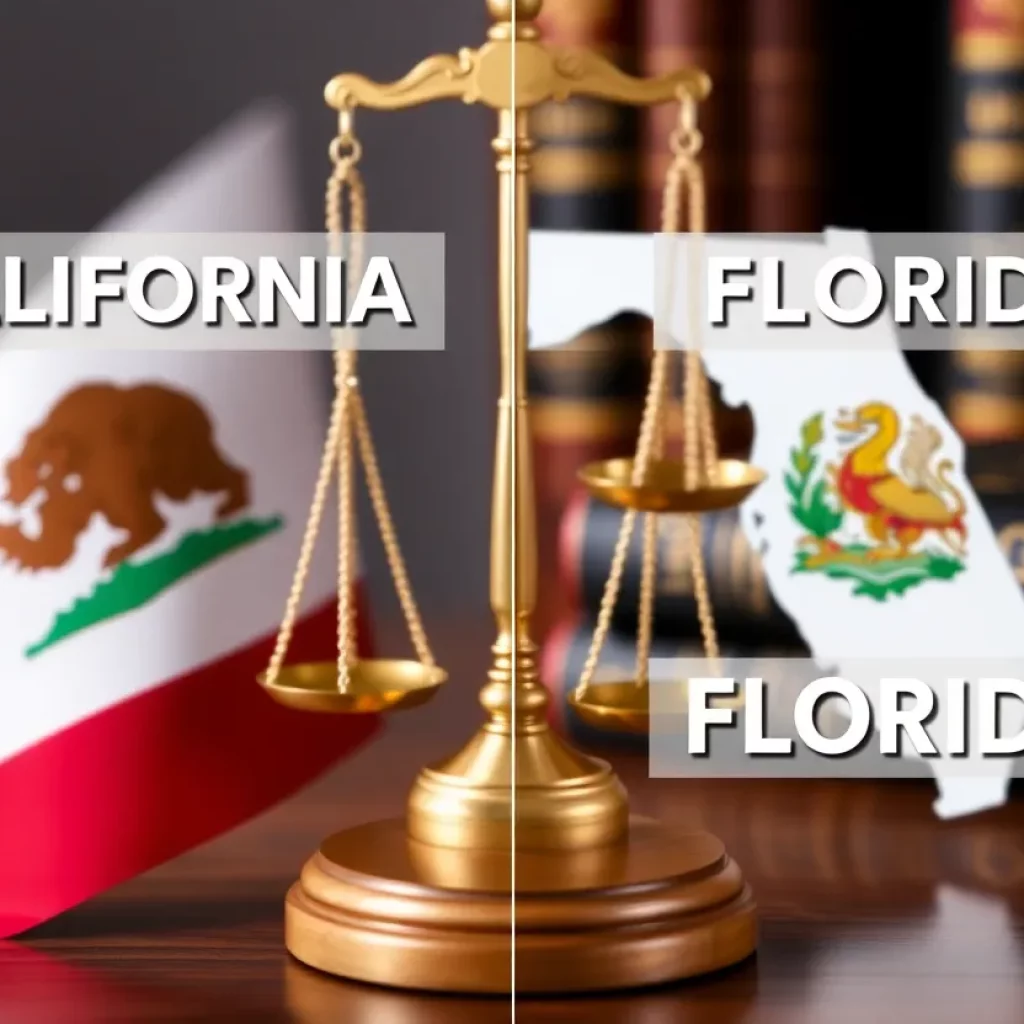
The legal landscape in California and Florida is undergoing significant changes, with new laws impacting personal injury claims, insurance obligations, and statutes of limitation. By 2025, both states will enforce a two-year deadline for injury claims, while California raises its car insurance coverage requirements. Florida transitions from a no-fault to a fault-based system, making significant shifts in liability assessment. The competitive negligence models used by each state further complicate these reforms, raising important questions for legal practitioners. Recent incidents like plane crashes also amplify concerns regarding public safety amidst these changes.
Legal Landscape Changing in California and Florida: The Impact of Reforms
As professionals split time between San Diego and Orlando, the complexities of legal reform become ever more critical. With new laws set to take effect by 2025 in both states, personal injury claims, insurance obligations, and statutes of limitation will look markedly different. The landscape of liability is shifting, and so must the understanding of those who traverse the highways and byways of these vibrant regions.
What If You Are Hurt in Transit?
With increased travel comes the essential question of liability when accidents occur in transit. Florida is making bold moves by replacing its longstanding “no-fault” Personal Injury Protection (PIP) system, shifting to a fault-based model. This shift, anticipated to be fully implemented by 2025, will greatly affect the way personal injury claims are filed and processed in the Sunshine State.
Meanwhile, California is also making headlines by increasing its minimum coverage requirements for car insurance. By January 1, 2025, San Diego will see a rise in crash insurance minimums to 30/60/15, doubling previous limits and prompting adjustments in how claims are filed.
Statutes of Limitation – A Tightening Window
Both states will enforce a two-year deadline for filing personal injury claims effective 2025. California, governed by its Code Civ. Proc. § 335.1, has specific stipulations for pausing or resetting the limitation clock based on various circumstances such as the discovery rule, administrative claims against public entities, and considerations for minors.
In a significant shift, Florida is reducing its previous four-year filing window to match California’s new timeline. This means that insurers will be encouraged to pursue quicker settlements, and the clock for claims will run out swiftly—specifically after 731 days unless fraud is present. Military exceptions will also apply to toll the limitation period.
Sorting Out Comparative Negligence
Another area seeing significant shifts involves the concept of comparative negligence. California employs a pure comparative negligence model, meaning that even if a plaintiff is 99% at fault, they can recover some damages, proportional to their fault. In stark contrast, Florida has adopted a modified comparative negligence system, barring recovery if the plaintiff is more than 50% at fault, except in medical malpractice contexts which adhere to the pure model.
Caps on Damages: All Eyes on the Numbers
A crucial aspect of reforming personal injury law is the capping of damages. California, notorious for its lack of caps on non-economic damages in typical injury cases, is an exception in the realm of medical malpractice. Florida, while also lacking caps in general personal injury, has capped damages for non-fatal injuries at $430,000 and wrongful death at $600,000—with continuing proposals yet unpassed for a $500,000 ceiling that advocates argue can stifle rightful compensation.
Insurance Guidelines Being Redefined
As regulatory frameworks evolve, the focus on insurance costs cannot be ignored. With new laws emerging, both states are adjusting how they manage regulatory insurance requirements. The positive tidying up of insurance minimums in San Diego is likely to be paired with greater financial responsibility from drivers and corporations alike. Contrastingly, Orlando retains its PIP requirement, though ongoing discussions about its repeal are on the table.
Company Liability and Jurisdictional Considerations
California’s respondeat superior principle continues to apply even within remote work models, impacting employer liability. Conversely, Florida has published regulations limiting recovery if an employee’s negligence exceeds 50%. These legal nuances have implications for businesses big and small, as they navigate their operations in both states.
When it comes to personal jurisdiction, issues arising from incidents occurring across the state lines—particularly in cases of dual notice—require immediate action and can drastically alter the prospects for recovery and the strategies employed by litigants.
Recent Plane Crash in Florida Highlights Safety Concerns
In a troubling recent incident, a small plane crashed near North Perry Airport in Pembroke Pines, Florida. Four survivors were rescued, but the crash drew public scrutiny and highlighted ongoing concerns about air safety in the area—particularly given a reported 30 crashes at or near the airport over the last five years. Local authorities have initiated calls for independent investigations to ensure accountability and safety for all travelers.
As laws evolve and case outcomes shift, the nexus of travel, legal reform, and public safety will continue to spark interest and discussion among residents and visitors in both California and Florida.
Deeper Dive: News & Info About This Topic
HERE Resources
Charleston City Council Proposes Updates to Animal Control Code
South Carolina Lawmakers Propose Changes to Liquor Liability Laws
Charleston Faces Severe Affordable Housing Crisis
Emerging Trial Lawyers Transform Chicago’s Legal Landscape
Understanding Lawsuits for Negligence: A Lawyer’s Guide in 2025
South Carolina Lawmakers Approve Liquor Liability Reform
Sean Combs Acquitted of Major Charges, Faces Remaining Convictions
Auto Accident Crisis in the U.S. Fuels Legal Opportunities for Lawyers
Armstrong Teasdale Welcomes New Lawyer Geoffrey S. Ogden
Diddy’s Legal Team Triumphs in Major Trial Verdict
Additional Resources
- Times of San Diego: Legal Changes Impacting California and Florida
- Times of San Diego: Plane Crash Raises Safety Concerns
- Times of San Diego: Changes in Insurance Guidelines
- Wikipedia: Personal Injury Law
- Encyclopedia Britannica: Injury Law

Author: STAFF HERE CHARLESTON
The CHARLESTON STAFF WRITER represents the experienced team at HEREcharleston.com, your go-to source for actionable local news and information in Charleston, Charleston County, and beyond. Specializing in "news you can use," we cover essential topics like product reviews for personal and business needs, local business directories, politics, real estate trends, neighborhood insights, and state news affecting the area—with deep expertise drawn from years of dedicated reporting and strong community input, including local press releases and business updates. We deliver top reporting on high-value events such as the Spoleto Festival USA, Charleston Wine + Food Festival, and the MOJA Festival. Our coverage extends to key organizations like the Charleston Metro Chamber of Commerce and the Charleston Museum, plus leading businesses in tourism and maritime industries that power the local economy such as South Carolina Ports Authority and the Charleston Visitor Center. As part of the broader HERE network, including HEREaiken.com, HEREbeaufort.com, HEREchapin.com, HEREcharleston.com, HEREclinton.com, HEREcolumbia.com, HEREgeorgetown.com, HEREgreenwood.com, HEREgreenville.com, HEREhiltonhead.com, HEREirmo.com, HEREmyrtlebeach.com, HEREnewberry.com, HERErockhill.com, HEREspartanburg.com, HEREaustin.com, HEREcollegestation.com, HEREdallas.com, HEREhouston.com, and HEREsanantonio.com, we provide comprehensive, credible insights into South Carolina's dynamic landscape.