

News Summary
Charleston honors Septima Poinsette Clark, known as the ‘Mother of the Movement,’ for her significant contributions to civil rights and education. Born in 1898, Clark’s advocacy for educational equity and voter registration transformed the landscape for African Americans. A new play titled ‘Septima’ and a mural commemorating her legacy highlight her enduring impact, ensuring her story continues to inspire future generations.
Celebrating the Powerful Legacy of Septima Poinsette Clark
Charleston, South Carolina
Nestled in the heart of Charleston, a remarkable legacy is being celebrated that resonates through the ages—Septima Poinsette Clark, affectionately known as the “Mother of the Movement.” Born on May 3, 1898, Clark was a true pioneer in the fight for civil rights and education, and her story is one of resilience and tireless dedication.
From the very beginning, Clark was a product of her environment, with parents who deeply understood the value of education. Her father, Peter, was a former slave who became a ship’s mechanic after gaining his freedom. Meanwhile, her mother, Victoria, was a free woman of color, working as a laundress. These strong familial roots undoubtedly shaped Clark’s aspirations and commitments.
Growing up, Clark eagerly embraced education, starting her learning journey at Mary Street School. She was just six years old then, filled with dreams and a thirst for knowledge. Later, she attended private classes to hone her teaching skills. By 1916, she was making an impact on the lives of rural children on Johns Island, as African Americans were barred from teaching in downtown Charleston until 1920.
Despite her early challenges, including financial limitations that postponed her college aspirations, Clark managed to earn a master’s degree from Hampton Institute in Virginia later in life. Her commitment to education was only strengthened after a devastating personal loss; following the passing of her husband shortly after the birth of their second child, she channeled her energy into teaching and uplifting her community.
Clark understood that literacy was a powerful tool in the battle against racial voter suppression in South Carolina. She dedicated herself to teaching adults to read and write, often using makeshift teaching materials, including the Sears catalog. While her white counterparts were earning $85 a week for teaching three white children, Clark was making only $35. This disparity only fueled her drive for change.
With her heart set on advocating for educational equity, Clark took on a vital role as vice president of the South Carolina chapter of the NAACP. Her fierce advocacy became a target when, in 1955, she was dismissed from her teaching post for her refusal to resign from the organization after the state passed a law barring employees from joining. Remarkably, her courageous stand garnered support from 41 fellow teachers, who also lost their jobs in solidarity with her fight for justice.
Clark’s journey took her to Tennessee, where she became a key figure at the Highlander Folk School. It was here that she trained sharecroppers and connected with other influential leaders in the civil rights movement, including Rosa Parks and Thurgood Marshall. Her commitment to civic engagement bore fruit when she assisted in registering an estimated 700,000 voters and laid the groundwork for Citizenship Schools that empowered African Americans with knowledge about their rights and the voting process.
Her relentless pursuit of justice continued into her later years, culminating in a victorious legal battle in 1970 when she secured her teacher’s pension. This made her the first woman and the first Black member of the Charleston County School Board. Clark’s impact didn’t fade with her passing on December 15, 1987. She rests peacefully at Old Bethel Methodist Church in Charleston, but her legacy lives on.
Speaking of her legacy, Charleston is gearing up to honor Clark with a new play titled “Septima,” created by Patricia Williams Dockery. This showcase is set to take place from February 28 to March 2, 2025, at the Cannon Street Arts Center—a fitting tribute to a woman whose impact reverberates through time.
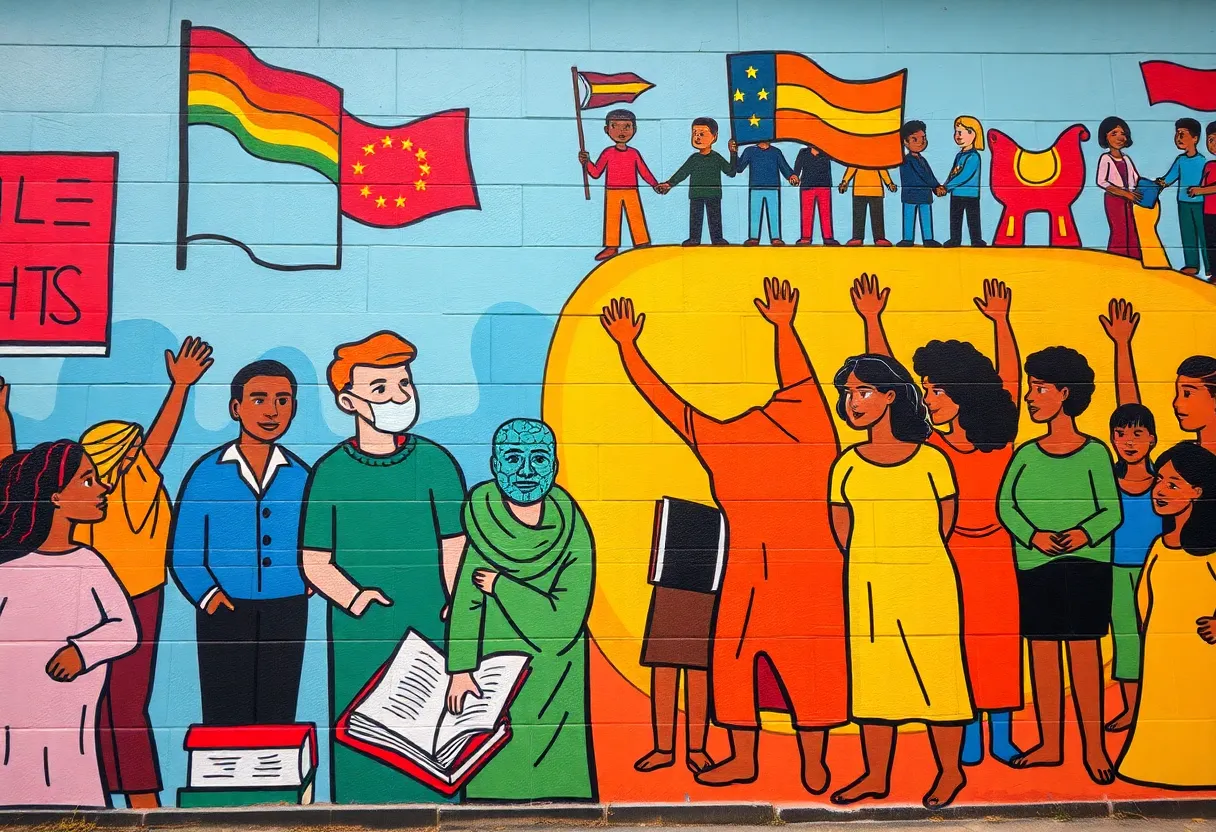
And let’s not forget the stunning mural entitled “Saint Septima with Carolina Jasmine,” painted by Natalie Daise. This artwork stands as a beautiful reminder of Clark’s immense contributions to civil rights and education.
As we reflect on Septima Poinsette Clark’s incredible journey, it becomes clear that her story is a shining beacon of hope, resilience, and dedication to uplifting communities through education. The lessons she imparted continue to inspire generations, reminding us all of the vital importance of civil rights activism, educational equity, and creating a brighter future for every individual.
Deeper Dive: News & Info About This Topic
HERE Resources
Additional Resources
- Post and Courier: Septima P. Clark
- Google Search: Septima Poinsette Clark
- Live 5 News: Crash on Septima Clark Parkway
- Encyclopedia Britannica: Septima Poinsette Clark
- Count on 2: Historical Marker for Septima P. Clark
- Google News: Septima P. Clark


Author: STAFF HERE CHARLESTON
The CHARLESTON STAFF WRITER represents the experienced team at HEREcharleston.com, your go-to source for actionable local news and information in Charleston, Charleston County, and beyond. Specializing in "news you can use," we cover essential topics like product reviews for personal and business needs, local business directories, politics, real estate trends, neighborhood insights, and state news affecting the area—with deep expertise drawn from years of dedicated reporting and strong community input, including local press releases and business updates. We deliver top reporting on high-value events such as the Spoleto Festival USA, Charleston Wine + Food Festival, and the MOJA Festival. Our coverage extends to key organizations like the Charleston Metro Chamber of Commerce and the Charleston Museum, plus leading businesses in tourism and maritime industries that power the local economy such as South Carolina Ports Authority and the Charleston Visitor Center. As part of the broader HERE network, including HEREaiken.com, HEREbeaufort.com, HEREchapin.com, HEREcharleston.com, HEREclinton.com, HEREcolumbia.com, HEREgeorgetown.com, HEREgreenwood.com, HEREgreenville.com, HEREhiltonhead.com, HEREirmo.com, HEREmyrtlebeach.com, HEREnewberry.com, HERErockhill.com, HEREspartanburg.com, HEREaustin.com, HEREcollegestation.com, HEREdallas.com, HEREhouston.com, and HEREsanantonio.com, we provide comprehensive, credible insights into South Carolina's dynamic landscape.